
The ongoing tensions between the United States and Iran are set to take a new turn following President Donald Trump’s announcement of forthcoming talks on Monday. These discussions will focus on the critical issues surrounding the Strait of Hormuz and Iran’s nuclear ambitions. This decision to pause military strikes is seen as an attempt to pave the way for a possible diplomatic resolution.
Diplomatic Efforts Amidst Conflicts
Iran has clarified that it is not currently engaged in direct discussions with the U.S. but is instead holding talks with Oman regarding a temporary safe passage through the strategic Strait of Hormuz. Despite this dialogue, Iranian officials stress that negotiating with Oman alone will not suffice to resolve the ongoing geopolitical tensions. Esmaeil Baghaei, a spokesperson for Iran’s Foreign Ministry, highlighted that any agreement will be futile as long as perceived U.S. “aggression” persists.
Trump has indicated that he decided to call off potential military strikes due to the framework of an emerging peace deal that would allow for resuming shipping through this vital global trade corridor. This development reflects a complex balancing act between military readiness and the pursuit of diplomatic solutions.
The High Stakes of Military Engagement
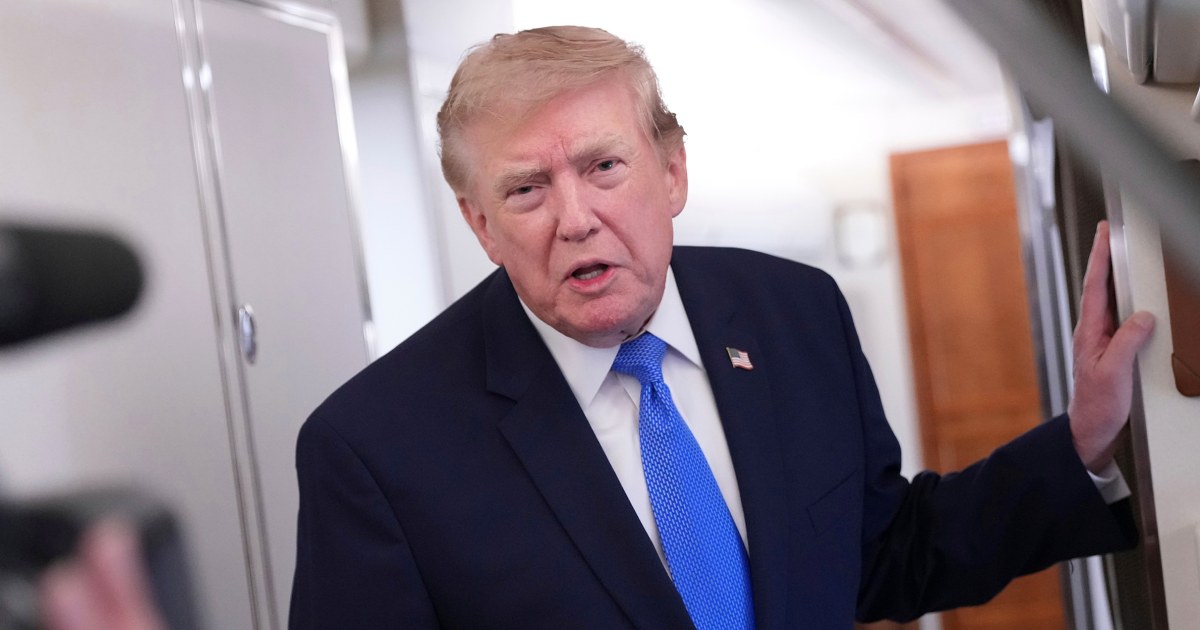
While on Air Force One, Trump characterized the canceled strikes as potentially the largest military action since World War II. He mentioned that, despite the cancellation, the U.S. is prepared for military action “anytime.” Moreover, he emphasized he would prefer to reach a deal rather than escalate violence, which indicates a conflict between his outward military posture and an underlying desire for a peaceful resolution.
This strategic ambiguity is not new for Trump, who has made similar claims in the past, often oscillating between threats of military action and diplomatic attempts. The administration’s approach has sometimes resulted in a cycle of aggression and negotiation without achieving sustainable solutions.
Implications for the Global Economy and Domestic Pressure
The recent cycle of attacks, including heightened tensions around the Strait of Hormuz, has broader implications, threatening to exacerbate regional conflicts and destabilize the global economy. New casualties among American forces and surging energy prices are putting additional pressure on Trump domestically, forcing him to reconsider military escalation.
Furthermore, the State Department has advised Americans in the Middle East to consider leaving the area or being prepared for rapid departures, citing increasing risks and potential disruptions in travel. This advisory underscores the ongoing uncertainty and volatility in the region, placing significant weight on upcoming diplomatic discussions.
Ultimately, the interplay between U.S. military readiness and Iran’s regional maneuvers will be closely monitored, as all stakeholders watch to see whether these latest talks will yield any substantive progress or simply lead to more rhetoric. As Trump continues to navigate these fraught waters, the stakes remain high for both nations and the global landscape at large.