
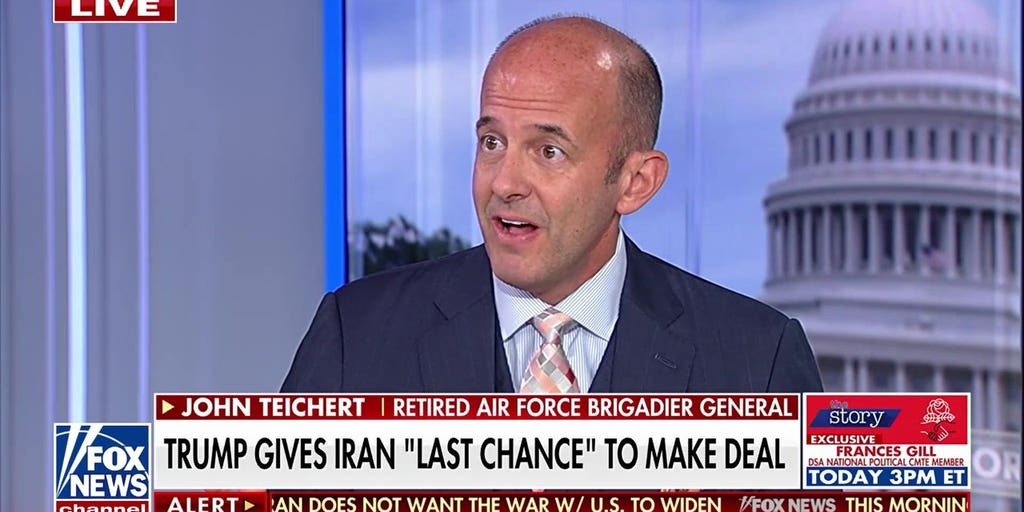
President Donald Trump has issued a stern warning to Iran, stating that the nation is on its “last chance” to reach a nuclear agreement. This assertion comes as retired Air Force Brigadier General John Teichert elaborates on the current administration’s approach to Iran during an appearance on the program “America Reports.” The topic highlights the complexities of U.S. foreign policy and the broader implications of Iran’s nuclear aspirations on global security.
U.S.-Iran Relations: A Critical Juncture
The relationship between the United States and Iran has been fraught with tension for decades. Currently, the prospect of Iran developing nuclear weapons poses significant risks not only to the region but also to international stability. President Trump’s declaration underlines the urgency of the situation, emphasizing that this may be Iran’s final opportunity to negotiate a favorable agreement. The hope is that diplomatic efforts can avert a potential conflict and lead to a lasting resolution that ensures peace and security.
Understanding the Deterrence Strategy
Retired Brigadier General Teichert has offered insights into the U.S. strategy regarding Iran, highlighting the principles of deterrence and credibility. The concept of deterrence is paramount, as it serves as a mechanism to prevent adversaries from taking aggressive actions through the demonstration of potential consequences. Establishing a credible threat can influence Iran’s decision-making processes, compelling it to reconsider its nuclear ambitions and engage constructively in negotiations.
Moreover, the credibility of the U.S. stance is vital. For any agreement to be effective, Iran must believe that the U.S. is serious about its commitments while also showcasing the consequences of failing to comply. This dual strategy aims to maintain pressure on Iran while leaving a door open for diplomacy.
The Role of International Diplomacy
International diplomacy plays a crucial role in negotiations with Iran. It requires cooperation not only from U.S. allies but also from global powers that have interests in the region. The involvement of other nations can help strengthen the bargaining position of the United States and increase the likelihood of a comprehensive and binding deal.
Efforts to engage Iran must be multifaceted, addressing not just nuclear capabilities but also regional destabilization activities. A well-rounded approach that combines diplomatic initiatives with economic and political pressure may provide the necessary leverage to secure a deal.
In conclusion, President Trump’s warning to Iran marks a decisive moment in U.S. foreign policy regarding nuclear proliferation. The comments made by retired Brigadier General Teichert further emphasize the importance of a credible deterrence strategy and the need for cohesive international diplomacy to navigate this complex issue. As the situation continues to unfold, the world watches closely, hopeful that a peaceful resolution can be achieved.