
Israeli Prime Minister Benjamin Netanyahu has emphasized that Israeli forces will remain stationed in Gaza until Hamas completely disarms. This statement reflects ongoing tensions and differing perspectives between Israel and the U.S. regarding recent disarmament negotiations.
Disarmament Disputes and Military Strategy
In comments shared on social media, Netanyahu indicated that the current Israeli stance diverges from the conditions set by the Trump administration in a recently proposed deal focused on disarming Hamas. This agreement suggested a reciprocal arrangement where Hamas would initiate disarmament, while Israel would cease military operations and begin withdrawing from the region. Netanyahu, however, contends that a full disarmament of Hamas must occur prior to any Israeli withdrawal, asserting that Israeli forces will take all necessary actions to safeguard their territory and citizens.
Netanyahu made it clear that Israel had not endorsed the draft sent by the Trump administration, instead mentioning that he provided feedback. “This is our position,” he stated, reinforcing that Israel is committed to its national interests. The dialogue surrounding these military strategies underscores the complexities in achieving a sustainable resolution in the ongoing conflict.
Tragic Recoveries Amidst Continuous Conflict
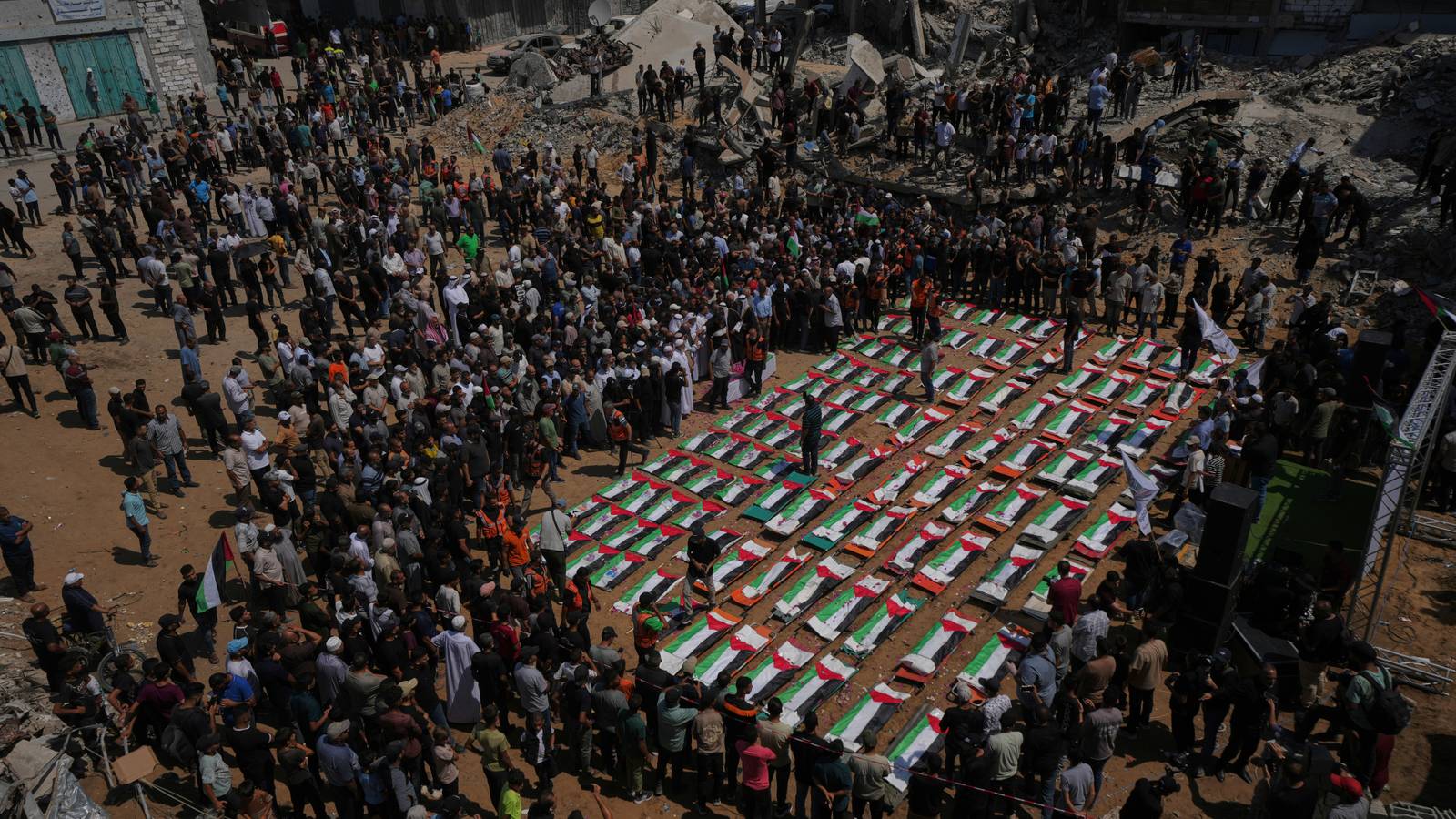
On the same day, Palestinians conducted a mass funeral for over 100 victims whose remains were recently recovered following a catastrophic Israeli airstrike in Gaza. This attack, which occurred on November 22, 2023, resulted in over 300 fatalities, marking one of the deadliest incidents during the conflict. Initial recovery efforts identified around 40 bodies soon after, but many were buried under rubble, making their retrieval challenging. The sheer scale of the loss and the delays in reporting these casualties reflect the overwhelming chaos that has characterized this conflict.
As recovery efforts resumed, a total of 112 victims were identified, including approximately 40 children, according to Gaza’s Civil Defense. Tragically, reports indicate that 157 additional bodies remain unaccounted for. Relatives like Taysir al-Hassayna, who mourned the loss, expressed the deep pain of loss, remarking that their loved ones merely sought safety in their homes.
Fragile Ceasefire and Humanitarian Crisis
The fragile ceasefire that was implemented in October has allowed for some recovery operations; however, it has not entirely halted violence. Since the ceasefire began, at least 1,252 individuals have reportedly lost their lives in Gaza. The health ministry, which operates under the Hamas-led government, continues to maintain detailed records of casualties, providing insights deemed reliable by various international observers. Notably, while the ministry does not differentiate between militants and civilians, it underscores that a significant proportion of the deceased are women and children.
As humanitarian conditions in Gaza deteriorate, the majority of its 2 million residents are now displaced, often living in inadequate tent camps with reports of disease outbreaks arising from overcrowding. Conditions have worsened due to ongoing accusations from both sides regarding ceasefire violations, leading to complications in further negotiations.
Despite the intention to stabilize the situation, Hamas has retained its military capabilities, while Israeli forces maintain a controlling presence over a significant portion of the territory. Discussions around a renewed disarmament agreement led by the U.S.-backed Board of Peace have yet to yield satisfactory outcomes, as tensions continue to strain efforts for long-term peace in the region.