
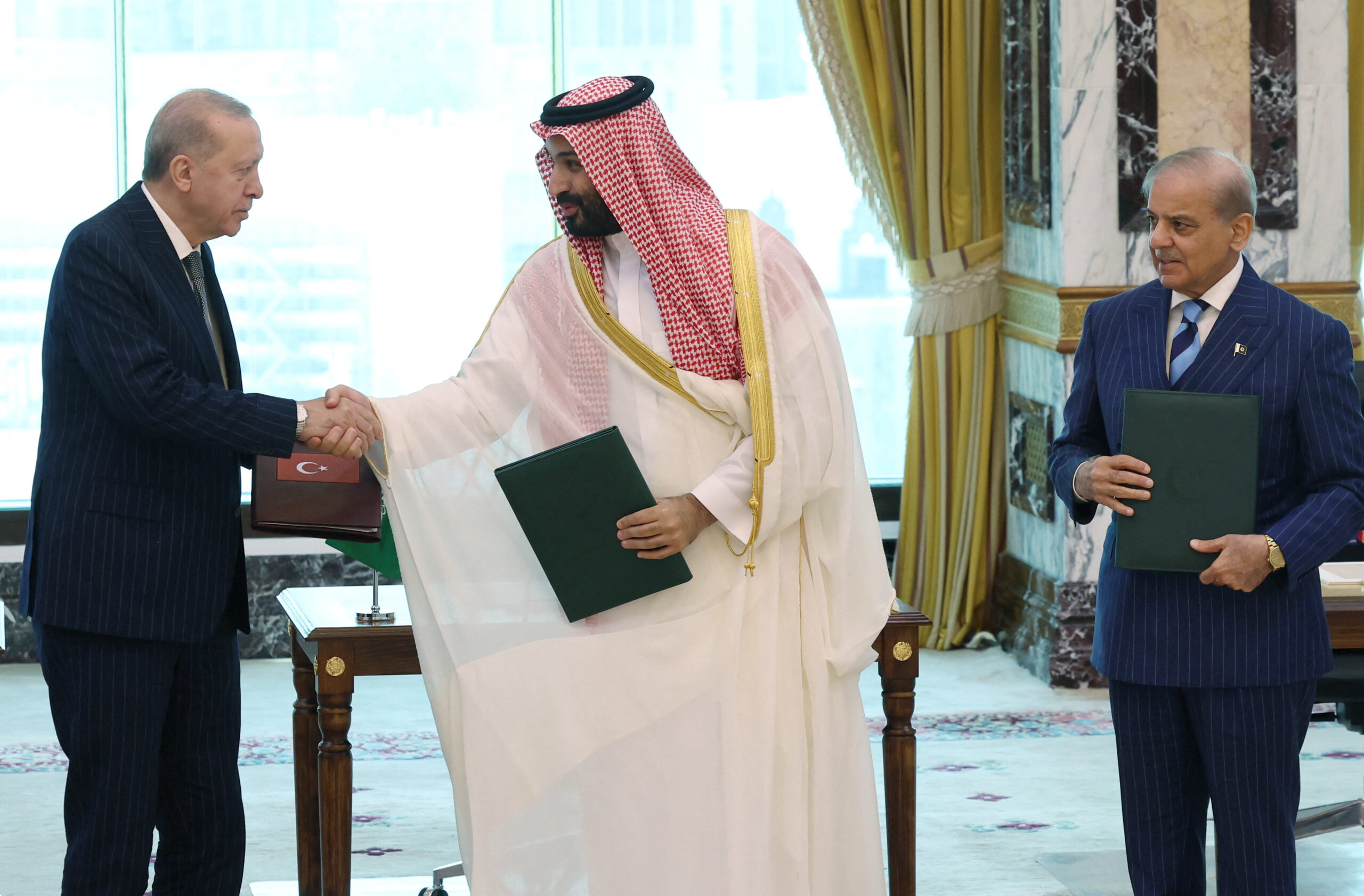
Leaders from Saudi Arabia, Pakistan, and Turkey recently took a significant step towards regional security by signing the Mecca Joint Defense Agreement. This treaty marks a collaborative approach, asserting that any armed aggression against one of these nations will be treated as an attack on all three. This agreement emerges amidst rising tensions in the region, particularly concerning threats posed by Iran and ongoing conflicts involving Houthi groups in Yemen. In an era where Gulf States increasingly question the United States’ reliability as a security ally, this pact aims to reinforce defense cooperation among these key players.
Significance for Saudi Arabia
This new agreement is not a traditional military alliance akin to NATO but does hold considerable importance for Saudi Arabia. By solidifying ties with Pakistan and Turkey, Riyadh seeks to enhance its strategic options against a more assertive Iran and navigate the complexities of U.S. influence in the region. The kingdom’s efforts to create a network of alliances indicate its intention to assert regional leadership. By hosting this agreement’s signing in Mecca, Saudi Arabia positions itself as a stabilizing force amid the perceived aggressiveness of both Iran and Israel.
Historically, Saudi Arabia has mutual defense arrangements with both Pakistan, established in 2025, and the Gulf Cooperation Council member states since 2000, although these have not mirrored NATO’s Article 5 responses effectively. While the agreement may lead to some strengthened security measures from Pakistan, such as troop deployments, the real value lies in Saudi Arabia’s diplomatic positioning and its ability to influence negotiations, especially during escalating conflicts with Iran.
Implications for Pakistan
For Pakistan, this agreement deepens its involvement in Middle Eastern security dynamics. Following its recent defense pact with Saudi Arabia, Islamabad is also actively enhancing military cooperation with regional allies like Egypt and Jordan. This newfound alliance boosts Pakistan’s stature as a significant player in Middle Eastern affairs, a key objective for its leaders. Being perceived as a constructive global influencer strengthens Pakistan’s narrative in the international arena, shifting focus away from its internal challenges related to governance and terrorism.
Furthermore, this agreement helps solidify Pakistan’s strategic interests, given the region’s economic importance to the country. The Middle East is not only home to vital allies but also serves as a source for significant energy imports and hosts a large expatriate community. Additionally, improved relations with Saudi Arabia may positively influence Pakistan’s stance with the United States, especially given Washington’s interest in collaborative regional defense strategies against Iran.
Turkey’s Strategic Perspective
The Mecca Joint Defense Agreement marks a pivotal moment for Turkey as it expands its network of alliances across the Middle East and South Asia. This pact enhances Turkey’s existing relationships with Qatar, Syria, and Libya, reinforcing the notion of a collective Muslim defense framework. The agreement signifies a unified stance against external powers that may disturb regional stability, notably emphasizing a collective deterrence against threats from Iran and Israel.
This collaboration provides Turkey with substantial military benefits, diplomatic leverage, and opportunities for defense industry growth. Collaborating with two countries, one of which is a nuclear power, serves as a strategic counter to regional adversaries. The implications of this agreement extend to economic considerations, positioning Turkey favorably in energy and commerce between India and Europe. The synergies between defense partnerships and business ties are poised to bolster Turkey’s influence, paving the way for greater geopolitical relevance in future discussions.
The Mecca Joint Defense Agreement exemplifies a strategic shift in regional alliances, fostering a climate of cooperation against common threats while also enhancing the individual security and diplomatic aspirations of the involved nations.