
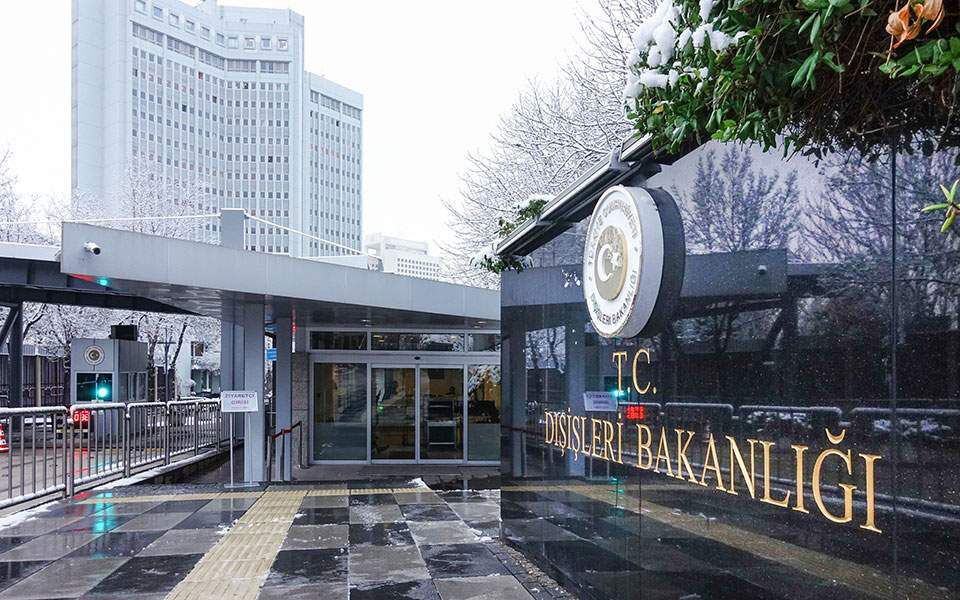
Turkey has recently responded to Greece’s newly established Special Spatial Planning Framework for Tourism, asserting that this initiative holds no legal weight regarding Turkish interests. The Turkish Foreign Ministry criticized Greece for allegedly leveraging environmental legislation for political leverage.
Turkey’s Stance on Greece’s Framework
According to Turkish Foreign Ministry spokesman Oncu Keceli, the Special Spatial Planning Framework for Tourism, unveiled by Greece, is ineffective for Turkey in light of ongoing territorial disputes in the Aegean Sea. Keceli emphasized that Greece’s claims regarding geographical formations in the area do not alter Turkey’s established legal stance, particularly concerning territories not formally ceded to Greece through international treaties.
Keceli condemned Greece’s purported attempts to manipulate environmental concerns for political gain. He asserted that such actions are counterproductive and will not influence Turkey’s resolute legal position. The Turkish government maintains that unilateral actions in enclosed seas like the Aegean or Mediterranean should be avoided, encouraging collaborative efforts among coastal nations to tackle environmental challenges.
Emphasizing Cooperation
The Turkish statement stressed Turkey’s willingness to engage cooperatively with Greece, given that both countries are adjacent coastal states in the Aegean. It reiterated Turkey’s commitment to resolving issues through a “sincere and comprehensive approach,” rooted in international law and mutual respect, as emphasized in the Athens Declaration on Friendly Relations and Good-Neighborliness, signed in December 2023.
On the other hand, Greece finalized its new framework on Friday, intending to manage tourism development effectively. The framework is designed to mitigate excessive development in popular tourist areas while promoting investment in lesser-known destinations. This update replaces an outdated system that had been pending revision since 2012, aiming to categorize tourism zones based on their intensity and environmental impacts.
Key Features of Greece’s New Framework
The newly approved framework, coordinated by the environment and tourism ministries, introduces stricter regulations for constructing new facilities in heavily populated tourist regions. It includes guidelines for modernizing existing hotels and converting traditional buildings into tourism-related spaces, enhancing sustainability and quality in the tourism sector.
Specific measures are also outlined for smaller islands, coastal areas, and Natura 2000 sites, which are vital for preserving biodiversity. This framework mandates environmental carrying-capacity assessments for specific planning activities, ensuring that the ecological impacts of tourism developments are carefully considered.
As the two nations navigate the complexities of their relationship, the discourse surrounding tourism and environmental management remains a critical component of their interactions. While Greece seeks to establish a regulated framework for tourism, Turkey stands firm on its legal rights and the importance of cooperative dialogues to address shared environmental concerns.