
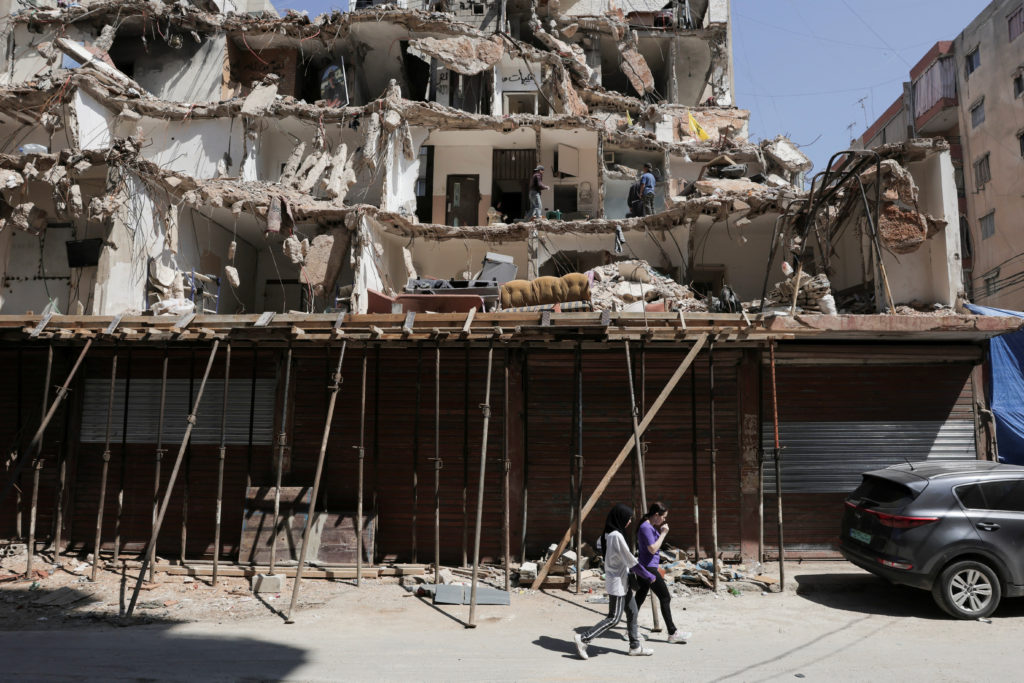
Escalating Tensions: Israeli Airstrikes and Hezbollah Rocket Attacks in Lebanon
Recent events in Lebanon have highlighted a worrying escalation in violence between Israel and Hezbollah. This resurgence of hostilities has resulted in loss of life and has reignited concerns regarding stability in the region.
Casualties from Airstrikes
On Friday, Israeli airstrikes targeted southern Lebanon, leading to the tragic deaths of at least five individuals. According to Lebanon’s Health Ministry, four casualties occurred in the village of Toura, located near the coastal city of Tyre, while another airstrike in Kfar Chouba claimed the life of a paramedic serving with the Lebanese Civil Defense. Furthermore, additional reports indicated that eight others sustained injuries from these bombardments. These strikes follow warnings from the Israeli army, which had advised residents in six villages, including Toura, to evacuate in anticipation of military actions.
In response to the airstrikes, Hezbollah countered by launching a series of rockets aimed at northern Israel. The Israeli military reported that they intercepted one of these rockets while the remainder landed in unpopulated areas, fortunately resulting in no reported casualties.
Ceasefire Violations
The escalation of violence comes despite a ceasefire established on April 17, which had temporarily quelled hostilities. This recent exchange marks the first airstrike on Beirut’s southern suburbs since the ceasefire was instituted. The Israeli military claimed responsibility for the deaths of Ahmed Balout, a commander in Hezbollah’s Radwan Force, among others. As military actions intensify, Hezbollah did not issue an immediate statement in response to these claims.
Israeli forces have reportedly inflicted significant damage on Hezbollah in recent months, claiming more than 85 militants killed and the destruction of 180 sites associated with the group. However, this assertion lacks publicly presented evidence, raising questions about the accuracy of these military reports.
International Perspectives and Responses
In light of the escalating violence, Lebanese President Joseph Aoun called upon European nations to apply pressure on Israel to honor the ceasefire and refrain from demolishing homes in occupied villages. He emphasized Lebanon’s commitment to the ceasefire while advocating for negotiations to address ongoing tensions.
Aoun’s discussions with European officials brought attention to the notion that both Israel and Hezbollah are putting Lebanon in a challenging position. European Commissioner for Equality, Hadja Lahbib, underscored the urgency for Hezbollah to disarm and for Israel to limit its airstrikes, particularly those targeting humanitarian facilities.
As Lebanon prepares to engage in discussions with Israel in Washington, these meetings could mark a crucial turning point in resolving long-standing issues. The direct talks, a first in over three decades, follow a history of hostilities between Lebanon and Israel, rooted in the latter’s creation in 1948.
In summary, the recent conflict outbreaks between Israel and Hezbollah underscore the fragile stability in the region and the pressing need for diplomatic negotiations. As both sides remain entrenched in their positions, the international community’s role in mediating discussions could be vital for establishing a more lasting peace.