
Escalating Tensions in the Strait of Hormuz
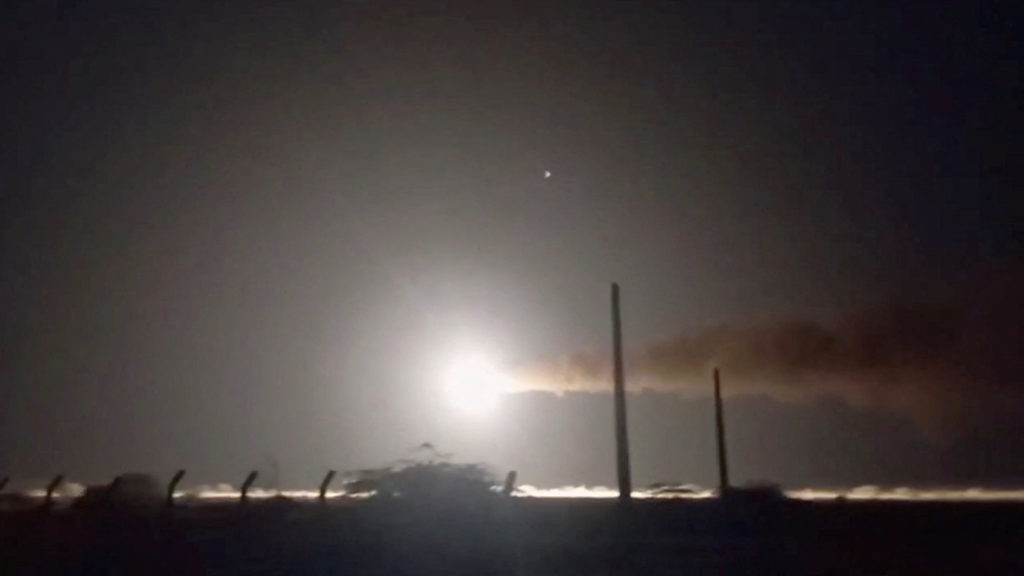
The ongoing conflict in the Strait of Hormuz has seen a significant uptick in hostilities recently, with the United Arab Emirates (UAE) reporting a retaliatory strike against Iranian missile attacks. This incident underscores the fragility of a ceasefire that had only been in place for about a month. The situation continues to escalate as nations navigate complex regional dynamics and military engagements.
UAE’s Defense Response
On Friday, the UAE’s Defense Ministry confirmed that air defenses intercepted two ballistic missiles and several drones launched by Iranian forces, resulting in injuries to three individuals. The specifics of whether all threats were neutralized remain unclear, prompting local authorities to advise the public to avoid areas where debris may have fallen. Meanwhile, the U.S. military intervened in the situation, claiming to have thwarted attacks on three Navy ships while also targeting Iranian military installations in the strait. The U.S. has accused Iran of attempting to block a critical maritime route, which is vital for global energy supplies, leading to a notable increase in fuel prices and economic instability worldwide.
U.S. Military Engagements
In a broader display of military might, the U.S. reported disabling two Iranian tankers that attempted to breach a blockade of its ports. While President Donald Trump referred to these U.S. strikes as mere “love taps,” the administration has reiterated a commitment to escalate military action should Iran decline to negotiate an agreement that permits safe passage through the strait and addresses Iran’s nuclear ambitions. In contrast, Iran’s Foreign Ministry condemned the U.S. actions as a violation of the ceasefire, illustrating the deteriorating situation.
As Washington anticipates a response from Tehran regarding peace negotiations, senior officials express hope that this will lead to a serious dialogue. U.S. Secretary of State Marco Rubio indicated the importance of a constructive response from Iran during a press briefing, emphasizing the urgency of resolving the ongoing hostilities.
Environmental Concerns and International Implications
Compounding geopolitical tensions, satellite imagery has revealed an alarming oil slick originating from Iran’s Kharg Island, raising ecological concerns. The slick, stretching over approximately 95 square kilometers, presents a potential threat to sensitive marine areas. Experts warn that if the slick continues to drift, it could aggravate environmental issues in the region. The Pentagon has yet to confirm whether U.S. military operations or strikes have contributed to the spill, adding another layer of complexity to the ongoing tensions.
On the international stage, the formation of a new Iranian agency tasked with vetting ships passing through the strait has raised eyebrows. U.S. officials, including Rubio, criticized this development as “unacceptable,” arguing it compromises the principle of free maritime navigation in international waters. With commercial vessels unable to traverse the strategically essential waterway, the potential consequences for global trade and energy markets are profound.
Future of Diplomacy and Regional Stability
As discussions around peace negotiations continue, various nations are seeking to mediate and extend the fragile ceasefire. Reports indicate ongoing communication between Pakistan and both the U.S. and Iran to foster dialogue and promote stability. Meanwhile, Israeli and Lebanese representatives are also preparing for discussions, suggesting that broader regional dynamics may be in play, reflecting a complex interlinking of conflicts.
In conclusion, the situation in the Strait of Hormuz remains dire, characterized by escalating violence, environmental concerns, and diplomatic negotiations. As the world watches closely, the implications of these developments could extend well beyond the immediate region, challenging global peace and security.