
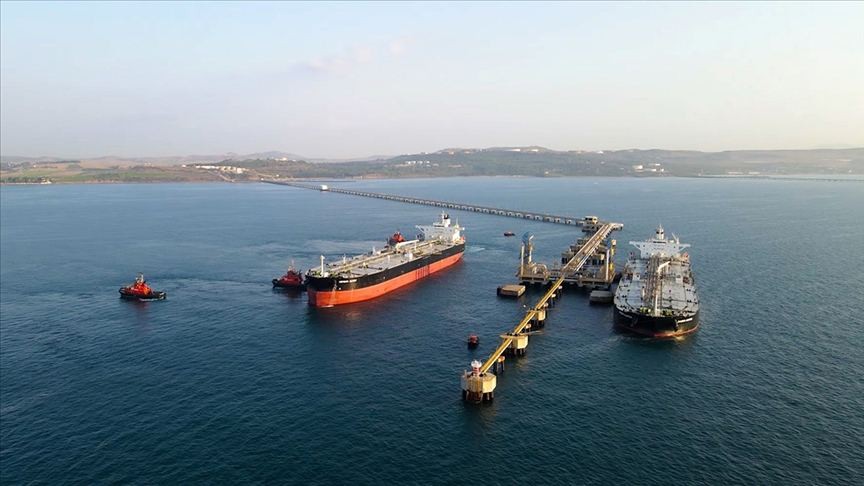
The current state of Iraq’s oil exports is dire, primarily due to its heavy reliance on the Strait of Hormuz. With over 90% of the national budget depending on oil export revenues, securing an alternative pipeline has become essential for Iraq’s economy, especially amid ongoing blockades. This situation not only results in immediate revenue losses for Iraq, but also threatens to stunt its long-term oil production capabilities as storage facilities reach their limits.
New Oil Export Agreement with Turkey
On August 1, 2023, Iraq and Turkey reached a temporary agreement allowing Iraqi oil to flow through the Iraq-Turkey Pipeline (ITP). This newly signed one-year contract, while offering a reprieve, has limitations. Currently, the agreement targets a flow of 750,000 barrels per day (bpd), significantly greater than the existing output of 170,000-200,000 bpd. However, this is still only half of the pipeline’s total capacity of 1.5 million bpd. Following the agreement, oil tanker operations resumed, with shipments swiftly making their way to European and American markets, indicating a shift in Iraq’s export focus away from its traditional Asian partners like China.
Demand for Iraqi crude remains robust in Western markets, largely to compensate for reduced supplies from the Black Sea region and Russia. Iraq’s Kirkuk blend, which is a medium sour oil, serves as an effective alternative for these buyers who are looking to avoid the logistics involved in transporting oil through commercial chokepoints like the Strait of Hormuz.
The Challenges Ahead
While the new agreement marks a significant step forward, multiple challenges loom large. Previous arbitration rulings halted oil flows from Iraq to Turkey for over two years due to Turkey’s alleged violations of the 1973 Crude Oil Pipeline Agreement. Turkey’s decision to allow the Kurdish region to independently export oil without Baghdad’s consent escalated tensions, further complicating relationships between the two governments. Baghdad has historically resisted any independent oil sales by the Kurdistan Region, fearing it could embolden the KRG’s ambitions for full autonomy.
The geopolitical implications of this situation cannot be overlooked. The United States and European Union have significant interests in ensuring stable energy supplies from Iraq. Conversely, countries like Russia and China see opportunities to diminish Western influence in the region by fostering stronger ties with Baghdad. Meanwhile, the KRG has ambitions of its own, as it aims to assert greater financial independence through oil exports. The long-standing tension between these parties continues to complicate agreements on oil flow and revenue management.
Future Prospects
The sustainability of the new oil deal hangs in a precarious balance. Given the past complications and unresolved disputes, it’s uncertain whether the agreement will endure beyond its initial term. Iraqi officials and analysts have expressed skepticism about the viability of maintaining cooperation with Turkey, especially if Turkey fails to meet its end of the bargain. Furthermore, the demand for multi-tiered joint ventures in the energy sector remains high, indicating that both parties view their relationship as essential for future energy stability.
In this complex web of interests, the U.S. and its allies continue to play a critical role in shaping energy policies in Iraq, especially as they aim to counterbalance the influence of China and Russia. Ultimately, the ability of Iraq to diversify its export routes and stabilize its oil industry will be crucial for its economic resilience and political stability in the years to come.