
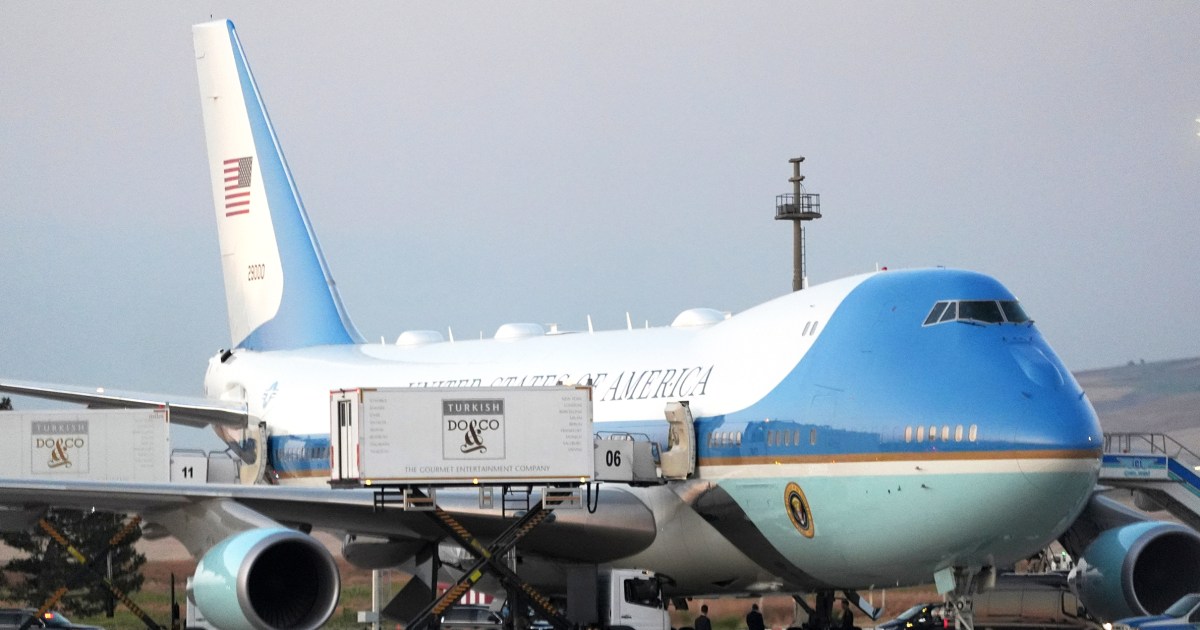
Last month, former President Donald Trump was secretly evacuated from Turkey using a military aircraft due to heightened security concerns stemming from tensions with Iran. This covert operation has sparked considerable discussion regarding presidential safety protocols and travel logistics.
Details of the Covert Operation
According to reports first published by *The Washington Post*, Trump was discreetly transported to a C-32 plane using a catering truck, which allowed his departure to remain hidden from public view. This aircraft flew him from Ankara to the Mildenhall Air Force Base in the United Kingdom. After arriving in the U.K., Trump quietly switched planes again, moving back to the older Air Force One jet. This detour was executed to keep the details of his travel under wraps, showcasing the government’s ability to implement diversionary tactics to protect the President.
During a follow-up, White House communications director Steven Cheung confirmed the authenticity of the reports and emphasized the state-of-the-art security features of the newer Air Force One jet. While Cheung did not dispute any specific details from The Washington Post, he underscored the constant threats faced by the President, stating that “many enemies of America have their sights on him.” This acknowledgment raises critical questions about existing security measures for high-profile figures.
Security Assessments and Congressional Concerns
As the details of Trump’s travel emerged, some lawmakers voiced their apprehensions. Senator Richard Blumenthal highlighted that the undisclosed nature of Trump’s travel was “downright scary,” urging for a congressional briefing. This request suggests a need for transparency regarding the measures taken to ensure not only the President’s safety but also that of his staff and the reporters traveling with him. With challenges like these, the importance of clarity becomes crucial in maintaining public confidence in national security apparatuses.
Cheung reiterated that the newer Air Force One is equipped with advanced security protocols designed to safeguard the President effectively. However, amidst these assurances, questions linger about why Trump opted for the older aircraft, especially given that the newer model was presented as a superior solution. It was reported that security considerations had led to this decision, as advised by the Secret Service in consultation with military officials.
Historical Comparisons and Future Implications
The U.S. government has previously executed similar covert operations, albeit with varying levels of transparency post-event. For instance, after 9/11, President George W. Bush was taken to an undisclosed location, which was later revealed to be a military facility. Such historical precedents emphasize the ongoing evolution of security measures taken by the government as threats change and become more complex.
Trump’s journey raised eyebrows, particularly when he was seen boarding the older Air Force One under the watchful eyes of journalists, who were later instructed to close their window shades. His quip about being “on a dangerous flight” due to “sleaze bags” exemplified the tension surrounding his presidency and his ongoing awareness of threats.
In the aftermath, discussions surrounding the Qatari-donated jet’s upgrades and its eventual fate are pivotal. The plane, intended for modern enhancements to optimize security, poses its own set of complications and implications regarding diplomatic relationships and resource allocation.
In conclusion, this covert operation underscores the complex interplay of security, politics, and public perception in the modern age. As more details unfold, the dialogue concerning presidential safety and operational transparency is likely to continue, reminding us of the precarious balance between governance and security in a global context.