
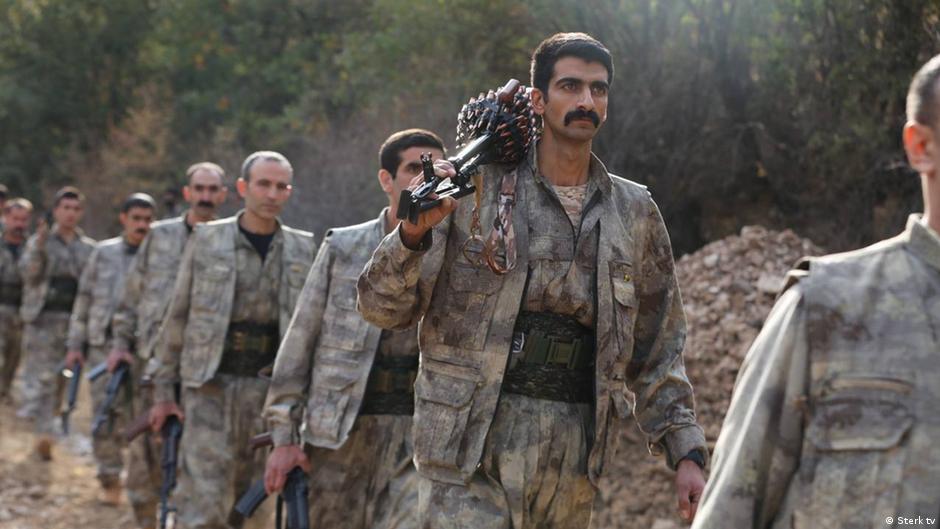
One year after the Kurdistan Workers’ Party (PKK) famously set their weapons ablaze, signaling a potential move towards disbandment, the Kurdish populace has increasingly urged the Turkish government to engage in meaningful political discussions. This call for change has recently gained traction with the passage of a significant legislative bill aimed at fostering peace and stability.
Legislative Milestone Toward Peace
The Turkish parliament has approved a bill initiated by the conservative Islamic ruling party, the AKP, in coalition with its ultranationalist partner. Dubbed the “Law on Strengthening National Solidarity and Social Integration,” this new legislation lays the groundwork for ongoing peace negotiations between the state and PKK. Official reports indicate that 467 out of 592 members of parliament voted in favor, highlighting this as a pivotal moment in Turkish politics. The legislation allows for the potential suspension of sentences for PKK affiliates, contingent upon their disarmament and disbandment, thereby fostering a sense of national unity.
The pro-Kurdish Democratic Regions Party (DEM) supports the bill but insists that it signifies merely a starting point for more expansive reforms. They argue that while the legislation is beneficial, it must be followed by further political advancements to ensure long-lasting peace.
Divided Opinions Across the Political Spectrum
However, not everyone welcomes this move. The ultranationalist IYI party expressed fierce opposition during parliamentary discussions, with delegate Ayyuce Turkes accusing the government of hurrying a significant bill without sufficient consideration. The divisions within Turkish society and its parliament reveal stark contrasts; while the ruling coalition backs the peace process, the IYI party vehemently rejects it, showcasing how contentious attitudes towards the PKK persist. The MHP, historically critical of peace initiatives, has shifted views and now supports this latest effort, marking a significant evolution in Turkish political dynamics.
Analysts suggest that this change is influenced by various regional security conditions, including the evolving political landscapes in Syria and the broader Middle East. Given these complexities, it appears that a more peaceful coexistence with the Kurdish population could enhance Turkey’s domestic and foreign policy flexibility.
Key Provisions of the Law
The newly enacted law applies to various offenses related to PKK membership, including propaganda and financing. For those facing prison sentences of up to 15 years, their enforcement may be suspended for up to five years, and for longer sentences, up to 10 years. Current investigations on these matters will also be halted. Advocates suggest that this law could affect as many as 3,600 prisoners, provided the PKK completely disbands and surrenders its weapons—a process that requires verification from Turkish authorities and endorsement by the National Security Council.
Notably, individuals convicted of serious crimes prior to 2005, as well as those involved in homicide, are excluded. This stipulation means that PKK leader Abdullah Ocalan remains unaffected by these legislative changes, even as he has previously called for disarmament and political resolution.
Concerns Around Democratization
The PKK has labeled this bill a preliminary step, expressing dissatisfaction with its limited scope. They emphasize that without the opportunity for Ocalan to lead the peace dialogue freely, true disarmament will remain elusive. The Kurdish movement argues that more profound democratization reforms are required to facilitate a genuine dialogue and reconciliation process. For those in the Kurdish community, ongoing criminalization of returning fighters and exiled politicians poses a significant barrier to peace.
Political analysts criticize the law for its failure to present concrete democratic solutions to the Kurdish question. There are growing concerns that, as the government engages in peace talks, it simultaneously increases judicial pressure on opposition parties like the CHP, destabilizing the political landscape further. Multiple leaders, including prominent CHP figures, face legal challenges that critics describe as politically motivated.
Erdogan’s Central Role in the Peace Process
Experts highlight President Recep Tayyip Erdogan’s substantial influence over the peace initiative. Although the process is managed by a committee involving senior ministers and intelligence heads, many speculate that Erdogan’s leadership will dictate the pace and direction of negotiations, given his position as head of the National Security Council. Observers note that Erdogan’s prior experiences with failed peace talks have likely led him to centralize control of the current discussions.
As Turkey approaches the 2028 elections, there is a palpable concern regarding the potential backlash from the public against any significant concessions made to the PKK. Political experts predict that the government may proceed cautiously, allowing gradual returns and political activities for former PKK fighters based on public sentiment.
This ongoing situation in Turkey reveals a complicated interplay of political machinations, societal divisions, and the quest for lasting peace. The journey toward reconciliation will require not only legislative changes but also a broader commitment to democratization and dialogue across the political spectrum.