
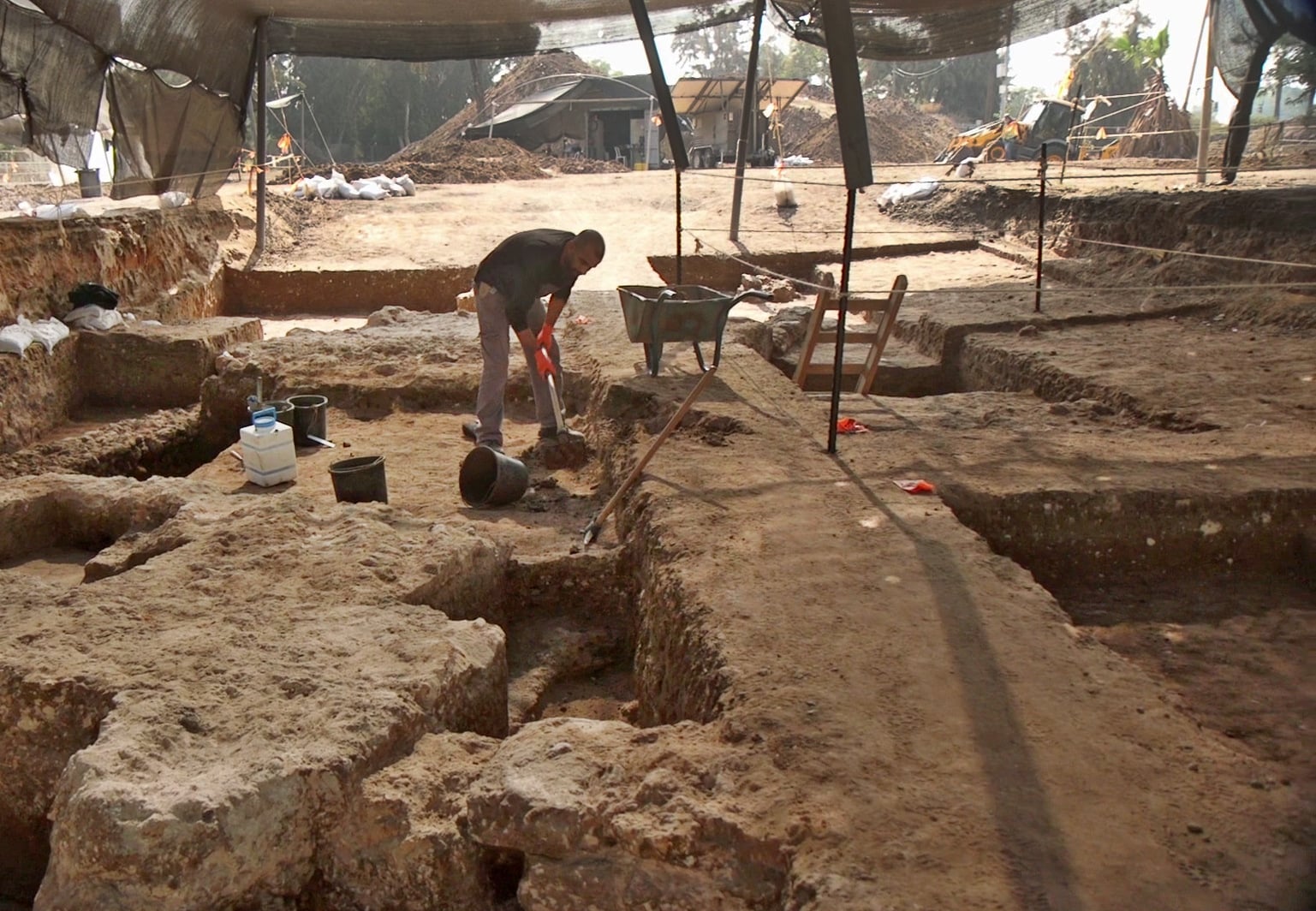
A recent salvage excavation in Ramat Gan, Israel, prior to construction of a new bus terminal, has led to significant archaeological discoveries. Archaeologists from the Israel Antiquities Authority (IAA) uncovered an extensive industrial and commercial complex that dates back approximately 1,300 years, providing fascinating insights into the region’s early economic activities.
Unveiling an Ancient Economic Hub
For several months, the excavation took place at the parking lot of the city’s Winter Stadium, where researchers uncovered a well-preserved network of interconnected streets filled with shops and warehouses. They discovered large pottery kilns and various industrial installations, indicating a substantial scale of production. According to Yoav Arbel, one of the excavation directors, this site offers a unique perspective on Israel’s economic landscape during the early Islamic period. He noted, “This find was quite unexpected and exceeded our expectations.”
The layout of the complex demonstrates meticulous planning. Streets intersect at precise right angles, lined with rooms designated for commercial use, along with plastered industrial spaces and kilns. Such organization suggests the involvement of engineers and possibly governmental oversight during its establishment. Arbel stated that the systematic arrangement even allowed archaeologists to predict the locations of additional walls during the excavation process.
Artifacts Shed Light on Daily Life and Trade
The excavation yielded a wealth of artifacts, including pottery vessels, coins, and even fragments of glassware. Among the more intriguing finds were intact oil lamps and tools like iron pickaxe heads, reflecting the community’s daily life and commerce. According to Arbel, these artifacts have helped establish the dating of the site with considerable confidence, even though scientific dating methods, such as radiocarbon dating, are still pending.
The industrial zone is believed to have thrived for around 150 years during the Umayyad and Abbasid periods prior to being abandoned in the late 9th century. Although the reasons for its decline remain uncertain, archaeological evidence suggests it was resettled in the 10th century, taking on a more domestic character with the addition of residential buildings.
Strategic Location and Cultural Diversity
Notably, the site is strategically situated along a critical route that connected key cities of the time, like Jaffa and Jerusalem. Arbel emphasized that the complex was likely built to cater to travelers and merchants passing through the region, although its broader distribution network is still unclear. The population during the period was diverse; it included Muslims, Christians, and Samaritans, but the precise ownership and operation of the facilities remain unknown.
Arbel pointed out that the Yarkon region likely had a significant Samaritan presence, descendants of a population that flourished in the area prior to the Muslim conquest in the 7th century. This cultural complexity adds an intriguing layer to the understanding of life within the industrial complex.
Future Preservation and Ongoing Research
The excavation is now concluded, but Arbel believes there is much more yet to uncover at the site. As scientists document the findings, plans are in place to cover the excavation, ensuring its preservation while construction of the bus terminal proceeds. The ongoing archaeological work in surrounding areas has already uncovered more evidence, suggesting that this newly discovered complex may be part of a larger network of economic activity in early Islamic central Israel.
This discovery is not just a window into the past; it highlights the region’s rich historical narrative and the importance of preserving such sites for future generations. As research continues, archaeologists hope to piece together the broader economic landscape that once thrived in this area, shedding light on an era that shapes our understanding of Israel’s historical development.