
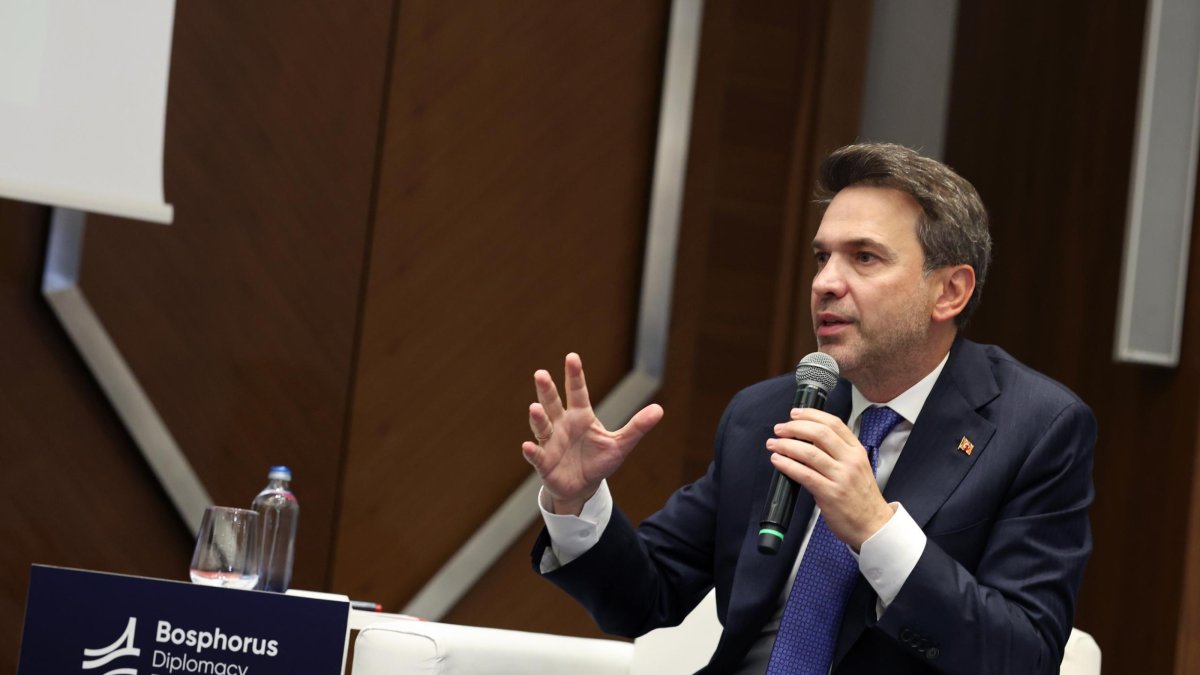
Türkiye and Saudi Arabia are set to enhance their collaboration in renewable energy with a new agreement aimed at adding 3,000 megawatts (MW) to their existing projects. This agreement, as shared by Energy and Natural Resources Minister Alparslan Bayraktar, will increase their total planned capacity to 5,000 MW for renewable energy in Türkiye. The announcement coincided with the upcoming U.N. Climate Conference in Antalya, known as COP31, which is scheduled for November.
Strengthening Renewable Energy Capacity
Previously, the two nations had signed off on a 2,000 MW agreement, but this new commitment significantly boosts their engagement in sustainable energy. Minister Bayraktar emphasized the importance of this collaboration during a statement released by the Energy and Natural Resources Ministry. Under President Recep Tayyip Erdoğan’s leadership, Türkiye has made considerable strides in energy and mining over the past 25 years, achieving what Bayraktar described as a century’s worth of development in a fraction of the time.
Türkiye’s installed electricity capacity has increased dramatically, quadrupling from 32,000 MW to 126,000 MW in the last two decades. This impressive growth makes Türkiye the third-largest in Europe for installed electricity capacity, trailing only France and Germany. Additionally, the nation has successfully commissioned approximately 95,000 MW of new energy capacity over the past 24 years, positioning itself as a key player in the energy sector.
Advancing Natural Gas and Oil Production
Bayraktar highlighted that natural gas availability has expanded significantly, with every province, all 81 of them, now having access compared to just five in 2002. The country’s domestic production in the Black Sea region is projected to increase substantially, with expectations to double this year and quadruple by 2028. The goal is ambitious but clear: by 2028, Türkiye aims to supply 17 million households with its own natural gas.
In terms of oil production, the Gabar field in southeastern Türkiye has seen a remarkable increase, now exceeding 83,000 barrels per day. The area employs over 3,500 individuals, predominantly from local communities, thereby fostering economic growth and reducing Türkiye’s reliance on energy imports. Minister Bayraktar expressed optimism about the potential of unconventional oil resources in Diyarbakır, where exploration is currently taking place. Success in this sector could lead to significant production increases.
Enhancing Regional Energy Security
As the geopolitical landscape remains tenuous, particularly concerning the Strait of Hormuz, Bayraktar noted that these challenges could open avenues for diversifying energy routes. During discussions with Iraqi Prime Minister Ali Falih al-Zaidi, plans were explored for transporting Iraqi oil through Türkiye’s Ceyhan terminal, a significant step toward regional collaboration in energy distribution.
Bayraktar also identified potential routes for Qatari gas that could flow through Saudi Arabia, Jordan, and Syria to Türkiye and then to Europe. The possibility of Kuwaiti oil reaching Türkiye is on the table as well. He pointed out that such crises could indeed create opportunities for Türkiye and the surrounding region to better position themselves in global energy markets.
In summary, Türkiye’s commitment to strengthening its renewable energy sector and enhancing oil and natural gas production is clear. With collaborative efforts alongside Saudi Arabia, Türkiye is positioning itself as a significant player in both regional and global energy markets. The country’s vision for energy independence and sustainable growth lays a promising foundation for the future.