
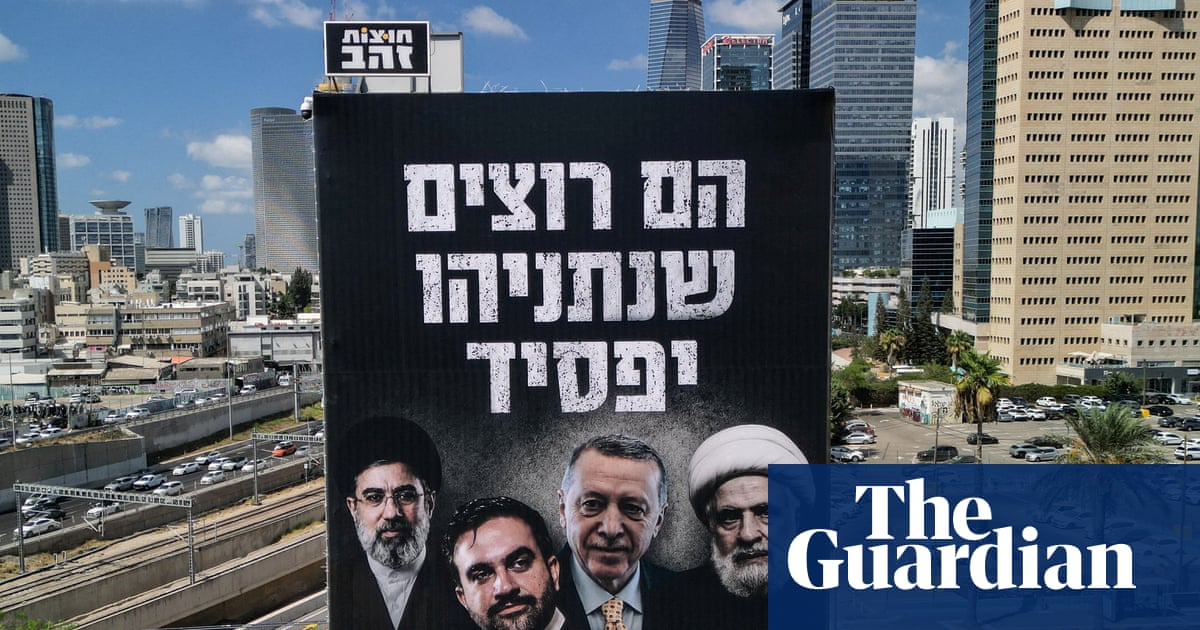
Benjamin Netanyahu’s party has recently stirred controversy by comparing New York City’s Mayor, Zohran Mamdani, to notable leaders of Iran and Hezbollah in a provocative campaign billboard. This imagery has fueled a dramatic escalation in the ongoing political tensions between the two figures as Israel prepares for significant elections.
Contentious Political Billboards
The advertisement displayed prominently in central Tel Aviv shows Mamdani alongside figures like Turkey’s President Recep Tayyip Erdoğan, Iran’s Supreme Leader Mojtaba Khamenei, and Hezbollah’s Naim Qassem. The message on the billboard reads, “They want Netanyahu to lose… Don’t let them win,” and prominently features the logo of Netanyahu’s right-wing Likud party. This move suggests a strategic attempt by Netanyahu to bolster his far-right coalition amidst intensifying political challenges as Israel heads toward elections following the dissolution of the Knesset, the country’s parliament.
Intensifying Rhetoric Between Leaders
Mamdani has emerged as a vocal critic of Israel’s actions in Gaza, a stance that gained traction during his mayoral campaign. He recently labeled Netanyahu a “war criminal” suggesting the Israeli leader ought to face justice at The Hague. The atmosphere grew increasingly charged when Mamdani called on U.S. authorities to pursue an international warrant for Netanyahu’s arrest if he attends the United Nations General Assembly in New York. This bold statement highlights Mamdani’s commitment to holding leaders accountable for their actions, further complicating his relationship with Netanyahu.
In response, Netanyahu accused Mamdani of inciting hatred and disrupting the previously bipartisan support for Israel among U.S. lawmakers. The Israeli Prime Minister expressed concerns that the rise of progressive Democrats, many of whom are aligned with Mamdani, poses a threat to Israel’s political and diplomatic standing in the U.S. Interestingly, recent polls indicate that Mamdani is gaining favor among American Jews, surpassing Netanyahu’s popularity, suggesting a shift in public sentiment that may impact future U.S.-Israel relations.
The Fallout of Political Statements
The feud transcends local politics, delving into broader geopolitical narratives. Netanyahu’s remarks about the United Kingdom, where he referred to it as “the Islamic republic of Britain” during a podcast interview, have fueled further allegations of Islamophobia and could alienate various demographics in both Israel and the U.S. As tension builds, Netanyahu’s use of incendiary imagery in campaign materials reflects his strategic necessity to galvanize support within his electorate.
The unfolding situation not only underscores the personal rivalry between Netanyahu and Mamdani but also highlights broader implications for international relations, especially given the stalled discussions surrounding a Gaza ceasefire. Amid ongoing complexities, including a recent meeting between Jared Kushner and Netanyahu that yielded no significant breakthroughs, the dynamics appear precarious as Mamdani remains silent on his portrayal in Netanyahu’s campaign.
This dispute reveals not just a clash between two leaders, but also highlights changing attitudes within the Jewish community and political circles regarding Israel’s policies. As Mamdani navigates this contentious landscape, the global reaction may play a crucial role in shaping future dialogues around peace and justice in the region.