
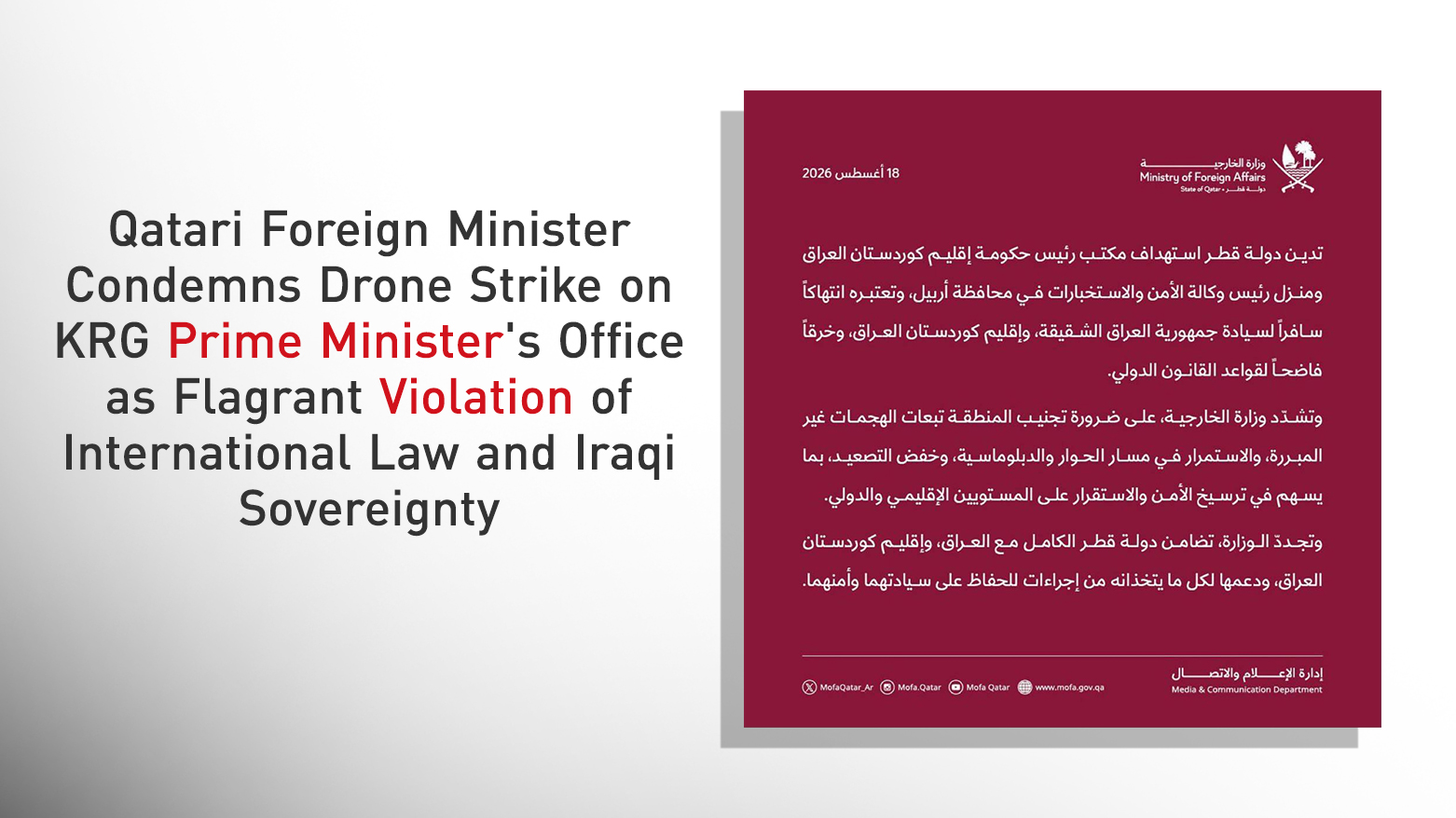
Qatar has recently expressed its strong support for Iraq and the Kurdistan Region amid escalating tensions, particularly following drone strikes that targeted key governmental offices in Erbil. This incident has highlighted the delicate nature of regional diplomacy and the vital importance of preserving sovereignty and security.
Qatar’s Condemnation of Drone Strikes
On Tuesday, Qatar’s Ministry of Foreign Affairs issued a formal condemnation of the drone strikes that struck the office of the Kurdistan Region Government’s Prime Minister and the residence of the head of the Security and Intelligence Agency in Erbil. The Ministry characterized these attacks as significant violations of both Iraqi sovereignty and international law. In its statement, Doha insisted on the need for protecting the region from unwarranted assaults while advocating for dialogue and diplomacy as essential paths toward reducing tensions.
Support for Sovereignty and Security
The Qatari government reiterated its unwavering solidarity with both Iraq and the Kurdistan Region, voicing support for every measure aimed at ensuring their security and sovereignty. This marked position is particularly significant given Qatar’s complex role in the evolving regional dynamics. Over the past months, Qatar has acted as one of the key mediators between the United States and Iran, facilitating indirect negotiations and fostering diplomatic communication. This multifaceted role illustrates Qatar’s commitment to maintaining stability in a fragile geopolitical landscape.
Risks Faced by Qatar in Diplomatic Roles
While Qatar strives to mediate between conflicting parties, the nation is simultaneously situated in a precarious position. As the host of Al Udeid Air Base, the largest U.S. military installation in the region, Qatar has found its territory vulnerable to the ongoing conflict. This military presence places Qatar in the crosshairs of escalating tensions, challenging its diplomats to navigate these complexities while simultaneously containing hostilities. The explicit condemnation of the drone strikes signifies that Qatar does not tolerate direct attacks on neighboring countries’ sovereignty, even as it seeks to mediate diplomatic solutions.
Wider International Response
The recent attacks were executed by two Hadid-110 drones originating from Iranian territory and targeted critical establishments within the Kurdistan Region. Fortunately, there were no reported casualties. In response, Prime Minister Masrour Barzani affirmed his commitment to public safety and stated that such attacks would not deter his government from fulfilling its responsibilities. The condemnation from Qatar aligns with similar denunciations from other nations, including Saudi Arabia and the UAE, as well as the Iraqi federal government and various human rights organizations in the region. This collective reaction represents one of the most substantial international responses to an Iranian attack on Kurdish territory to date.
Qatar’s latest statement and act of solidarity with Iraq and the Kurdistan Region underscore the nation’s commitment to fostering dialogue and maintaining peace in an increasingly unstable environment. Amidst the complexities of regional diplomacy, Qatar’s robust stance and emphasis on sovereignty and security are essential. This commitment not only facilitates a return to diplomatic negotiations but also highlights the necessity of upholding international law to protect vulnerable nations from external aggression.