
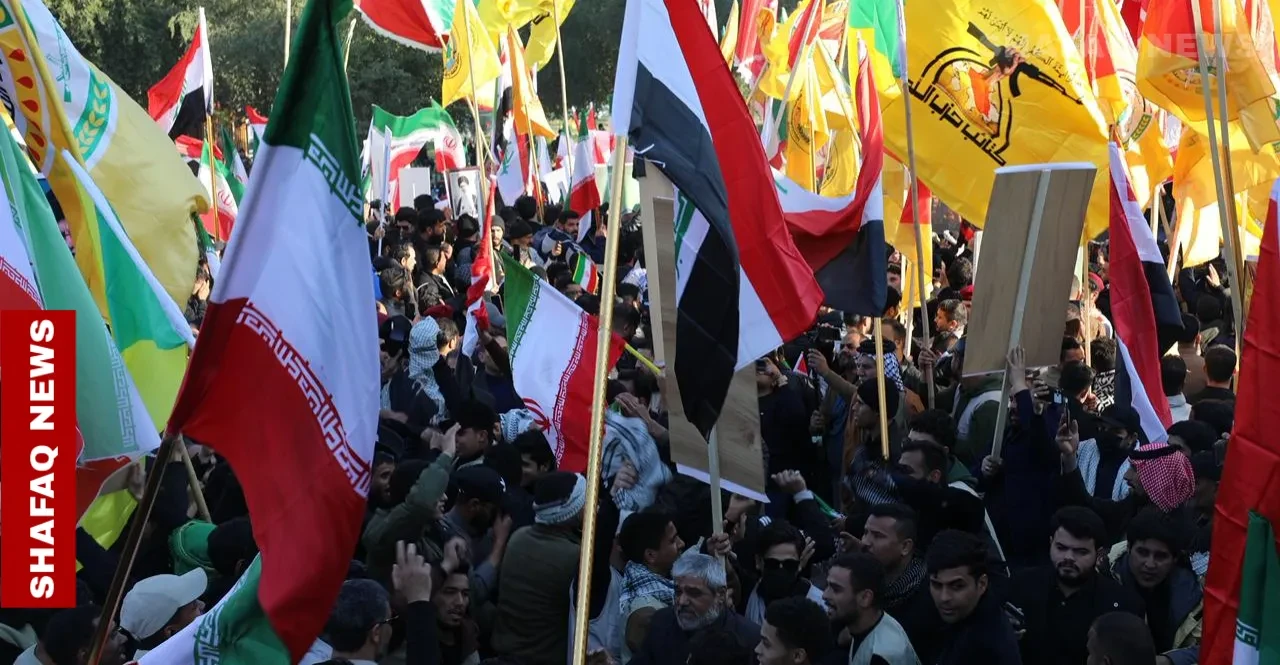
Kataib Hezbollah’s Demands for Negotiation with the Iraqi Government
Kataib Hezbollah, a prominent Iran-aligned militia in Iraq, has outlined specific demands concerning the broader issues of armed factions in the country. Their statements come amidst increasing tensions between these groups and the Iraqi government, particularly regarding the presence of foreign forces. Understanding the implications of these demands is crucial for navigating Iraq’s complex political landscape.
Conditions for Negotiation
In a recent announcement, the group’s security official, Abu Mujahid al-Assaf, presented three essential conditions for any potential agreement with the Iraqi government focused on disarming armed factions. The first stipulation requires the complete withdrawal of U.S. troops from Iraqi territory and airspace, ensuring that no American forces return. Al-Assaf emphasized that Iraq should free itself from American interference in its political and economic decisions. The second demand is the withdrawal of Turkish forces stationed in northern Iraq. Lastly, he called for the dissolution of the Peshmerga, the armed forces of the Kurdistan Regional Government (KRG).
The complexity of these demands reveals the deep-seated sensitivities around foreign military presence in Iraq, particularly given the country’s turbulent history. Al-Assaf’s rhetoric highlights the reluctance of armed factions to limit their power, as they view the presence of foreign forces as a threat to national sovereignty.
Government Criticism and Growing Frustration
Al-Assaf has not held back in his criticism of Prime Minister Ali al-Zaidi, who has been in office since May 2026. He accused the Prime Minister of failing to effectively address the internal and external pressures surrounding the weapons issue. Al-Assaf expressed dissatisfaction with a perceived lack of responsiveness from al-Zaidi to counsel from allied political actors, suggesting that he may be more inclined to heed advice from the U.S. envoy, Tom Barrack.
His warnings are not just political posturing; they indicate a potential escalation in tensions if the government fails to meet these demands. Al-Assaf cautioned against actions that intimidate families of faction members, hinting that patience is wearing thin, and threatening possible retaliatory measures.
Strategic Moves in Iraq’s Political Landscape
The Iraqi government has launched initiatives to rein in the influence of armed factions, including the formation of a committee addressing issues in Jurf al-Sakhr, a strategically significant area that has previously been dominated by these groups. This committee includes ministries of interior, justice, and agriculture, as well as the Popular Mobilization Forces (PMF) Commission, which oversees these factions. The actions taken in Jurf al-Sakhr signal a broader government effort to reassert control over regions that have long been under the sway of Iran-affiliated militias.
Recent developments, like a meeting involving Esmail Qaani, commander of the Quds Force, with leaders of the Coordination Framework—an alliance of Iran-aligned Shiite factions—further complicate the landscape. Qaani’s message to these factions was clear: delaying disarmament is a strategic necessity, and he advised against escalating tensions with the government in favor of seeking political resolution.
Conclusion
The interplay between Kataib Hezbollah and the Iraqi government highlights critical issues of sovereignty, foreign influence, and regional security. With both sides entrenched in their positions, the coming weeks will be pivotal as Iraq approaches a self-imposed deadline to tackle armed activities beyond state control. The outcome of this stand-off will significantly shape Iraq’s political future and influence the stability of the broader region.