
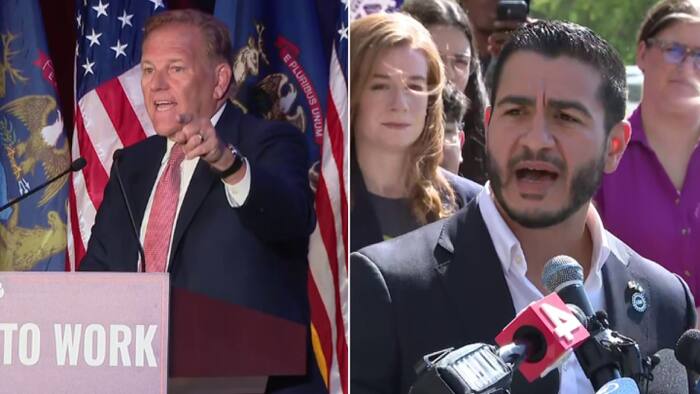
In a critical debate held just weeks before the elections, U.S. Senate candidates Mike Rogers and Abdul El-Sayed engaged in a fiery exchange, underlining the urgent issues facing Michigan voters. The debate revolved around vital topics such as economic challenges, healthcare, immigration, and voter rights, framing the candidates’ contrasting visions for the state’s future.
Key Economic Concerns
Rogers, representing the Republican Party, launched his campaign’s focal point on Michigan’s manufacturing job losses and the impact of escalating utility and auto insurance rates. He emphasized that these financial pressures significantly affected families across the state, thereby calling for immediate interventions to alleviate the burdens. In a sharp rebuttal, El-Sayed prioritized the need to focus on lowering living expenses and expanding healthcare accessibility. He pointed fingers at Rogers, suggesting that his policies mirrored those of President Donald Trump, to which Rogers countered by accusing El-Sayed of constantly invoking Trump’s name as a distraction from pressing issues.
Public Safety and Immigration Enforcement
The debate took a turn towards public safety, with accusations flying between the two candidates. Rogers claimed that El-Sayed’s stance hinted at defunding law enforcement, a charge that El-Sayed firmly denied. Each candidate defended their respective approaches to immigration, with Rogers supporting Immigration and Customs Enforcement (ICE) for its role in combating serious crime. He argued that ICE had a significant impact on reducing criminal activity by targeting serious offenders. Conversely, El-Sayed criticized the agency’s methods, asserting that they lacked transparency and accountability, leaving communities vulnerable to unseen enforcement actions.
Healthcare and Economic Policies
Another area of contention was El-Sayed’s Medicare for All plan. Rogers deemed this initiative impractical due to its excessive costs, suggesting that not even fellow Democrats backed the proposal. El-Sayed, on the other hand, accused Rogers of being too closely affiliated with pharmaceutical interests, implying that such connections hindered genuine healthcare reform. This confrontation reflects the broader national debate on healthcare access and affordability, resonating strongly with voters who prioritize these issues.
International and Voter Rights Concerns
As the candidates discussed foreign policy, Rogers raised alarms about Iran potentially acquiring nuclear capabilities, warning of drastic economic repercussions, including rising gas prices. El-Sayed, however, retorted that Rogers had a history of advocating for military interventions, positioning him as a proponent of war rather than dialogue. The debate also tackled voter rights, specifically the Safeguard American Voter Eligibility (SAVE) Act. While El-Sayed condemned the requirement for photo identification at polls as voter suppression, Rogers defended it as a rational measure for safeguarding the electoral process.
The heated exchanges showcased the stark contrast between Rogers and El-Sayed, reflecting the broader ideological divide in contemporary American politics. As Election Day approaches, voters in Michigan are left to weigh these compelling arguments as they consider the direction in which they want their state to go. Each candidate’s stance on critical issues will undoubtedly shape their campaign narratives, influencing the decision-making process for a significant number of voters.