
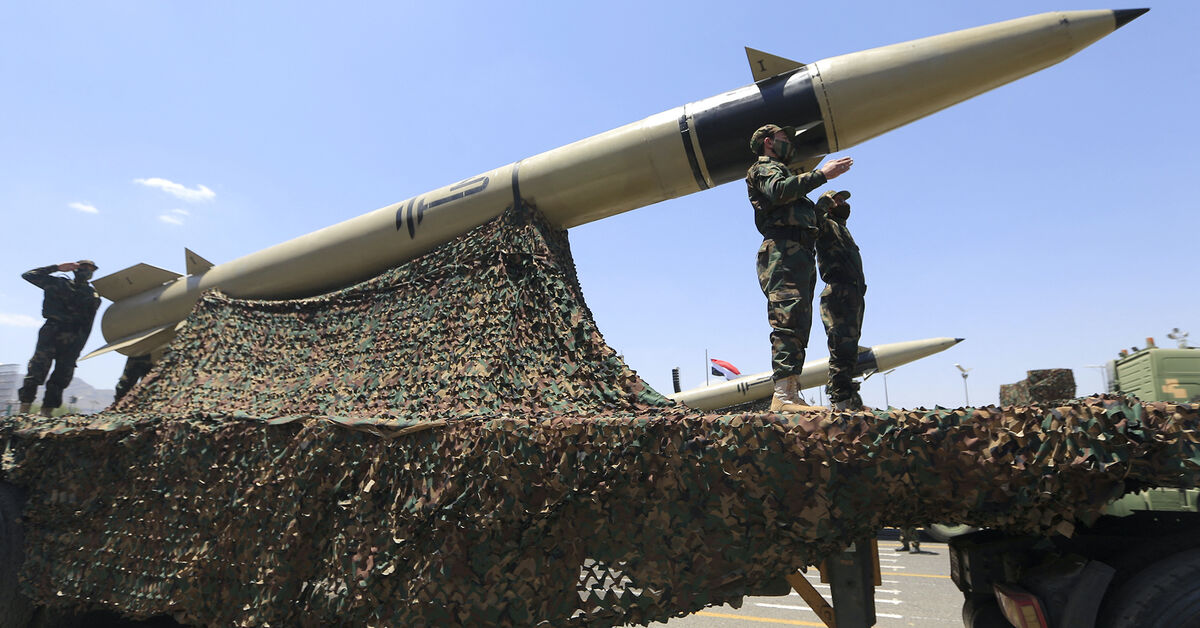
Yemen’s ongoing conflict continues to escalate, particularly with the recent announcements from Houthi rebels regarding their military maneuvers against Saudi Arabia. The situation highlights the ongoing volatile dynamics in the region and the implications for wider geopolitical stability.
Recent Military Actions by Houthis
On Thursday, Houthi spokesperson Yahya Saree revealed that the militia had launched two attacks targeting Saudi Arabia. The operations included a drone strike on Najran Airport and another aimed at unidentified Aramco facilities, marking a significant escalation in hostilities. These actions were reportedly in retaliation for Saudi drones allegedly operating over Saada, a province under Houthi control. Najran, located in southwestern Saudi Arabia, shares a border with Saada, emphasizing the proximity of these confrontations.
Saudi Arabia has not provided an immediate response to these strikes, leaving many to speculate about potential military or diplomatic consequences. Meanwhile, Iran’s Islamic Revolutionary Guard Corps (IRGC) weighed in on the conflict, with Brig. Gen. Hossein Mohebbi asserting that Saudi Arabia lacks the military capability to defeat the Houthis. He indicated that the Saudis, whose power he claims is inferior to that of Israel, would struggle to overcome Houthi forces.
The Broader Implications of Renewed Strikes
The escalation of cross-border strikes is particularly concerning. Following an attack on the Houthi-controlled Sanaa International Airport, the Houthis resumed regular assaults on Saudi territory and vessels navigating the Red Sea. The airport strike, which the Houthis attribute to Saudi forces, aimed to deter an Iranian plane from landing. As a result, the Houthis announced a naval blockade on Saudi Arabia, underscoring their intent to exert pressure over maritime routes.
In recent weeks, the Houthis have targeted multiple sites in southwestern Saudi Arabia, including Aramco facilities. Their renewed aggression coincides with warnings from UN special envoy Hans Grundberg, who indicated that Yemen faces a high likelihood of returning to large-scale conflict—greater than at any time since the UN-mediated truce in 2022. This truce had initially fostered a period of relative calm before the current spike in violence.
International Reactions and Regional Dynamics
As the situation unfolds, Saudi Arabia has mostly refrained from significant military action, only responding to provocations when necessary. They launched a coalition focused on enhancing security in the Red Sea, signaling an intent to protect vital shipping lanes. Additionally, Iran is suspected of increasing its support for the Houthis, with reports suggesting that IRGC personnel and missile components have been transported to Yemen.
Despite the burgeoning tensions and the Houthi blockade, shipping activity through the Bab al-Mandeb Strait appears to be increasing. Data from the shipping firm Kpler revealed a 53% rise in vessel crossings recently, indicating resilience in trade activities amid escalating maritime threats. Saudi Arabia has also begun rerouting oil exports through the Red Sea, adapting to disruptions in the Strait of Hormuz.
In summary, the conflict in Yemen continues to evolve, with cross-border hostilities intensifying and major regional powers entrenching their respective positions. The interplay between Houthi aggressions, Saudi defensive measures, and the influence of Iran creates a complex landscape that poses challenges not only for Yemen but also for broader Middle Eastern stability. As the situation unfolds, global observers remain watchful of potential shifts that may arise from this fragile theater of conflict.