
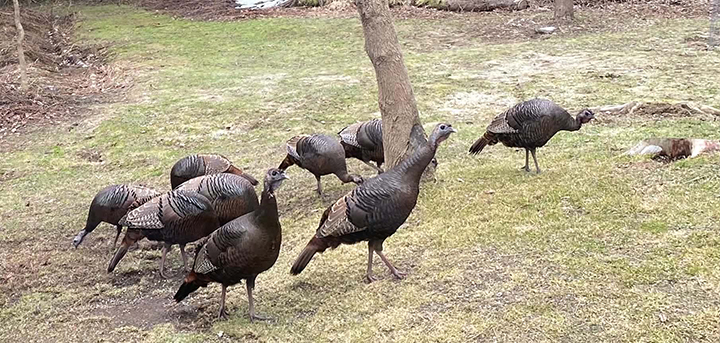
Each year since 1996, residents of New York State are encouraged to participate in the Summer Wild Turkey Survey, organized by the Department of Environmental Conservation (DEC). This initiative aims to monitor the number of wild turkey poults—young turkeys—as compared to adult hens, providing vital data on turkey productivity across the state.
Understanding the Survey Process
Conducted annually every August, the DEC reaches out to the public to report observations of turkey flocks. Participants are asked to note the number of adult males, adult females, and poults sighted, along with the date and location of each sighting. According to wildlife biologist Tom Cunningham, August is an ideal time for this survey; the differences in size between adult turkeys and their chick-sized poults make them easier to distinguish.
Poults generally range in size from that of a small dove to a chicken, which facilitates their identification alongside larger adult hens. Cunningham also highlights that adult males are significantly larger and usually possess darker plumage, unmistakable red or pink heads, and prominent beards on their chests. In contrast, adult hens typically have lighter brown feathers and usually lack any adornment like beards, making it easier for participants to identify different members of turkey flocks.
Observing Wild Turkeys
Cunningham recommends keen observation for tracking turkeys, especially in open areas such as fields where they are more visible. Thick foliage can conceal these birds, making their observation in wooded areas more challenging. It’s not uncommon to spot turkeys even in residential neighborhoods or along roadsides, particularly when they are foraging for insects, their primary food source during this protein-critical development phase.
Turkeys are labeled as “generalists” in terms of habitat; they inhabit various terrains, ranging from agricultural fields to dense forests. Typically roosting at night in trees, they tend to be close to forested regions. This data gathered from the public helps the DEC estimate reproductive success rates and anticipate future turkey populations, adding a layer of reliability to hunting forecasts for the upcoming seasons.
The Importance of Public Participation
Public participation in the Summer Wild Turkey Survey is vital. It not only helps track turkey populations but also involves citizens in wildlife management. The DEC encourages citizens to use binoculars for better observation and to report sightings without approaching the birds, maintaining a safe distance to minimize stress on wildlife. They also advise to report only complete observations to avoid skewing the data.
The information collected each year ultimately allows the DEC to assess the health of the wild turkey population, which holds ecological importance as both a prey and a seed disperser in its habitat. By participating in this survey, hunters and the general public can contribute to the effective wildlife management necessary to sustain this natural resource.
For those eager to report sightings or learn more about prior survey results, the DEC provides a straightforward digital survey form, ensuring that citizen scientists can seamlessly contribute to wildlife monitoring efforts.