
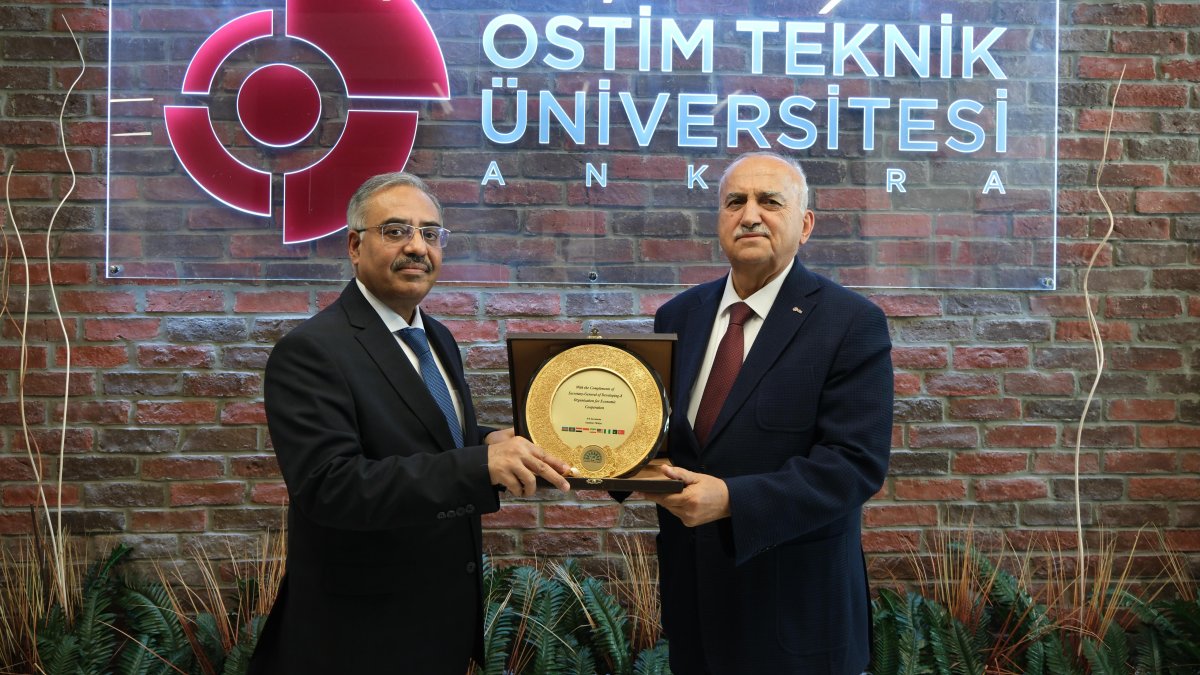
The Secretary-General of the D-8 Organization for Economic Cooperation recently completed a two-day visit to Ankara, emphasizing the need to convert the bloc’s economic objectives into actionable partnerships in technology, research, and industrial development. This visit was an essential step in fostering deeper collaboration among member nations, according to the organization.
Strategic Discussions with Turkish Officials
During his visit, Sohail Mahmood met with high-ranking Turkish officials, scholars, and representatives from industry and research sectors. Key discussions took place with Aylin Sekizkök, Türkiye’s D-8 Commissioner, focusing on enhancing the organization’s institutional capabilities. The agenda also included expanding cooperation across various sectors and fostering stronger connections between D-8 countries and external partners.
One of the central themes of these talks was improving the D-8’s operational effectiveness and strengthening its international presence. The discussions sought to transform the decisions made within the organization into tangible outcomes that can benefit member states.
Appreciation for Türkiye’s Support
Mahmood expressed gratitude to Türkiye, a founding member of the D-8 and host of its secretariat, for the relentless support it has gained under the leadership of President Recep Tayyip Erdoğan and Foreign Minister Hakan Fidan. He also highlighted Türkiye’s pivotal role in hosting the inaugural D-8 International Ministerial Meeting on Environment in Istanbul. At this meeting, the Istanbul Declaration was adopted, aimed at enhancing collaborative climate action ahead of COP31 under Türkiye’s stewardship.
The focus on environmental issues reflects the D-8’s broader commitment to sustainable development, aligning member states on climate initiatives. Mahmood underscored the importance of coordinating efforts to effectively combat climate change.
Expanding Statistical Cooperation
A productive meeting with Zehra Zümrüt Selçuk, the director-general of the Statistical, Economic and Social Research and Training Centre for Islamic Countries (SESRIC), centered on enhancing cooperation in areas like statistics and socioeconomic research. Mahmood and Selçuk agreed to pursue joint conferences and workshops, contemplating a more structured framework for collaboration. This initiative aims to fortify the research capabilities of member nations and leverage data for evidence-based policy-making.
Additionally, interactions with Ramazan Erdağ from the Turkish Foreign Ministry’s Center for Strategic Research focused on establishing partnerships between think tanks and academic institutions. Developing joint research projects and forums for policy dialogue were identified as key strategies for fostering collaboration within the D-8 framework.
Innovative Discussions at OSTIM Technical University
Mahmood’s visit also included discussions at OSTIM Technical University. The dialogue revolved around themes of artificial intelligence, innovation, and entrepreneurship. Emphasis was placed on strengthening the relationships between higher education institutions and the industrial sector, aiming to facilitate the commercialization of research across D-8 economies. Mahood noted that the OSTIM ecosystem could serve as a vital connector for universities, technoparks, and businesses, driving growth and innovation across member states.
Meeting with Burhan Kayatürk, a member of the Turkish Parliament, Mahmood discussed the importance of enhancing economic ties and fostering people-to-people relationships among D-8 nations. He underscored the critical role legislators can play in promoting the organization and its objectives, advocating for heightened public awareness.
In summary, these meetings and discussions highlight the D-8’s commitment to fostering action-oriented collaboration. By engaging various stakeholders, including governments, educational institutions, and industry players, the D-8 aims to create a robust framework for economic cooperation among developing countries. Established in 1997 in Istanbul, the D-8 continues to evolve and adapt to the needs of its member states in a dynamic global landscape.