
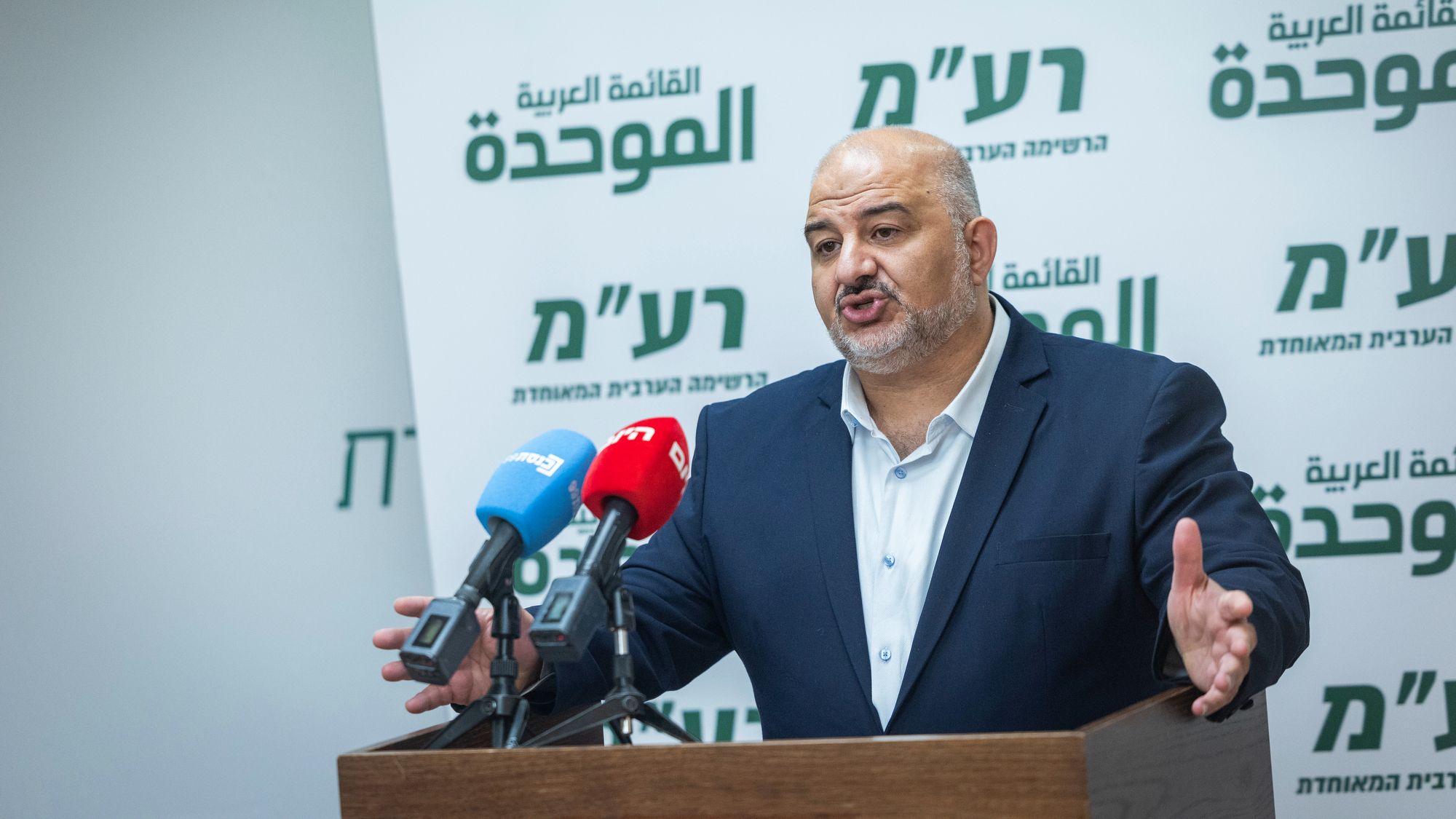
Mansour Abbas, the leader of Ra’am, emphasized the pressing issue of Palestinian statehood during a recent election speech. He boldly stated, “the State of Palestine exists,” and urged for “an end to the occupation.” His remarks quickly drew criticism from Prime Minister Benjamin Netanyahu and opposition leader Gadi Eisenkot, reflecting the contentious nature of the Israeli political landscape.
Call for International Recognition
Addressing Ra’am’s general conference, Abbas highlighted that Arab citizens of Israel could act as a “bridge to peace.” He mentioned that “the State of Palestine exists and is recognized by most of the world, except for the United States and Israel.” His appeal extends beyond recognition; he aims for peace and reconciliation alongside a resolution to the occupation and ongoing conflict. This focus on statehood illustrates Abbas’s strategy to place significant emphasis on longstanding Palestinian aspirations.
Abbas also made a strong case for Arab representation in Israeli politics, arguing that Ra’am has tested Israeli democracy by successfully integrating an Arab party into a governing coalition. He expressed hopes for a new chapter in collaboration among the Arab parties in Israel, promoting cooperation both before and after the elections. This appeal for unity underscores his vision of Arab political influence in shaping Israel’s future.
Shift in Political Strategy
This emphasis on Palestinian issues is a notable shift for Abbas, who previously built his political reputation through a pragmatic approach focused on immediate community concerns. In 2021, he spearheaded Ra’am’s coalition with the Bennett-Lapid government, making history as the first Arab party to officially join an Israeli government. This coalition was viewed as a significant milestone, demonstrating a unique opportunity for Arab parties to wield political power.
Reactions from the opposition were swift. Eisenkot firmly dismissed Abbas’s claims, asserting, “There is no Palestinian state, and under a government we form, no Palestinian state will be established.” Eisenkot has consistently distanced himself from the conversation around Palestinian statehood as the campaign unfolds. His rejection of Abbas’s vision reflects a broader ideological divide in Israeli politics.
Political Leverage and Future Alliances
Netanyahu took the opportunity to criticize his opponents in light of Abbas’s statements, stating, “As long as I am prime minister, there will be no Palestinian state controlled by Iran: not in Gaza, not in Judea and Samaria.” This assertion aims to reassure his base of Likud supporters while positioning his rivals as potentially dangerous partners due to their associations with Abbas and the Arab parties.
He further emphasized that “the cost of a left-wing coalition with the Muslim Brotherhood has been exposed again,” framing Abbas as a collaborant with Eisenkot and others, and suggesting they would neglect the concerns of Likud supporters while seeking alliances with Arab parties. These statements highlight the ongoing political maneuvering as Israel approaches a pivotal election.
In conclusion, Mansour Abbas’s speech signals a critical moment in Israeli politics, bridging issues of Palestinian statehood with the representation of Arab citizens. The responses it elicited illustrate the deep divisions within Israeli society over this contentious topic, setting the stage for a heated election season. As parties navigate these complex dynamics, the future of both Palestinian statehood and Arab political influence in Israel remains at the forefront of national discourse.