
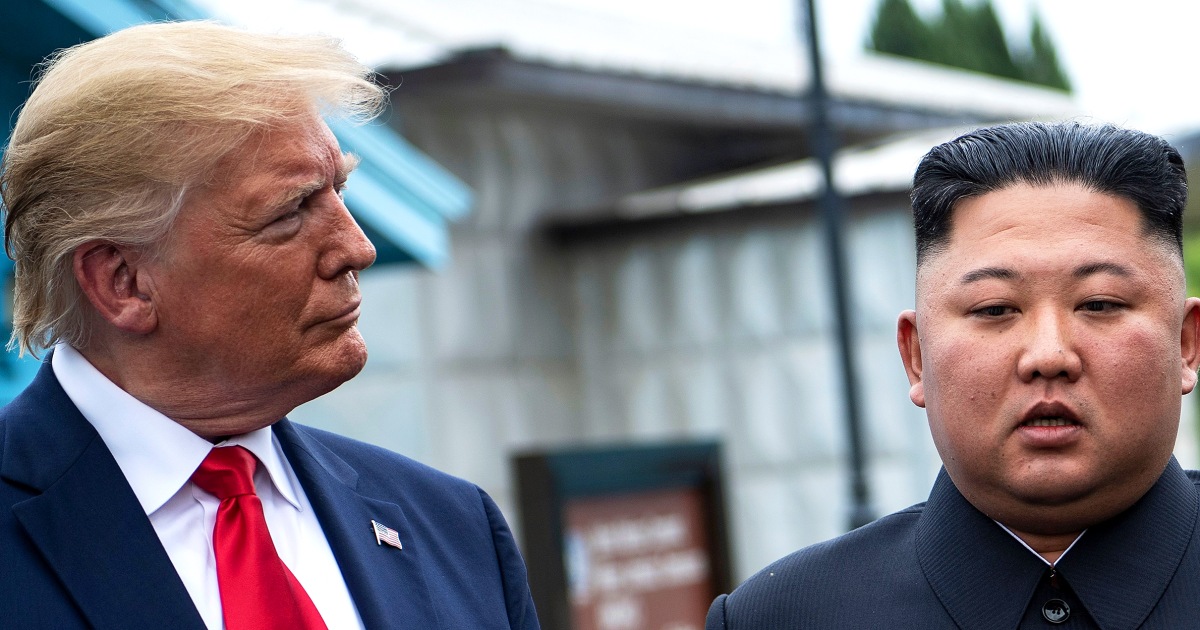
In the realm of international relations, the potential for future dialogue between the United States and North Korea remains a topic of intense speculation. With North Korean leader Kim Jong Un now appearing to be in a more robust position than during their last encounter in 2019, the dynamics of any forthcoming negotiations have evolved significantly.
Political Landscape: A Stronger Kim Jong Un
Since their initial summit in 2018 and the subsequent meeting in 2019, Kim Jong Un has fortified his leadership and the country’s nuclear capabilities. Analysts suggest that this strengthened position fundamentally alters the negotiation framework. Unlike before, Kim is less likely to view discussions with the U.S. as a means to simply gain concessions; rather, he is expected to seek recognition of North Korea as a legitimate nuclear power. This shift in approach indicates that any upcoming talks would require the U.S. to accept a new reality where North Korea’s nuclear arsenal is a permanent feature of the geopolitical landscape.
U.S. Strategy and Its Implications
For the U.S. to engage effectively with North Korea, it must reassess its strategy in light of these changes. Historically, Washington has maintained a policy of denuclearization as the primary goal of discussions. However, given Kim’s current stance, this may no longer be a feasible position. Experts argue that a more pragmatic approach is essential if the U.S. wants to foster any productive dialogue. This may involve shifting the narrative from complete disarmament to arms control measures, thereby accepting some degree of North Korea’s nuclear ambitions while working to curb any further developments.
The Role of International Players
In addition to the U.S. approach, the involvement of other international stakeholders cannot be overlooked. China and Russia have consistently backed North Korea, complicating the U.S.’s efforts to isolate the regime diplomatically. Their support could enable Kim Jong Un to feel less pressure to negotiate from a position of weakness. Thus, if the U.S. is serious about engaging in meaningful talks, it may need to consider a multilateral approach that includes these key players. By navigating the complex web of alliances and interests, the U.S. could potentially create a more conducive environment for dialogue.
The Future of U.S.-North Korea Relations
As the situation stands, the future of U.S.-North Korea relations hinges on some critical decisions from both sides. Kim Jong Un’s enhanced position suggests that he is looking for legitimacy and respect on the world stage, while the U.S. must grapple with the reality of a nuclear North Korea. The confluence of these two perspectives could either lead to a breakthrough in negotiations or escalate tensions further.
Moving forward, embracing a flexible mindset could provide avenues for compromise. U.S. policymakers might find success in focusing on shared interests such as regional stability and economic cooperation, rather than solely fixating on nuclear disarmament. How both nations approach future discussions will ultimately shape the fate of not only their bilateral relations but also the security landscape of East Asia and beyond.