
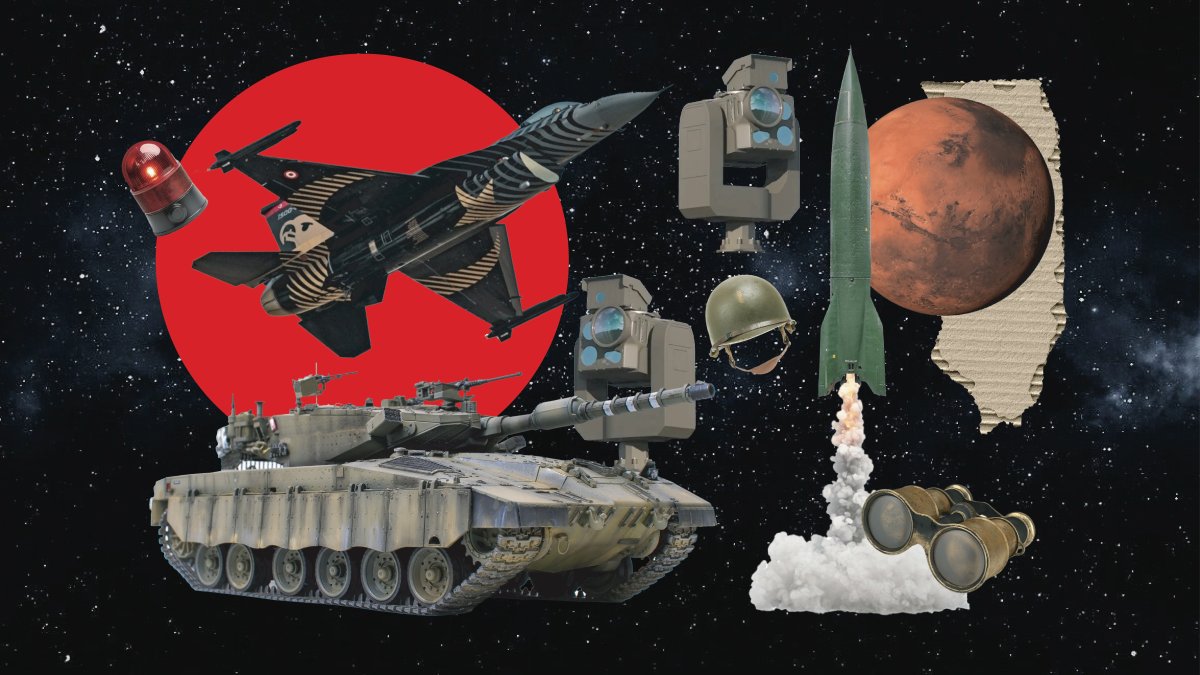
The Turkish defense industry is making significant strides, with exports hitting $11.2 billion, a notable increase of 40% from the previous year. This sector now comprises 4% of the country’s total exports and has the potential to reach $15 billion when incorporating defense-related services. The industry is capable of shipping products globally, showcasing rapid advancements driven by a commitment to high-tech innovation using domestic resources. With around 3,500 companies working within this sector, the focus continues to be on enhancing industrial capabilities throughout Turkey. The Turkish defense industry, designed as an interconnected ecosystem, stands as a testament to the success of the “Made in Türkiye” initiative.
Advanced Technologies and Products
A prime example of this advancement is Aselsan’s new infrared detector, which positions Turkey among a select group of countries that can develop and manufacture this sophisticated technology. While only a few countries, including the U.S., U.K., Germany, Canada, Japan, and China, have similar capabilities, Turkey’s innovation is expected to influence various applications. These detectors can be crucial for unmanned aerial vehicles (UAVs), armored units, tanks, and missile defense systems. By incorporating cutting-edge technology into strategic military platforms, the infrared detectors are designed to enhance operational efficiency on the battlefield, lessening reliance on environmental factors.
The integration of infrared detectors into combat platforms—such as the Altay main battle tanks and the Bayraktar Kızılelma unmanned combat aerial vehicle—aims to significantly improve night vision and target detection capabilities. Insights gained from active conflicts in regions such as Ukraine, Iraq, Syria, and Libya have informed the design and deployment of these advanced technologies, enhancing the Turkish military’s capacity to operate under extreme conditions. With their application extending across surveillance systems and missile technology, the development of these detectors marks Turkey’s entry into a strategic realm, fulfilling a critical security need while bolstering combat readiness in varying climatic situations.
Global Comparison and Strategic Positioning
Comparing Turkey’s advancements in infrared technology with global standards reveals a competitive landscape. The United States reigns as the largest market, holding approximately 50% of the global infrared detector market share. While Japan and China have developed competent detector production capabilities, their market influence is not on par with that of the United States. Japanese players, including companies like Mitsubishi and NEC, maintain a significant global presence by utilizing dual-use technologies under strict government regulations.
On the other hand, China’s focus on achieving self-sufficiency via state-driven production contrasts with Canada’s integration with U.S. defense mechanisms. Countries such as Germany and France adopt closely coordinated policies in detector production. In contrast, Israel focuses on building its own technology while enforcing selective export policies. Collectively, the U.S., Israel, France, and Germany maintain a technological edge over other nations like Canada, Japan, and China. As Turkey continues to develop its state-of-the-art infrared systems, it must strategically navigate global defense ecosystems, prioritizing technological independence while exploring collaborative opportunities.
Future Prospects and Strategic Goals
In light of these developments, the Turkish defense sector has demonstrated remarkable growth, generating nearly $70 billion in exports between 1974 and 2026. Projections suggest that this figure could exceed $150 billion by 2030, especially with the inclusion of defense-related service exports. This upward trajectory reflects not only an escalation in export potential but also Turkey’s increasing capacity to develop innovative technologies. The rise of the defense industry is a pivotal aspect of this transformation, extending beyond combat applications into diverse technological domains, including space exploration.
To capitalize on this momentum, Turkey’s focus must encompass a fully integrated defense industry ecosystem that fosters technological independence. The advancements seen in infrared detector technologies are vital steps toward achieving these goals. This trajectory aligns with Turkey’s broader national strategy to assert itself as a major player in the global defense industry, reinforcing its commitment to becoming a leader in high-tech military solutions while bolstering the “Made in Türkiye” brand.