
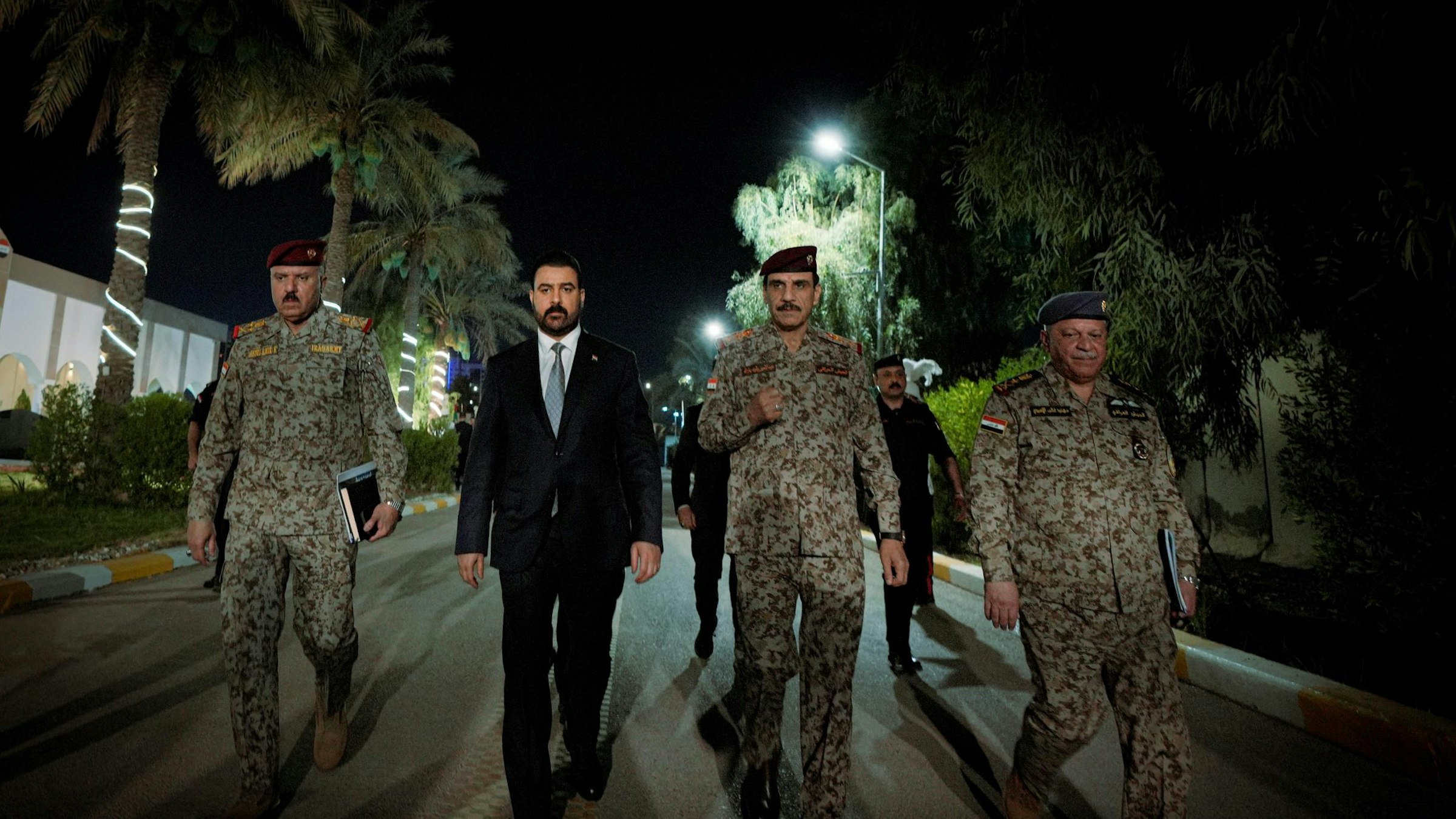
The deadline set by the Iraqi government for October 1 to integrate armed groups into state authority is quickly approaching. However, tensions and challenges are increasingly complicating this task. Recently, high-ranking officials from Iran, Saudi Arabia, and the United States have visited Baghdad one after another, each bringing distinct messages and requests. As these external influences loom, the discord among various Iraqi armed factions regarding the disarmament process has become increasingly evident.
Challenges in Disarmament
The debate surrounding disarmament often revolves around critical issues: when and how armed groups should relinquish their weapons. Different factions have differing perspectives on these matters, creating a complex landscape for any potential resolution. Some groups advocate for gradual disarmament, arguing that immediate surrender could leave them vulnerable to rival factions or foreign aggression. Others press for immediate compliance, insisting that armed groups jeopardize national stability and security.
Compounding the internal strife is the external pressure from neighboring countries and global powers. Each influential nation has its own interests that directly affect the dynamics within Iraq. For instance, Iranian officials may support certain Shiite factions, while Saudi representatives typically back Sunni groups. This geopolitical tug-of-war complicates the internal negotiations and makes it challenging for Iraq to assert its sovereignty over various armed factions.
Regional Implications
The outcome of this disarmament initiative will not only shape Iraq’s domestic landscape but will also have reverberations throughout the region. If successful, it could lead to a more unified national identity and strengthen the Iraqi government’s control, potentially dampening sectarian tensions. Conversely, if the government fails to effectively manage the situation, it could lead to further fragmentation, emboldening armed groups to operate independently and even sparking renewed conflicts.
Moreover, the involvement of international powers enriches the complexities of Iraq’s internal politics. The ongoing negotiations occur against a backdrop of regional instability characterized by proxy wars and sectarian strife. Understanding these dynamics is crucial for Iraq to navigate a path toward lasting peace and security.
The Quest for Unity
As the deadline looms closer, Iraqi leaders are faced with the difficult task of fostering dialogue among the various factions. Achieving consensus on disarmament and integration into state authority will require sensitive, inclusive discussions that take into consideration the diverse needs of all groups involved.
In an environment where mistrust runs high, building reliable communication channels and negotiating frameworks is essential. A collaborative approach will not only aid in smooth disarmament but also help unify the factions under a shared vision of a peaceful Iraq. Engaging local leaders and community representatives could be vital in garnering support for the government’s initiatives, enhancing the legitimacy of the process across different segments of society.
In conclusion, the road to disarming armed groups in Iraq is fraught with challenges but holds the potential for a more stable and unified nation. Success will depend on navigating both internal divisions and external pressures while fostering dialogue aimed at reconciliation and integration. As the October 1 deadline approaches, the decisions made by Iraqi leaders will play a crucial role in shaping the country’s future.