
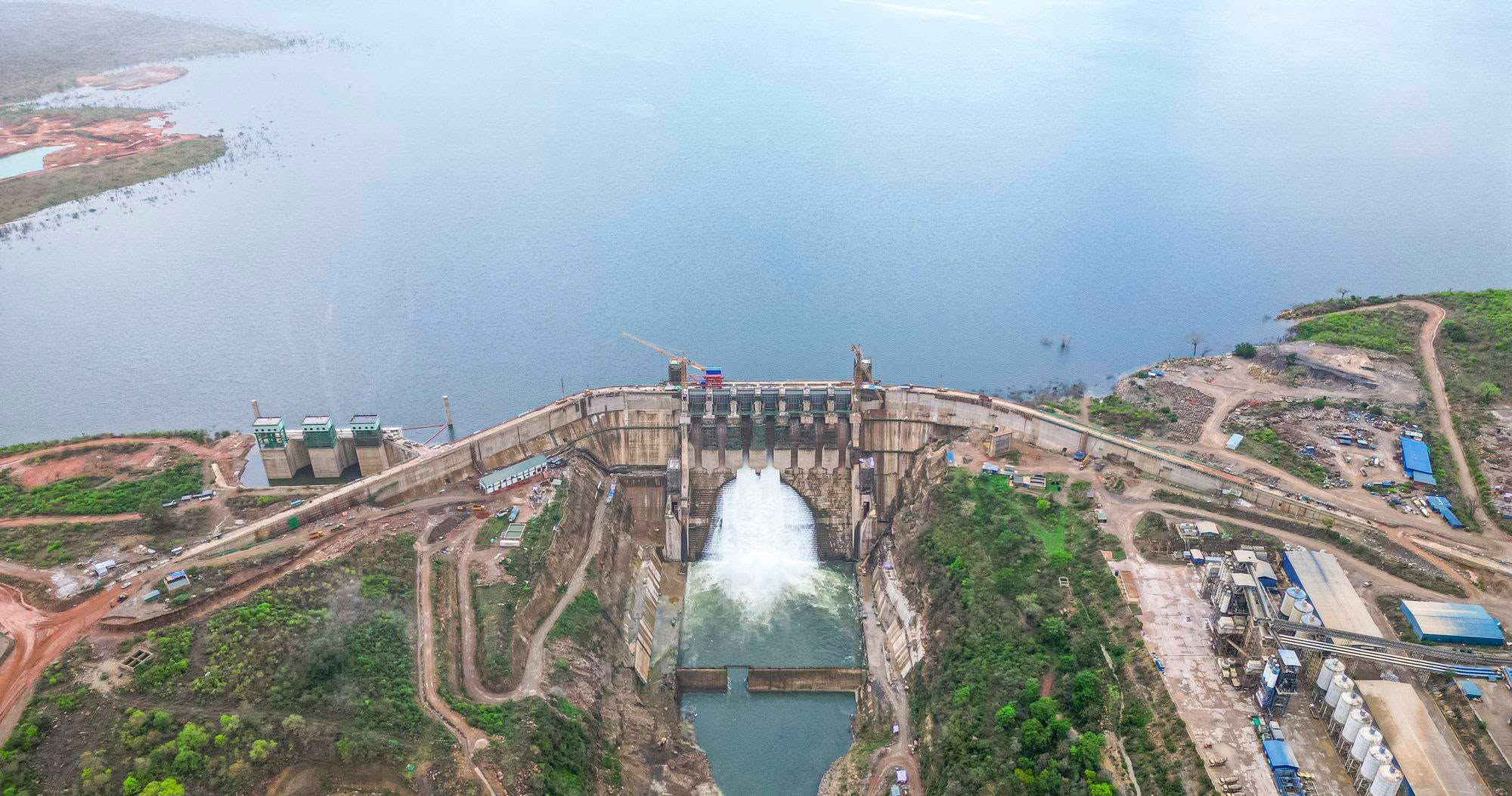
Tanzania has officially launched the $2.9 billion Julius Nyerere Hydropower Plant, marking a significant milestone in its energy sector. Built by an Egyptian consortium, this mega facility adds an impressive 2,115 megawatts (MW) to the national grid—a crucial development for the country’s energy needs.
Inauguration Ceremony Highlights
The inauguration took place on Saturday, attended by key figures, including Tanzanian President Samia Suluhu Hassan and Egyptian Prime Minister Mostafa Madbouly, who represented Egyptian President Abdel Fattah Al-Sisi. During the ceremony, both leaders revealed a commemorative plaque celebrating the operational launch of the plant following an inspection tour of the site. In his address, Prime Minister Madbouly extended greetings from President Al-Sisi, emphasizing the dam as a realized vision for Tanzania. He underscored the collaborative efforts that made this project possible and expressed confidence in the shared potential of their nations to achieve sustainable development through mutual understanding and cooperation.
A Historic Achievement in African Infrastructure
During his speech, Madbouly showed appreciation for the contributions of the Egyptian consortium, comprising Arab Contractors and Elsewedy Electric, describing the plant as a pivotal accomplishment in constructing one of Africa’s largest dams. He highlighted that the project, completed in just 42 months, reflects the capabilities of Egyptian firms to manage substantial international infrastructure projects, particularly within the African continent.
The dam itself features an impressive length of 1,036 meters and a height of 131 meters, with a water reservoir capacity of 34 billion cubic meters managed by seven spillway gates. The power plant is equipped with nine large turbines, each producing 235 MW, to reach its total capacity of 2,115 MW. This electricity is then delivered to the national grid via the Chalinze 1 and Chalinze 2 transmission lines through a state-of-the-art 400-kilovolt switchyard.
Strengthening Bilateral Economic Ties
In addition to the energy infrastructure, Madbouly emphasized the potential for strengthening economic relations between Tanzania and Egypt. He urged both nations to take advantage of the momentum generated by this project to foster increased trade and encourage mutual investments. He mentioned the groundwork laid during President Sisi’s recent visit to Dar es Salaam, where business leaders engaged in discussions about diverse sectors, including construction, agriculture, and energy.
Further consolidating regional partnerships, Madbouly expressed gratitude for Tanzania’s balanced stance on issues concerning the Nile Basin. He reiterated Egypt’s commitment to enhancing cooperation with Tanzania to address shared challenges and opportunities among Nile Basin countries.
Attendees and Future Prospects
The inauguration ceremony was graced by an array of senior Tanzanian officials, including Vice President Emanuel John Nchimbi and Zanzibar President Hussein Ali Mwinyi. Their presence underscored the importance of this project for Tanzania’s future. The Egyptian delegation also included various ministers and business leaders, all committed to fostering collaborative efforts in the region.
In conclusion, the Julius Nyerere Hydropower Plant stands as a testament to the enduring partnership between Tanzania and Egypt, symbolizing their shared ambitions for sustainable development and economic growth. As both nations continue to leverage their strengths, this project marks only the beginning of enhanced cooperation and prosperity in East Africa.