
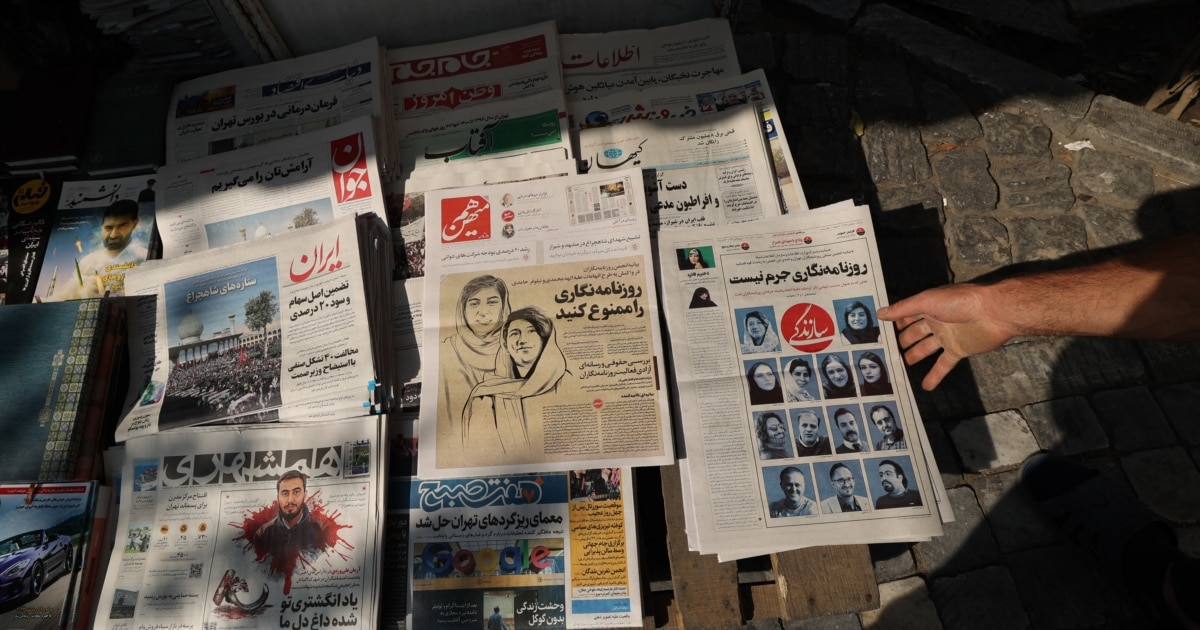
The recent threats from Iran’s military regarding the potential targeting of Persian-language media outlets have raised significant concerns among journalists and media organizations worldwide. The U.S. government has acknowledged these threats and emphasized the Iranian regime’s long history of harassment against journalists and dissidents both domestically and abroad.
Concerns Over Iranian Threats
In a statement on August 28, a State Department representative confirmed awareness of Iran’s military threats, specifically mentioning outlets such as Radio Farda. The spokesperson highlighted the Iranian government’s troubling record of intimidation, kidnapping, and even attempted murder of individuals simply for voicing dissent. The remarks underscore a regime that has utilized terror tactics for decades to maintain control and propagate its agenda.
The Iranian armed forces’ spokesman, Brigadier General Abolfazl Shekarchi, recently identified various media organizations as potential military targets. He described journalists from these outlets as “soldiers of Zionism and criminal America,” claiming, albeit without evidence, that they are linked to foreign intelligence services like the CIA and Mossad. This unfounded narrative reflects Iran’s pervasive need to stifle dissenting voices that might disrupt its version of reality.
Impact of Independent Media on Iranian Society
David Kramer, a prominent figure at the George W. Bush Institute, remarked on the significance of media outlets like Radio Farda in shaping perceptions within Iran. According to him, such organizations represent a threat to the regime because they provide the Iranian populace with uncensored information. The regime, keen on silencing dissent, resorts to violence and suppression, which only emphasizes the critical role independent media plays in exposing the truth.
The Czech Republic, which houses RFE/RL and Radio Farda in Prague, has also voiced its opposition to Iran’s threats. Czech Foreign Minister Petr Macinka indicated intentions to summon the Iranian ambassador to address the matter. The Czech Foreign Ministry spokesperson pointed out that Radio Farda is crucial for delivering verified news to Iranians, especially during times of widespread repression. This was evident during recent protests, which led to thousands of fatalities, highlighting the need for reliable information in times of crisis.
The Broader Context of Information Warfare
Experts caution that the threats against outlets like Radio Farda signify a serious escalation in Iran’s attempts to control the narrative, suggesting a broader agenda to stifle freedom of speech and suppress accurate reporting. Thomas Melia, a former senior U.S. State Department official, stressed the importance of heightened security for journalists working in such precarious conditions. He noted that the regime’s reaction to independent media highlights their fear of being exposed for their oppressive tactics.
Christopher Walker, vice president at the Center for European Policy Analysis, highlighted how Iran’s leadership invests heavily in state propaganda to counteract external influences. This investment reflects their recognition of the importance of information control in maintaining power. Walker characterized the threats against international Persian-language outlets as part of Iran’s ongoing campaign against freedom of expression, contextualizing this within a global struggle where authoritarian regimes seek to undermine democratic narratives.
In essence, the Iranian regime’s antagonism toward independent media outlets like Radio Farda sheds light on its fundamental opposition to free speech and open dialogue. Their desperate attempts to silence dissent reveal a regime intent on maintaining its grip on power in a rapidly changing information landscape. As this threat persists, it underscores the importance of supporting independent journalism as a vital part of promoting truth and accountability in societies living under oppressive rule.