
Spanish Prime Minister Pedro Sánchez recently accused networks affiliated with Russia and Israel of disseminating false information regarding the migration crisis in Ceuta. This came in light of the claim that these foreign entities were using the situation as leverage against Spain due to its stances on both the ongoing war in Ukraine and Israel’s actions in Palestinian territories.
Recent Migrant Surge in Ceuta
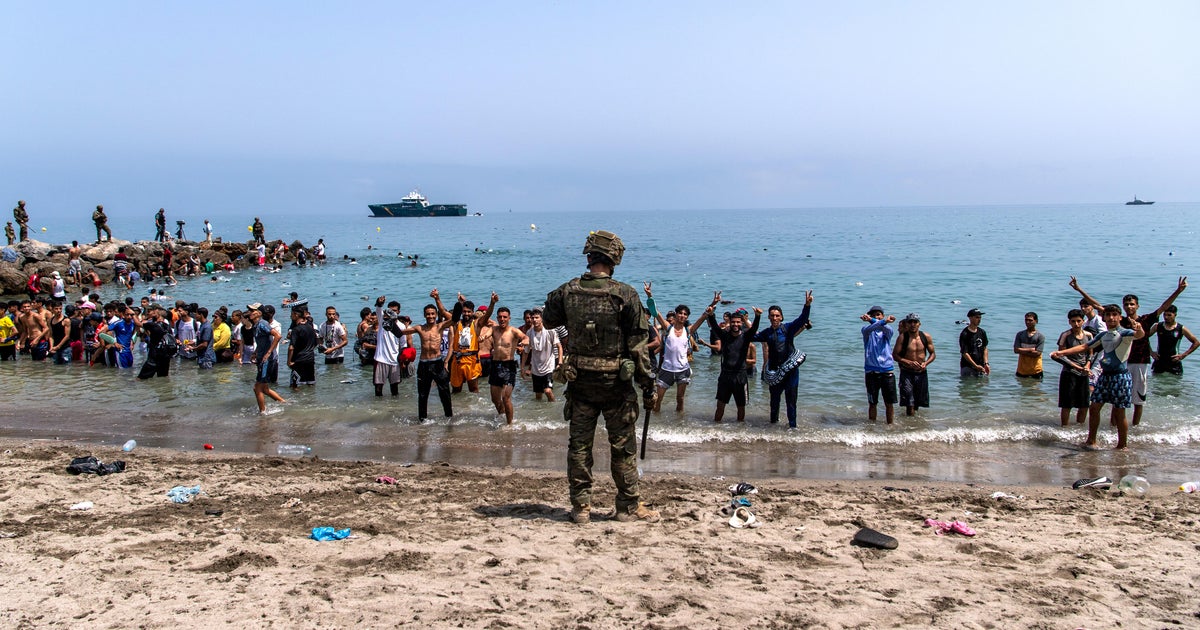
Over the last weekend of July, an unprecedented influx of over 72,000 migrants crossed from Morocco into Ceuta, a Spanish enclave on the North African coast. Tragically, at least 70 individuals lost their lives during this mass migration attempt, as reported by Spain’s national news agency, EFE. While most of these migrants were sent back to Morocco, approximately 5,000 remained in Ceuta by the end of August, including around 1,200 unaccompanied minors. This significant movement prompted serious discussions about border security and migration policies across Europe.
Sánchez highlighted the role of social media in propagating disinformation following the surge. He stated that many of the false claims originated from networks closely linked to both Russia and Israel, indicating that these countries could be exploiting the migration crisis to undermine Spain’s political stance. He remarked that the far-right has historically utilized migration as a tool to create divisions within Europe, further complicating the crisis.
Political Response and International Controversy
Sánchez mentioned that research conducted by the European External Action Service (EEAS) suggested ties between these misinformation campaigns and Russian and Israeli entities; however, he did not disclose additional specifics about the findings. In his comments, he asserted that such disinformation would not arise from genuine concern over the migration issue but rather as a response to Spain’s courageous political positions, particularly regarding the humanitarian crisis in Gaza and the ongoing conflict in Ukraine.
Spain has staunchly supported Ukraine since Russia’s invasion in February 2022, while Sánchez has been vocal in criticizing Israel’s actions in Gaza. He noted that Spain condemned both the recent attacks by Hamas and the subsequent military actions by Israel against Gaza, which he termed as genocidal.
Diplomatic Tensions With Israel and Russia
Reacting to Sánchez’s allegations, Israeli Foreign Minister Gideon Saar dismissed the claims as “brazen lies,” accusing the Spanish Prime Minister of spreading disinformation. He asserted that Spain’s failure to manage its migration policy was a more pressing issue than any purported Israeli involvement in the crisis. Furthermore, Russian officials similarly refuted Sánchez’s claims, indicating a reluctance to accept blame in this complex geopolitical situation.
In light of soaring migrant numbers at the Spanish border, leaders from 22 EU member states expressed concern, uniting in a call to enhance border security and combat illegal migration. They pointed to Spain’s recent introduction of a large amnesty program for undocumented migrants as potentially being a “pull factor,” which might have incentivized the surge.
Spain’s Migration Policy Under Examination
Sánchez has defended Spain’s migration strategy, emphasizing the necessity of giving undocumented migrants legal status to enable them to work and assimilate into society. He argued that such measures would not only benefit the individuals involved but also contribute positively to the overall welfare system. This crisis has shed light on the broader challenges of migration policies within Europe, with many countries grappling simultaneously with rising numbers and strained resources.
Overall, the current situation in Ceuta serves as a stark reminder of the intricate and multifaceted nature of international migration, where humanitarian concerns coexist with political machinations and misinformation campaigns. As Sánchez and other European leaders seek to navigate these turbulent waters, the focus will need to remain firmly on effective policies and humane responses.