
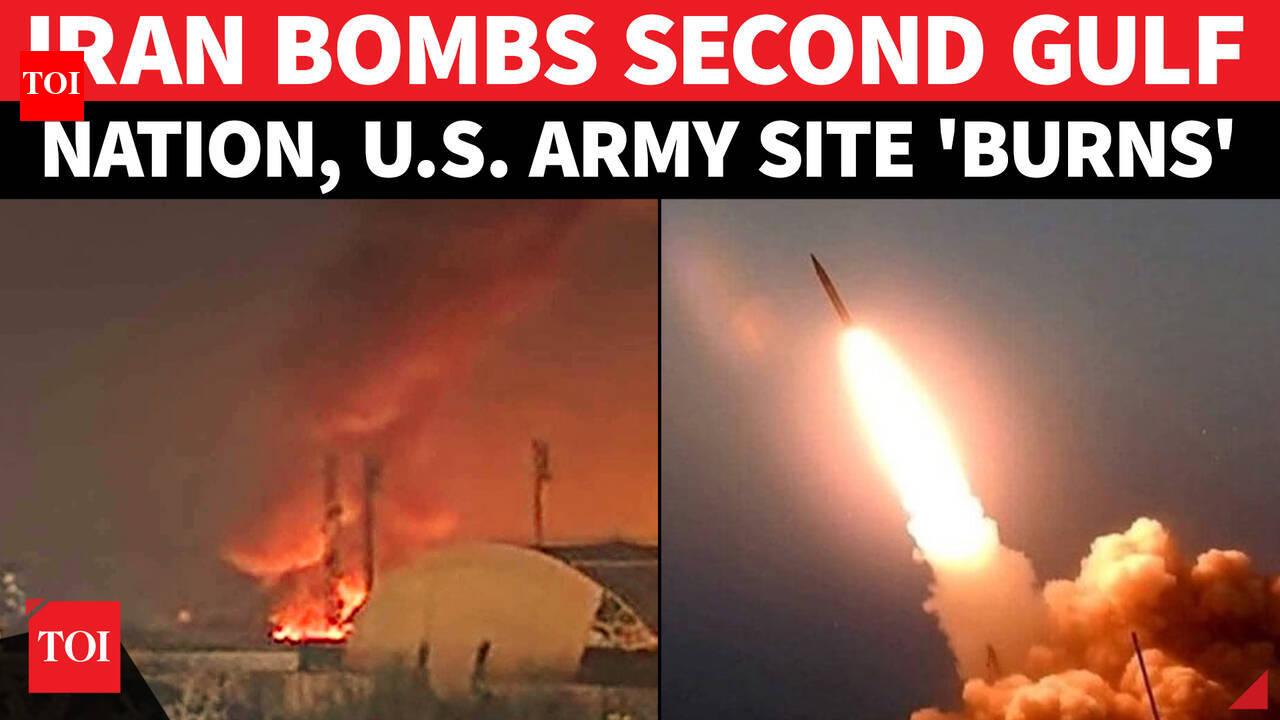
Iran’s Islamic Revolutionary Guard Corps (IRGC) has announced a significant missile and drone strike aimed at U.S. military installations in Erbil, Iraq. The Iranian government asserts that the attack resulted in fires engulfing fuel tanks and the destruction of military facilities, storage areas, and surveillance equipment. Tehran further claims that U.S. personnel sustained injuries or fatalities; however, Washington has not verified these allegations. This escalation follows Iran’s recent ballistic missile assault on Camp Titin in Jordan, highlighting an intensifying series of Iranian operations directed at American military assets throughout the region.
Details of the Missile and Drone Strike
The IRGC reportedly executed a sophisticated attack utilizing both missiles and drones, which are increasingly becoming pivotal components in modern warfare. Iranian officials indicated that the strike was meticulously planned to maximize damage to U.S. military positions. They detailed that fuel tanks were set ablaze, causing extensive secondary damage to nearby infrastructure, including military warehouses and essential surveillance systems. This marks a notable escalation in Iran’s military strategy by openly targeting U.S. assets and signaling a readiness to engage in direct confrontation.
Immediate Consequences and Responses
The immediate fallout from the strike has stirred concerns among U.S. military officials and policymakers. While Iranian sources claim that American casualties occurred, the lack of confirmation from Washington raises questions about the veracity of these reports. The U.S. Department of Defense has remained reticent, providing little insight into the situation, which may be an effort to maintain operational security and avoid further escalation. Iran’s actions could lead to a reassessment of U.S. military posture in the region, as the potential for retaliatory measures looms large.
Broader Implications for U.S.-Iran Relations
This recent missile and drone strike is emblematic of a rapidly deteriorating relationship between the United States and Iran. It underscores the potential for a broader conflict in the Middle East, particularly as Iranian elements continue to assert their military capabilities against U.S. interests. The escalation raises questions about the effectiveness of diplomatic efforts and sanctions aimed at curbing Iran’s aggressive behavior. As tensions mount, the U.S. may be compelled to reconsider its strategic objectives and alliances in the region to safeguard its personnel and interests.
Future Scenarios and Considerations
With the ongoing Iranian attacks, it is crucial for U.S. military leadership and intelligence agencies to forecast potential future scenarios. A sustained Iranian campaign against American forces could prompt a stronger military response, further entrenching both nations in a cycle of retaliation. Alternatively, this situation might catalyze renewed diplomatic discussions aimed at de-escalating tensions and preventing a full-scale conflict. Understanding Iran’s strategic calculus will be essential for effective U.S. policy formulation in the coming months, as the situation remains fluid and unpredictable.