
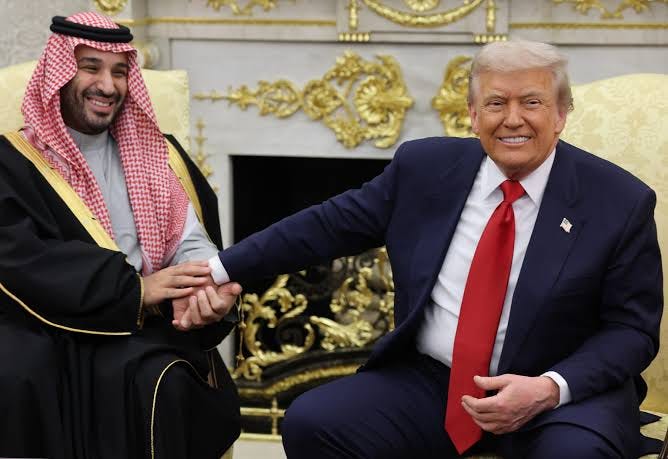
The ongoing tensions between the United States and Iran are intensifying, particularly as prospects for a renewed Memorandum of Understanding (MOU) appear increasingly bleak. With the recent collapse of discussions in July, both nations seem trapped in a cycle of escalating demands and unyielding positions. As Iran requests the revival of the MOU, the United States, under Trump’s leadership, remains steadfast against lifting the blockade or reverting to previous agreements. Compounding the situation is Israel’s ongoing military actions in Lebanon, which Iran insists must be addressed before any accord can be established.
The Nuclear Dilemma: Saudi Arabia vs. Iran
One of the most significant obstacles to resolving U.S.-Iran relations is the deepening rift over nuclear capabilities. Recent disclosures reveal that Trump has struck a deal with Saudi Arabia that could grant the kingdom uranium-enrichment technology—something the U.S. has been intent on denying Iran for over three decades. Rather alarmingly, this agreement entails a considerably less stringent inspection framework for Saudi nuclear activities, effectively creating a pathway for Riyadh to develop its nuclear program while imposing a stringent “zero-enrichment” stipulation upon Iran.
In the context of nonproliferation, Trump’s deal undermines long-established bipartisan standards. Critics point out that the agreement does not necessitate Saudi Arabia to comply with the more rigorous safeguards established by the International Atomic Energy Agency (IAEA). In contrast, Iran had been cooperative with the Additional Protocol in 2016 under Obama’s nuclear deal, showcasing a stark double standard in how the U.S. approaches nuclear proliferation in both countries.
Contrasting Enrichment Policies
The recent agreement with Saudi Arabia opens up the possibility for the kingdom to pursue uranium enrichment capabilities up to 20%. This allowance starkly contrasts Iran’s historical enrichment activities. When Iran elevated its enrichment to 20% in 2010, it was met with international condemnation and sanctions, suggesting that such maneuvers were evidence of ambitions to develop nuclear weapons. In theory, Trump’s actions seem to sanction similar activities in Saudi hands while relentlessly scrutinizing Iran for the same intentions, highlighting a gross inconsistency in U.S. foreign policy.
The implications of this disparity could severely complicate diplomatic negotiations with Tehran. While Iran had previously indicated a willingness to halt enrichment for an extended period—a move orchestrated in part through mediation by Oman—these understandings may dissipate in light of the U.S. bestowing concessions upon Saudi Arabia. Should there be no nuclear accord following the MOU’s 60-day timeframe, the risk of renewed conflict looms over the geopolitical landscape.
Future Implications on U.S.-Iran Relations
The stark double standard set by U.S. policy is sure to complicate any future dialogues between the two nations. If diplomatic windows do reopen, the very terms that were at one point viewed as possible solutions to the conflict are now cast into doubt given the U.S.’s contrasting treatment of Saudi Arabia and Iran. War could easily become an unwelcome reality if both sides remain entrenched in their positions, especially should nuclear ambitions remain unaddressed.
In essence, Trump’s deal with Saudi Arabia may serve to make peace with Iran significantly less attainable. The divergent expectations placed on these two nations highlight a need for introspection in U.S. foreign policy. Without addressing these inconsistencies, the road to lasting peace and resolution in the Middle East appears increasingly fraught with peril.