
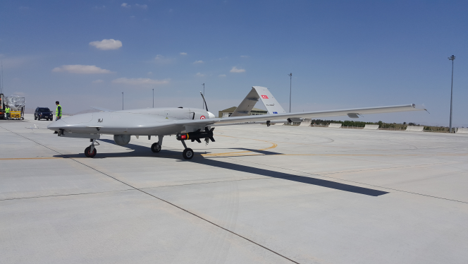
In May 2025, the Kurdistan Workers’ Party (PKK) made a historic decision to disband and cease hostilities, marking the conclusion of an insurgency that has claimed around 40,000 lives in Türkiye over four decades. This unexpected turn of events occurred not at a time of military stalemate or exhaustion but rather at a peak in Türkiye’s military capabilities, including advanced surveillance and drone operations. The PKK’s withdrawal raises multiple questions: Why would a group choose to end a prolonged struggle in the face of intensified military pressure? The answer lies in a unique confluence of sustained conflict and an unexpected political initiative.
The Role of Intelligence and Strategy
The dynamics that led to the disbandment of the PKK can be understood through the lens of strategic intelligence rather than straightforward military defeat. Turkey’s military innovations and intelligence capabilities did not eradicate the PKK; instead, they made sustained conflict increasingly costly and impractical for the insurgents. The strategy was not merely about fighting but about creating an environment where the costs of warfare outweighed the benefits. Consequently, the PKK’s decision to disengage was more a calculation than a capitulation. The crucial element was the simultaneous presence of a political opening alongside the military pressure, as neither factor alone would have compelled the PKK to withdraw.
Technological Advancements: The Turning Point
The shift in the conflict’s direction can be traced back to September 2016 when Türkiye deployed the Bayraktar TB2 drones for precision strikes against PKK targets. This technological innovation simplified the process of identifying and eliminating threats, allowing for effective operations without direct contact. The ability to monitor and strike militants from the air significantly reduced the risks for Turkish forces and increased the PKK’s vulnerability. This paradigm shift not only reduced casualties on the Turkish side but also facilitated a more systematic approach to targeting PKK leadership.
In conjunction with these technological advancements, Türkiye’s intelligence community played an indispensable role by integrating data from various sources, including human intelligence and regional partnerships, to ensure that operations were strategically effective. The cumulative effect of these strategies was apparent in the combat statistics, which indicated a significant number of high-profile PKK casualties, shifting the balance of power in Türkiye’s favor.
The Complex Nature of Peace Negotiations
Though technological advancements and intelligence capabilities were integral to putting pressure on the PKK, the subsequent peace process could not be attributed solely to military accomplishments. In fact, the settlement was primarily forged through a political strategy initiated by unlikely nationalist figures within Türkiye. However, this alone cannot explain the timing of the PKK’s disbandment, as previous peace attempts had failed despite similar political overtures. The critical factor distinguishing this moment was the sustained military pressure that made the option of continued conflict less tenable for the PKK.
This encourages a comparative examination of similar historical contexts. For example, past leadership decapitation efforts against groups like al-Qaeda and the Islamic State have not led to the dissolution of those organizations. In contrast, the PKK’s case illustrates that the right combination of military pressure and political negotiation can lead to substantial changes. The political landscape in the region also influenced this outcome, suggesting that the pressures facing the PKK were both external and internal, creating a more complex performance than mere military maneuvers.
In conclusion, the PKK’s decision to lay down arms reveals that the convergence of military pressure from advanced technologies and strategic intelligence, coupled with an opportunistic political landscape, can lead to significant shifts in long-standing conflicts. The conclusion of this insurgency stands as a reminder that, while military capabilities can corner an adversary, the pathway to lasting peace is often paved with political negotiation and a nuanced understanding of the conflict’s underlying issues. As states engage in similar conflicts, the lessons from Türkiye’s experience emphasize the imperative of marrying military capabilities with robust political solutions to truly address the complexities of insurgency and warfare.