
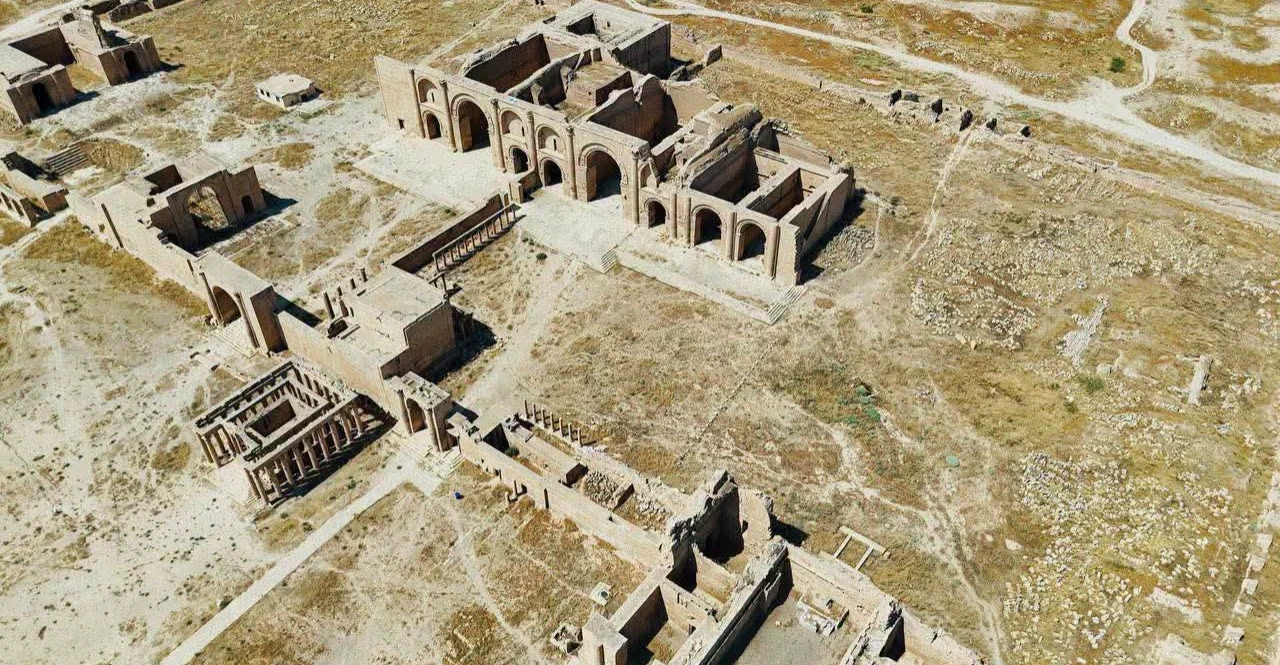
Iraq’s State Board of Antiquities and Heritage has recently refuted claims circulating on social media regarding the intentional destruction of archaeological sites for urban development. The Board emphasizes that any construction projects can only move forward after thorough excavation and documentation of these sites, according to Iraqi law. This approach seeks to balance the urgency of housing needs with the preservation of Iraq’s rich cultural heritage.
Legal Framework for Excavation
The Board, which operates under Iraq’s Ministry of Culture, Tourism, and Antiquities, described the process of rescue excavation as not only lawful but also recognized on an international scale. These excavations are necessary, given that Iraq currently faces a significant housing deficit estimated between 2.5 and 3 million units for its approximately 46.1 million residents. According to Mohammad Ouda al-Obaidi, head of the Tourist Guides Syndicate, Iraq is home to around 150,000 registered archaeological sites, making the careful handling of these locations imperative for both heritage conservation and urban development.
During the excavation process, archaeological teams recover valuable artifacts such as pottery, coins, and glassware, which are then transferred to the Iraqi Museum in Baghdad. Additionally, structural remains like walls and foundations are meticulously documented using techniques including 3D mapping and photography. This thorough documentation not only protects these cultural assets but also creates a historical record that future generations can study.
Procedure for Land Re-designation
Once excavation activities are completed and authorities confirm that no archaeological features remain intact, the Board may lift a site’s archaeological designation. This is done in accordance with Article 30 of Iraq’s Antiquities and Heritage Law No. 55 of 2002, which allows for construction and development initiatives to proceed unimpeded. The Board has pointed out that similar practices are employed in countries like France, Germany, and Egypt, underscoring Iraq’s commitment to upholding its heritage while addressing contemporary needs.
Furthermore, the Board has received commendation from UNESCO for its efforts in this area. It has also warned against framing post-excavation land-clearing activities as deliberate destruction, alluding to potential legal repercussions as outlined in Iraq’s Penal Code. This caution serves to underscore the importance of following proper procedures in the management of archaeological sites.
Addressing Past Allegations
Claims of unlawful activities regarding archaeological sites have previously emerged, particularly from Saladin Province. In April, local antiquities authorities clarified that an incident involving an archaeological site was the result of unauthorized actions, stressing that all excavations are carried out under rigorous supervision and with the necessary approvals. This narrative aligns with a broader commitment to safeguard Iraq’s archaeological treasures while facilitating urban development.
In June, additional reports circulated on social media, suggesting that a construction project near Tikrit posed a threat to an archaeological site. However, authorities quickly countered these claims, affirming that the ongoing developments did not compromise the integrity of the nearby Tell Hatra mound. Such statements reinforce the idea that the preservation of Iraq’s rich cultural heritage can coexist with necessary urban progress, provided that all legal and ethical guidelines are followed.
In conclusion, Iraq’s commitment to balancing urban development with heritage preservation is increasingly relevant in a country confronting significant challenges in housing. By adhering to legal protocols and embracing internationally acknowledged practices, Iraq can ensure that its archaeological sites are respected even amid the pressures of modernization.