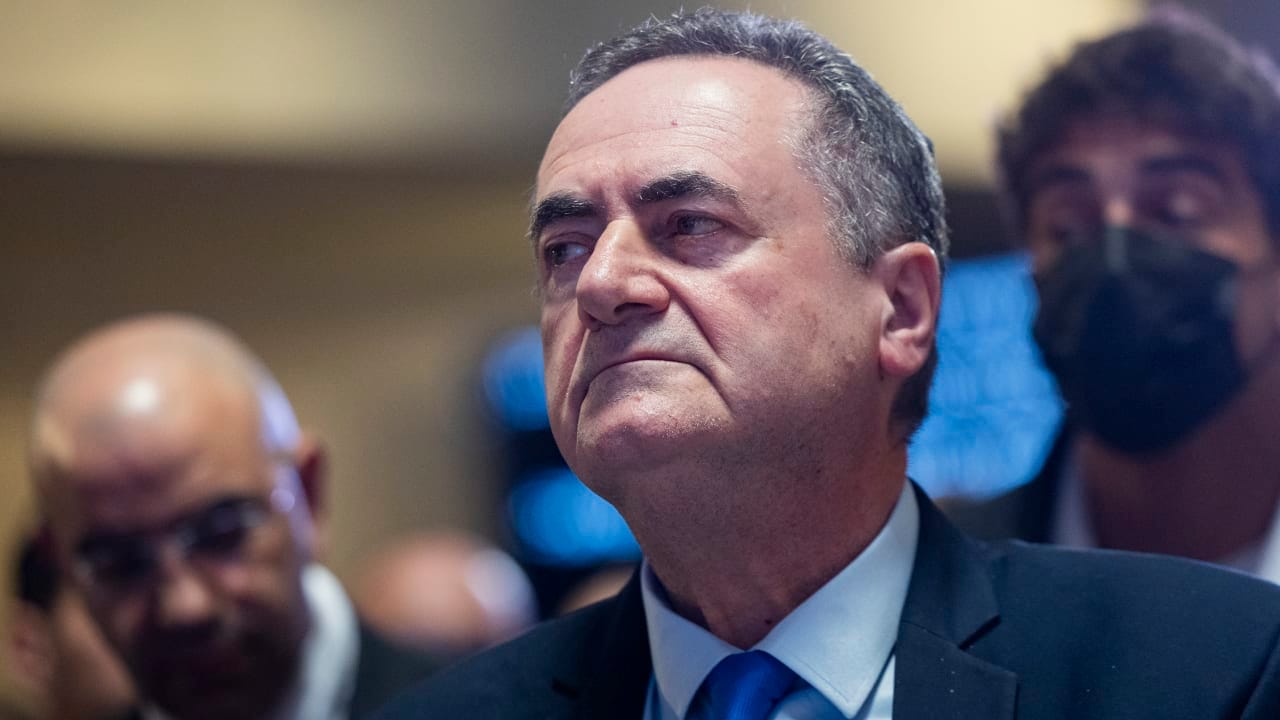
Defense Minister Israel Katz has stirred controversy with his remarks regarding opposition leaders in the context of potential security threats facing Israel. His claims, made publicly on Thursday, suggest that future attacks on the nation will be attributed to those who challenge the government’s security assessments, a comment that has drawn sharp criticism from opposition head Yair Lapid, who termed the statement a “gift” to Israel’s adversaries.
Blame and Accusations in Israeli Politics
During his announcement, Katz specifically singled out opposition figures like Yair Lapid and Naftali Bennett, stating that they would bear responsibility should any terrorist attacks occur. He accused them of undermining the government’s credibility by disrespecting its warnings about imminent threats possibly aimed at influencing electoral outcomes. Katz emphasized that these warnings were grounded in information available to authorities, though he did not disclose the specifics of any proposed attacks.
In his emphatic defense, Katz stated, “It is crucial for our enemies to understand that Israel remains vigilant and that our security forces are prepared for every eventuality, irrespective of political maneuvering.” His assertion highlights an ongoing issue in Israeli politics, where security becomes a pivotal topic, particularly in times of impending elections.
Opposition’s Response
In response to Katz’s remarks, Lapid accused the government of utilizing security as a political weapon while simultaneously manifesting incompetence in addressing significant threats like Hamas, Iran, and Hezbollah. He deemed Katz’s tirade as reckless, suggesting it aids those who wish to threaten Israel. Lapid is adamant that the government’s desperate attempts to evade accountability expose their weakness in governance, as they distract from their failures with blame.
Lapid’s statement raised pertinent concerns, emphasizing that national security ought not to become a political sideshow. He underlined the dangerous precedent set by the ruling party in politicizing such vital issues, suggesting that the government’s approach only serves to embolden adversaries rather than deter them.
Calls for Accountability
Furthermore, both Gadi Eisenkot, the chairman of Yashar, and Yair Golan, the head of the Democrats party, criticized Katz for his comments. Eisenkot articulated that shifting blame before any future incidents could diminish national security and lay the groundwork for potential crises. He remarked, “Our military is strong, but we have leadership that is ineffective and perilous.”
Golan echoed this sentiment, suggesting that Katz’s statements reflect a lack of the necessary resolve for his role. He labeled Katz’s approach as dangerously irresponsible, indicating that such rhetoric could incite greater division and instability within Israeli society.
A Broader Implication for Israeli Security
The tension between the government and opposition regarding security measures underscores a critical moment for Israel as it navigates both domestic politics and external threats. The growing divide amplifies concerns about how security is being handled and the ramifications this has on the country’s societies and its citizens. As the political landscape evolves, the implications for Israel’s security dynamics warrant close attention, especially as the next elections approach.
In light of these developments, it is imperative for Israeli leaders to recognize the profound importance of a unified strategy in handling security matters. Only through cohesive dialogue and constructive governance can the nation hope to face its challenges effectively while maintaining accountability and trust among its citizens.