
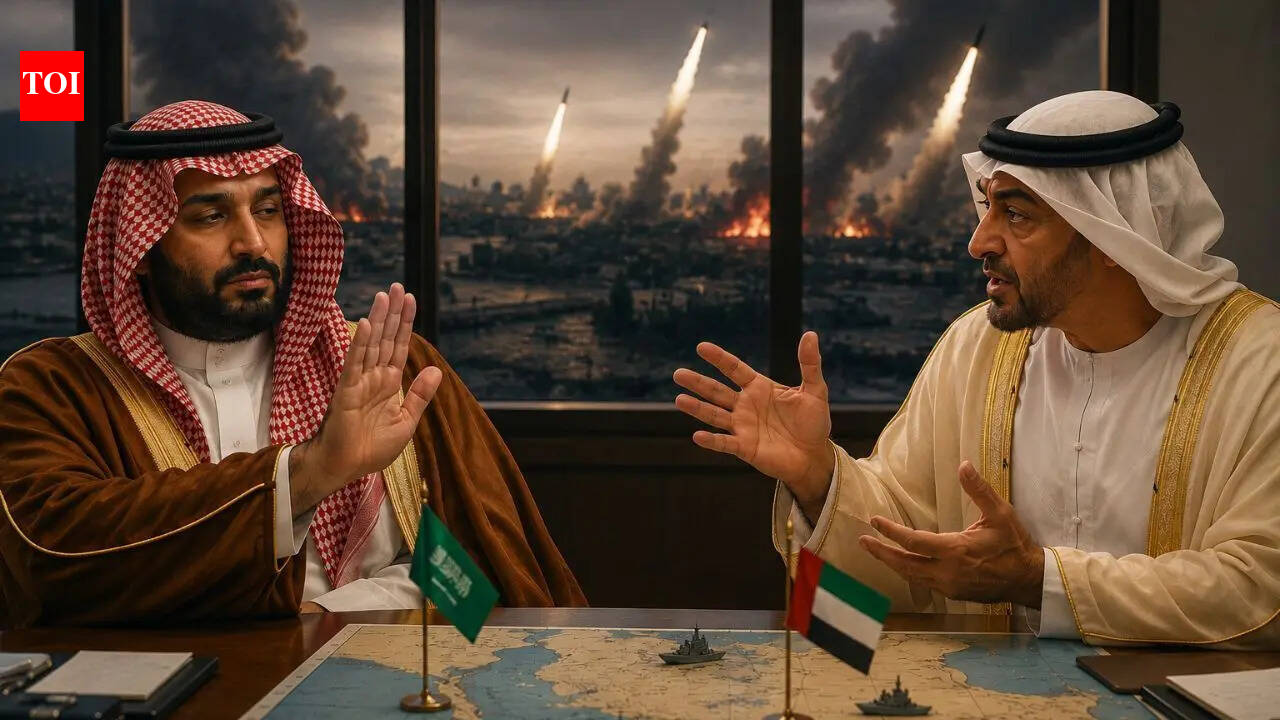
The United Arab Emirates (UAE) recently attempted, albeit unsuccessfully, to rally Gulf nations like Saudi Arabia and Qatar for a unified military response against Iran. This initiative came in the wake of Iran’s aggressive actions targeting various Gulf states, particularly after significant U.S. and Israeli strikes against Tehran in late February.
UAE’s Diplomatic Push
UAE President Mohamed bin Zayed Al Nahyan, often referred to as MBZ, engaged in numerous discussions with regional leaders following these events. The urgency for a coordinated military strategy grew as Iran launched hundreds of drones and missiles aimed at Gulf nations in reaction to the strikes. These actions by Iran disrupted essential supply routes and threatened critical infrastructure, such as ports and airports, raising alarm bells throughout the region. Despite MBZ’s advocacy for a collective response to deter further Iranian aggression, several Gulf leaders outright rejected the notion of participating in military action. Citing their stance that “this wasn’t their war,” they chose to avoid escalation.
Strained Gulf Relations
This dissent over military strategy has reportedly deepened existing tensions between the UAE and Saudi Arabia, raising questions about the effectiveness of the Gulf Cooperation Council (GCC). MBZ reminded fellow leaders of the GCC’s foundation in security concerns stemming from Iran’s Islamic Revolution in 1979. The UAE’s frustration reached a tipping point, leading to its decision to exit the Organization of the Petroleum Exporting Countries (OPEC) in late April. Additionally, the UAE is reconsidering its involvement with other regional organizations, concerned about the lack of solidarity among Gulf states in the face of shared threats.
Security Challenges and Responses
The UAE has positioned itself as a significant target for Iranian assaults, particularly following its normalization of relations with Israel under the Abraham Accords in 2020. Reports indicate that Iran targeted the UAE with nearly 3,000 drones and missiles, although a majority were intercepted. Additional attacks aimed at energy infrastructure across the region further illustrate the precarious security landscape. Notably, an attack on Qatar’s Ras Laffan liquefied natural gas facility resulted in substantial financial damage, emphasizing the broader economic implications stemming from regional instability.
While the UAE navigates these challenges, it has sought closer collaboration with Israel, sharing intelligence and coordinating defensive measures against Iranian threats. The US, under former President Trump, was aware of the UAE’s intentions to form a unified military front and pushed for Saudi and Qatari involvement. However, the dominant sentiment among these Gulf leaders veered towards diplomatic solutions, fearing that military confrontation with Iran could provoke retaliation.
Future Implications for Gulf Cooperation
Going forward, the UAE’s frustrations may lead to a rethinking of alliances within the Gulf. With Saudi Arabia, Qatar, and other nations hesitating to engage militarily, the regional dynamics appear to be shifting. The ongoing debates about military action versus diplomatic engagement highlight significant rifts in strategy and priorities among Gulf nations. As they grapple with security threats posed by Iran, the prospect of future military cooperation remains uncertain, reflecting larger concerns about stability and economic growth in the region.
As the geopolitical landscape evolves, the UAE’s stance may provoke a reevaluation of its partnerships and participation in regional frameworks. Navigating through these complexities could define the future of Gulf cooperation in an increasingly volatile context.