
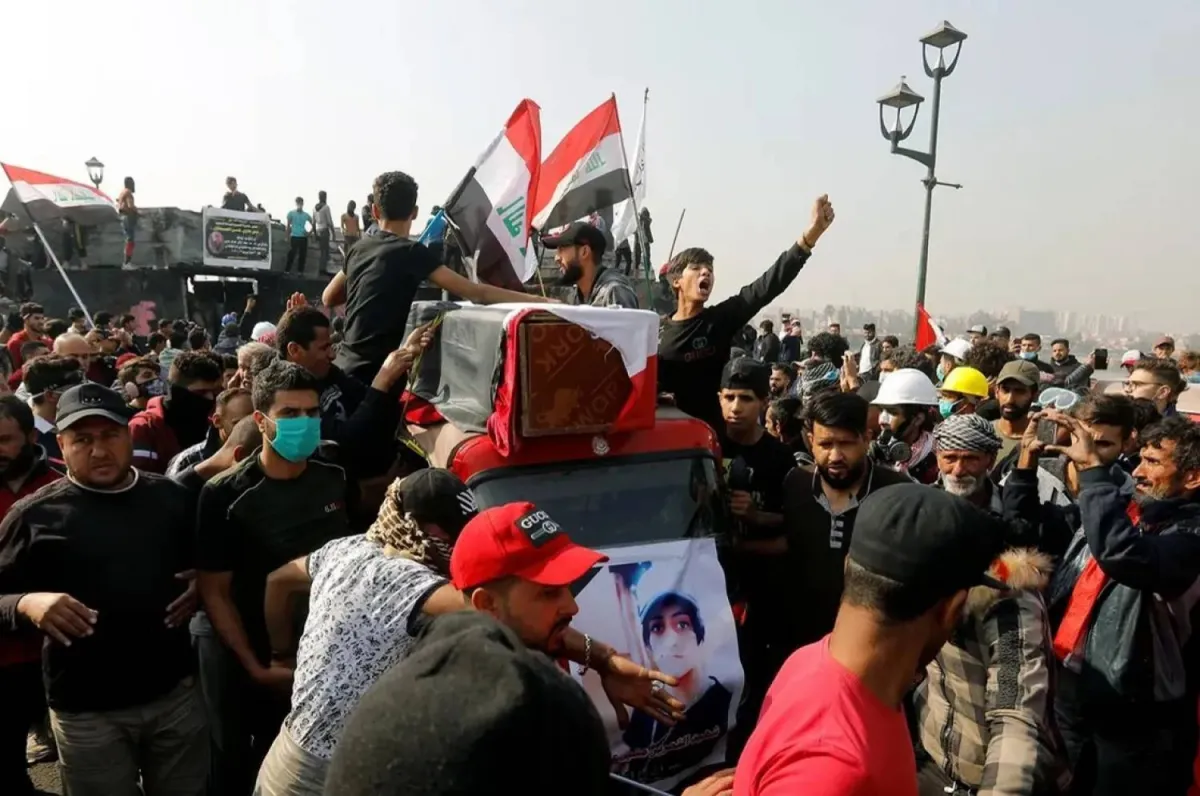
Reactions in Iraq are intensifying following remarks made by Hadi al-Amiri, the leader of the Badr Organization, regarding the 2019 Tishreen protest movement and the alleged role of armed factions in suppressing it. Families of victims are now preparing legal actions against him, igniting discussions surrounding accountability and justice in a turbulent period for the nation.
Controversial Remarks and Immediate Backlash
Speaking at a recent public event, al-Amiri defended armed factions by asserting their role in protecting Iraq’s political framework, which he claims includes combating ISIS and managing dissent. His assertion that these groups suppressed what he termed the “Tishreen sedition” has sparked outrage among families mourning loved ones who lost their lives in the protests sparked by a demand for reform. Their calls for accountability resonate deeply, as thousands rallied against corruption and systemic failures, often expressing their hopes for a better future with the slogan “We want a homeland.”
Al-Amiri’s comments came nearly seven years after the protests, during which unidentified armed groups, colloquially referred to as the “third party,” were implicated in the killing of demonstrators. The lack of clarity surrounding that entity has left a significant mark on Iraqi society, with families of victims seeking acknowledgment of their lost relatives and the injustices they faced.
Legal Action and the Quest for Accountability
Groups representing the families of Tishreen victims are now finalizing documents to support their lawsuits against al-Amiri. The objective of these legal maneuvers may extend beyond criminal conviction; they aim to restore the honor of victims, many of whom were disparaged as “agents” or “children of the embassies.” According to legal experts, the actions against protesters qualify as acts of terrorism and genocide under Iraqi law. Therefore, they argue, such cases are not subject to a statute of limitations, allowing families to seek justice at any time.
Despite potential legal hurdles, the families retain hope that their efforts will confront broader systemic issues regarding impunity within Iraq. Legal expert Ali al-Tamimi notes that the nature of these crimes makes them inherently prosecutable, regardless of the political nuances that might shield perpetrators from accountability.
The Political Landscape and Al-Amiri’s Defense
Hadi al-Amiri’s statements emphasize a complex interplay between political defense and societal outrage. As a prominent figure in the Shiite Coordination Framework, he represents a faction heavily entrenched in Iraqi politics. Amid the rising tensions surrounding disarmament and the role of these militias, al-Amiri’s remarks may reflect an effort to reinforce the factions’ legitimacy during a time of considerable pressure from both domestic and international observers.
While al-Amiri’s interpretation of events suggests a protective stance towards the political system, critics underscore that his views resonate with a historical script marked by violence against dissent. Many argue that the armed factions mobilized not only to defend the system from perceived external threats but also to quell any internal challenges to authority. The fallout from al-Amiri’s comments could thus be significant, affecting public opinion and the legitimacy of the political process as families push for recognition and justice.
Future Implications and Ongoing Struggle
As legal actions move forward, the ramifications of al-Amiri’s statements will likely unfold within both judicial and societal contexts. The critical nature of these developments signals not only a quest for justice for Tishreen victims but also an evolving discourse on political accountability in Iraq. Families pushing back against labeling and the minimization of their grief represent a microcosm of a larger struggle for rights and reforms against a backdrop of deep-seated issues within the political establishment.
In conclusion, the intensifying calls for justice from Tishreen victims’ families, coupled with al-Amiri’s controversial remarks, highlight the complex dynamics of Iraq’s political landscape. The ongoing struggle for accountability reflects a broader yearning for change and acknowledgment within a nation still grappling with its past. As these legal battles commence, they embody not just a fight for individual dignity but a collective call for reform and recognition of the sacrifices made during the pivotal Tishreen protests.