
Understanding Turkiye’s Economic Growth and Its Implications for Azerbaijan
In the second quarter of 2026, Turkiye’s economy recorded a modest growth of 2.3 percent year-on-year, a figure that, while significant, highlights ongoing challenges such as high inflation and stringent monetary policies. However, an interesting component of this GDP data is the expansion of information and communication activities, which surged by 8.6 percent. This trend is not only pivotal for Turkiye but also holds promising implications for Azerbaijan and the surrounding South Caucasus region.
The Broader Scope of Information and Communication Sector**
The category of “information and communication” is expansive, extending beyond the traditional IT framework to encompass telecommunications, internet infrastructure, digital services, software development, and data centers. Over the past two and a half years, Turkiye’s information sector has enjoyed consistent growth, with annual rates oscillating between 8.6 percent and 9.9 percent. This uptrend has largely been fueled by digital transformation initiatives, advancements in cloud computing, the establishment of data centers, and significant investments in 5G technology.
Crucially, this growth is not confined to Turkiye; it has the potential to foster greater economic integration across the region. For countries like Azerbaijan, Turkiye’s expanding digital economy represents yet another avenue for collaboration beyond traditional sectors such as energy and transport. In today’s landscape, a well-functioning digital infrastructure can significantly enhance the efficiency of various economic activities.
Establishing a Digital Corridor Between Turkiye and Azerbaijan**
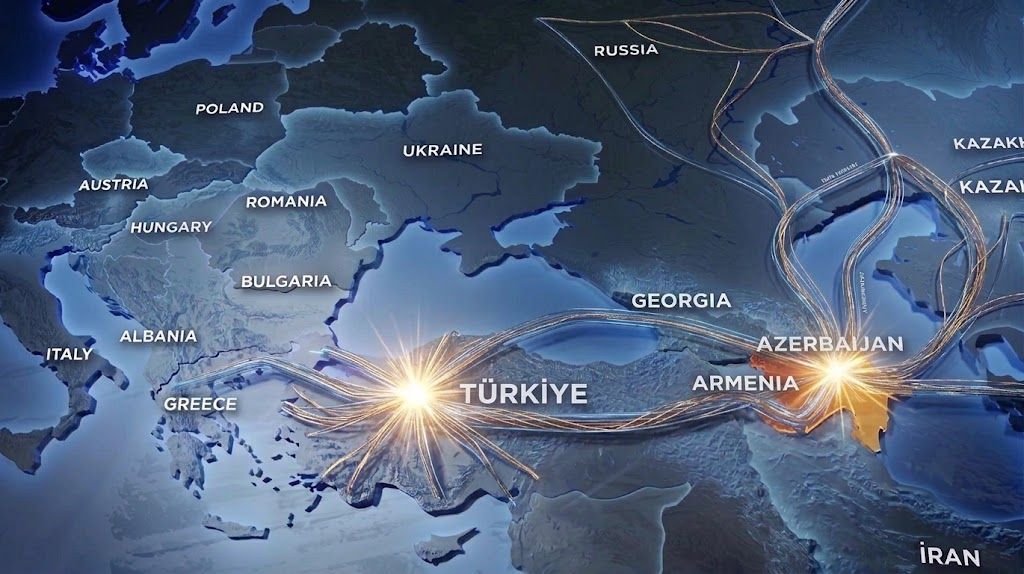
A prime example of how digital growth can enhance regional cooperation is exemplified by the Middle Corridor. Azerbaijan has strategically positioned itself as a transit hub linking Central Asia with Turkiye and Europe. The ongoing discourse has primarily focused on physical infrastructure such as railways, ports, and highways. However, the future is leaning toward digital advancements.
As cargo transits between Azerbaijan and Turkiye, mountains of data—ranging from customs documents to tracking information—are generated. Streamlining these systems to ensure seamless communication could lead to far quicker and more reliable transportation of goods. An initiative to digitalize cross-border freight documentation called e-CMR has already been set in motion, showcasing a step toward integrated logistics operations. The benefits of reducing paperwork include fewer delays, lower administrative costs, and improved visibility for logistics companies.
Mutual Benefits of Digital Development**
Turkiye’s robust telecommunications infrastructure, bolstered by a fiber network that reached 697,000 kilometers in early 2026 and nearly 100 million broadband subscriptions, is enhancing this potential. The investments in 5G technology are further increasing demand for fiber optics, data centers, and network capacities. However, Azerbaijan is not standing still; it is simultaneously advancing its own digital infrastructure. The migration of 147 government institutions to the Government Cloud and ongoing construction of data centers are notable trends.
This emerging synergy presents opportunities for both countries. While Turkiye boasts a larger technological market with a solid telecommunications sector, Azerbaijan’s strategic geographic location allows it to effectively serve as a gateway to Central Asia. Joint ventures in digital service exports could become an attractive proposition. For instance, Turkish companies specializing in software and cybersecurity could leverage Azerbaijan as a launching pad into Central Asian markets. In turn, Azerbaijani enterprises could benefit from Turkish innovations and investment opportunities.
Strategic Implications for Regional Collaboration**
The data underscores a promising future for Azerbaijan’s own digital services market, having reported a 10.4 percent uptick in this sector during the first half of 2026. Notably, software development and consultancy services soared by 34.8 percent. This trend suggests that Azerbaijan is cultivating a digital services sector capable of competing in larger markets, including Turkiye.
While growth in Turkiye’s digital economy does not guarantee immediate benefits for Azerbaijan, the potential for strategic synergy exists. Azerbaijan’s traditional reliance on energy exports could be bolstered by its emerging role in digital commerce, redefining its economic relevance. To maximize these opportunities, it will be crucial for Azerbaijan to align its digital initiatives with its ambitions for the Middle Corridor, transforming this route into one that accommodates not only goods but also data, services, and technology. In this interconnected landscape, both nations stand to gain immensely.