
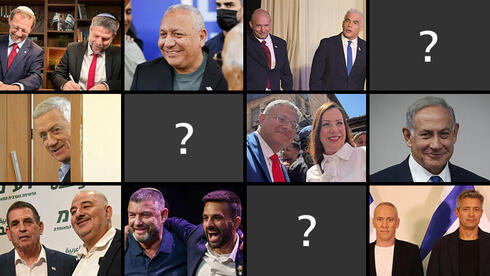
As Israel approaches a crucial election on October 27, the political landscape is under significant pressure. With nearly 417,000 votes—approximately 9% of the valid ballots—wasted in the previous election on parties failing to meet the electoral threshold, the next few days may be pivotal in determining the composition of the next Knesset.
Impending Deadline for Candidates
Saturday marks the commencement of a critical period for candidates whose parties are currently polling close to the 3.25% threshold. As the deadline for submitting candidate lists approaches—set for 10 p.m. on Tuesday—pressure is mounting. Smaller parties must consider merging with larger factions or withdrawing altogether to avoid rendering their votes ineffective. The stakes have escalated as candidates navigate this delicate dance, balancing their ambitions with the need for strategic alliances.
Several pivotal questions linger less than 72 hours before the deadline. Prime Minister Benjamin Netanyahu is tasked with selecting potential Knesset members for the Likud party while considering the possibility of further mergers within his political bloc. Key figures such as Benny Gantz need to decide whether to remain in the race or follow suit like former minister Gilad Erdan, who withdrew from electoral contention. Compounding the uncertainty, candidates from parties facing dismal polling results are wrestling with their next steps—will they collaborate, or will they navigate these turbulent waters alone?
Netanyahu’s Calculated Moves
Netanyahu is acutely aware of the importance of each voter, especially from his right-wing constituency, where any lost votes could be detrimental based on past election cycles. He is keen to incorporate newcomers, such as Brig. Gen. (res.) Ofer Winter, who leads the Amcha Israel party, into a broader coalition. However, Winter remains resistant to merger offers, advocating for the establishment of an entirely new political slate devoid of familiar figures from the previous administration—arguing that only this can provide voters with a true alternative.
Polling indicates that both the Smotrich-Feiglin alliance and Winter’s party could surpass the threshold, each garnering between four to six seats, making these potential mergers all the more significant. Notably, Otzma Yehudit chairman Itamar Ben-Gvir has already ruled out uniting with other factions, complicating Netanyahu’s objectives. He has, however, successfully recruited Likud lawmaker Tally Gotliv for his party, demonstrating that maneuvering can yield immediate personnel solutions.
The Opposition’s Strategic Considerations
The dynamics on the opposition side are equally intricate. Gadi Eisenkot, a former IDF chief of staff and the leading candidate for prime minister from the Yashar! party, has indicated that significant political “surprises” lie ahead. He is fervently exploring various options, conducting discussions aiming towards creating a unified bloc to combat Netanyahu’s coalition effectively.
The potential for a merger between Eisenkot and former PM Naftali Bennett is also under scrutiny. Both leaders recognize that a consolidation of forces may help curb internal conflicts within the bloc, ultimately fostering a cohesive front against the incumbent administration. Amidst this political maneuvering, it appears that Eisenkot is also engaging with the Zionist Home party leader, Chil Tropper, whose alliance with fellow former minister Yoaz Hendel could shift the balance in this fierce political contest.
As the clock ticks down, the decisions made by Gantz and other key players will be pivotal. Gantz’s Blue and White party has been struggling in the polls, leading critics to advocate for his withdrawal to ensure the collective strength of the anti-Netanyahu bloc. The recent withdrawal of former UN ambassador Gilad Erdan and the ensuing calls for responsible action from other parties only intensify the pressure on Gantz.
By Tuesday night, the political landscape may shift dramatically. Every candidacy withdrawal, merger, or strategic position taken will be vital in shaping whether substantial votes translate into actual Knesset seats or fall helplessly beneath the threshold. The countdown to the election is on, and the decisions made in these next few days could irreversibly alter the future of Israeli politics.