
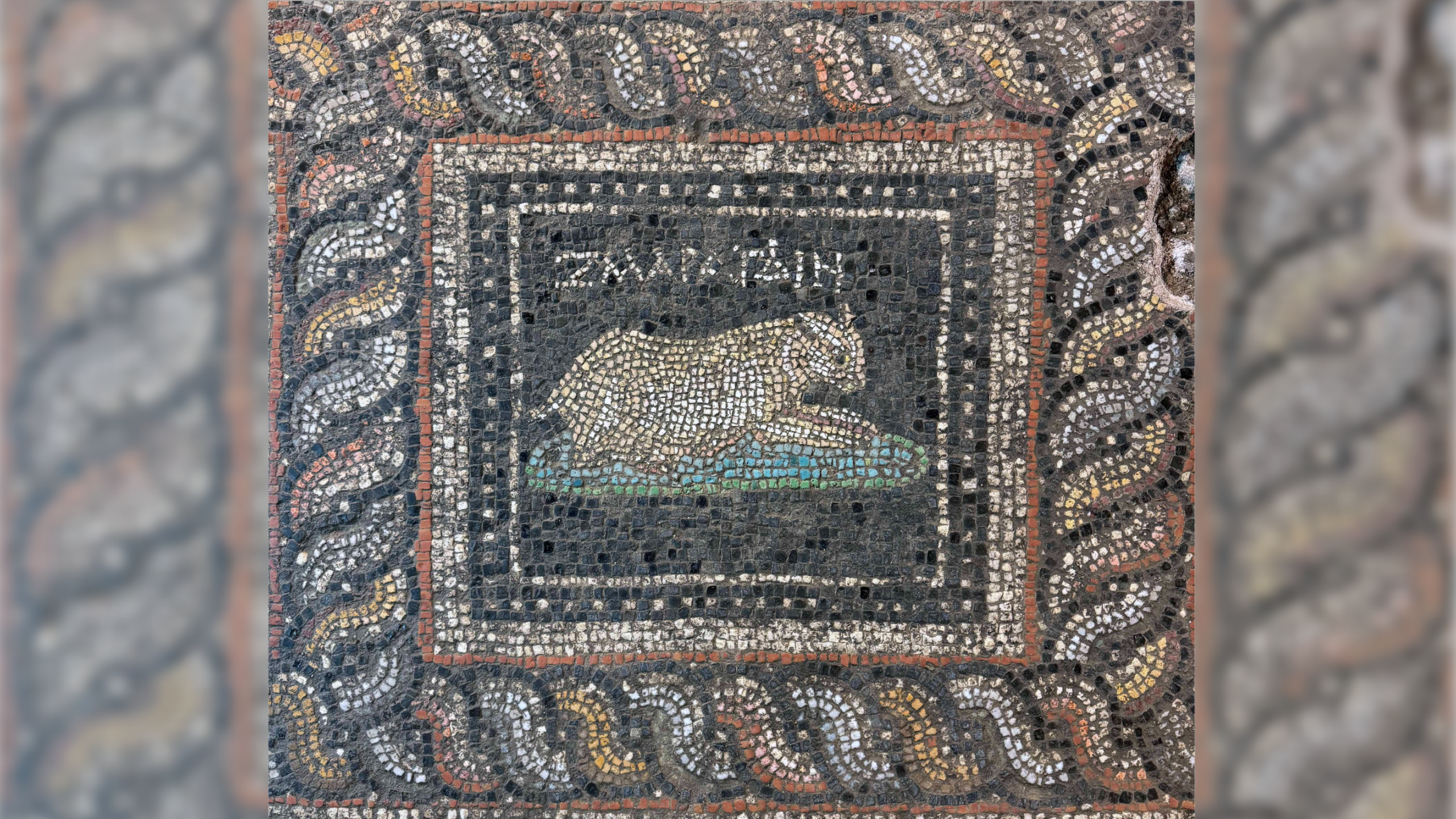
Researchers have recently made a fascinating discovery in Turkey’s Aegean region: an ornate Roman villa containing a colorful mosaic that features two cherished household pets—Emerald the cat and Ocean the dog. This exceptional finding provides insight into the domestic life of the Roman elite nearly two thousand years ago.
Excavation of the Roman Villa
The villa, believed to date back to the late second or early third century A.D., was uncovered in Adramytteion, an ancient city that served as a significant trading hub. The excavation, led by archaeologist Hüseyin Özgen from Mimar Sinan Fine Arts University, began in 2012 but only recently unveiled the villa’s intricate details. It features three halls surrounding a central atrium, highlighting the architectural sophistication of the time.
Occupying the main reception area is a striking mosaic measuring approximately 5 by 3.6 meters, consisting of 15 separate panels filled with a variety of living and mythical creatures. According to Özgen, the layout appears to be centered around an image of Medusa, surrounded by stylized representations of birds, fish, and felines. The artistry is remarkable, employing a spectrum of tiles in colors such as turquoise, burgundy, and yellow to create an elaborate design.
The Meaning Behind the Mosaic
Of the many figures captured in the mosaic, only two pets are named—Emerald and Ocean. As visitors entered the reception hall, they would first encounter a representation of Emerald, a serene cat depicted resting on a blue-green cushion. Above her, the name Emerald is inscribed in Greek, suggesting that she was likely a treasured companion rather than a stray.
The naming of these pets offers intriguing clues about the owner’s status and lifestyle. Emerald, linked to the renowned emerald mines of ancient Egypt, could imply that the villa’s proprietor was involved in trade with North Africa. Conversely, Ocean, depicted as a lively dog, likely reflects the villa’s coastal surroundings, positioning the owner as someone deeply integrated into the maritime culture of Adramytteion.
Significance of Animal Representations
The inclusion of Emerald and Ocean in the mosaic not only reveals the affection and companionship shared by the villa’s occupants but also serves as a form of identity representation. Özgen suggests that these depictions were more than mere artistic expressions; they were likely symbols of ownership and personal connection to the home environment. The visible named pets act as markers of familial affection and demonstrate the role pets played in the lives of the ancient elite.
As excavations continue at the site, the findings reflect a rich historical narrative that contributes to our understanding of Roman domestic life. The careful preservation of these mosaics ensures that future generations will gain deeper insights into the intricate social dynamics and artistic achievements of this ancient civilization.
In summary, the discovery of the Roman villa and its vivid mosaic featuring Emerald and Ocean sheds light on the galas of everyday life in antiquity. Each detail within the mosaic invites us to explore how personal relationships with pets were celebrated and signifies the importance of homes as centers of identity and culture during Roman times.