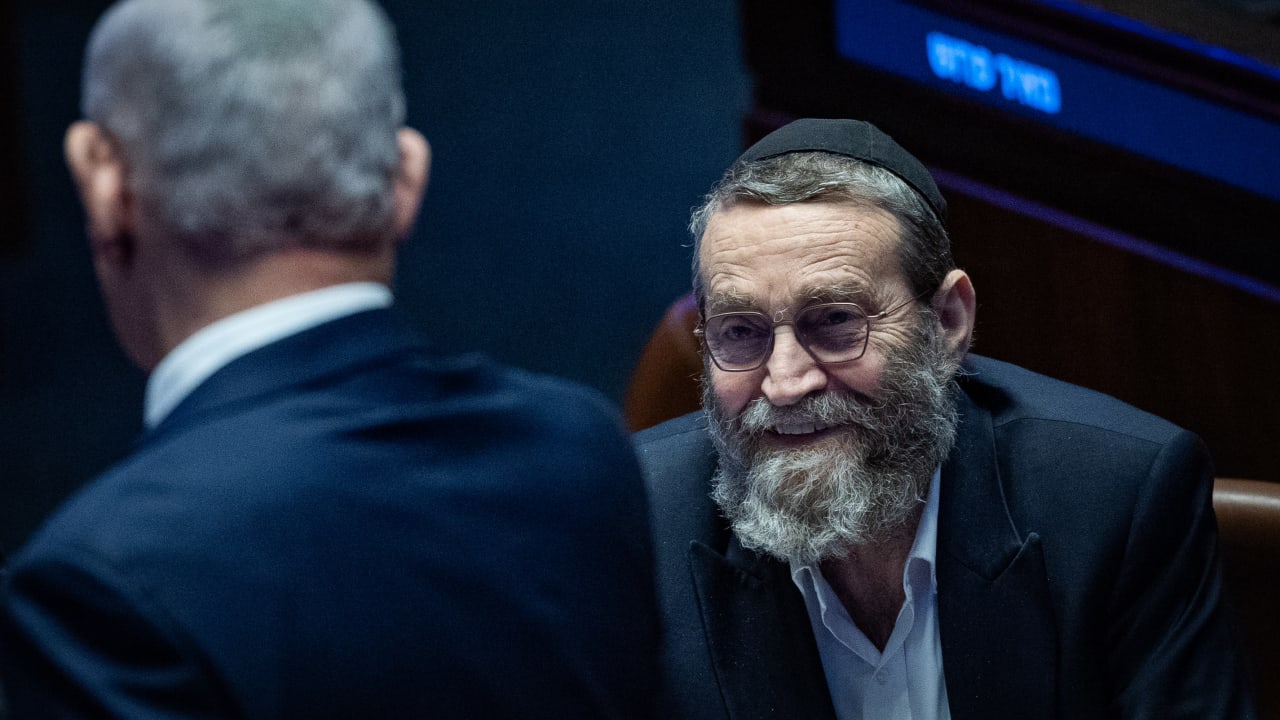
Prime Minister Benjamin Netanyahu might seem like a seasoned political operator, but in the world of Israeli politics, Moshe Gafni’s tenure offers a striking comparison. Gafni, representing Degel Hatorah, has held a long-standing position in the Knesset, finding himself in the spotlight as he was recently excluded from the party’s list for the upcoming elections.
The End of an Era for Moshe Gafni
Gafni’s political journey began in 1988, a time when Israel featured only a single national television channel, and significant global figures like Ronald Reagan and Mikhail Gorbachev were at the forefront. During this period, Gafni was first elected to the Knesset alongside Netanyahu. However, while Netanyahu returned to the Knesset in 2003 after a brief hiatus, Gafni has experienced nearly three decades of continuous service, interrupted only by short absences. His departure serves as a reflection of the evolving landscape in Israeli politics, with new leadership signifying a potential shift away from established alliances.
Despite never wielding the same level of power as Netanyahu, Gafni became a key player in Israel’s political framework. He was known for his inability to secure specific legislation that his rabbinic leaders viewed as vital for the haredi community, particularly regarding military exemptions. This episode raises essential questions about the effectiveness of traditional haredi strategies within the current political context. Has the approach to safeguard the yeshiva community’s interests within the parliamentary system reached its limit?
Changing Dynamics Amid Election Preparations
As upcoming elections draw near, the political winds are shifting. Several opposition parties are placing military or national service for all as a prerequisite for coalition agreements. This shift may indicate that Gafni’s departure is not merely a personal loss but also a signal of a diminishing influence of haredi parties in Israeli politics. The leadership of Degel Hatorah announced Gafni’s dismissal, emphasizing a need for “refreshing” political representation, which hints at broader strategic realignments.
The rabbinic leadership of Degel Hatorah has also expressed their gratitude towards Gafni, but the unmistakable message is clear: the old guard is making way for new leadership. This transition coincides with Yakov Asher’s rise to take over not just as Gafni’s successor in the party but also as the head of United Torah Judaism, reinforcing the idea that change is afoot at multiple levels.
Implications for Netanyahu and Haredi Alliances
The decision to exclude Gafni could convey to Netanyahu that the haredi alliance is no longer a guaranteed fixture. During a recent legislative attempt for draft exemptions, Degel Hatorah’s leaders declared a waning trust in the prime minister. Historically, Gafni’s connection to Netanyahu symbolized the enduring Likud-haredi partnership. His removal potentially weakens Netanyahu’s authority and control over the haredi factions, paving the way for an unpredictable future.
While Gafni’s political era may be concluding, his party remains ideologically aligned with Likud. However, this change implies that historical relationships cannot be taken for granted; Netanyahu must actively earn the support of Degel Hatorah and its future leaders. Gafni’s ongoing absence might create opportunities for new alliances or strategies that could ultimately redefine the political landscape in Israel.
The evolution within Degel Hatorah underscores a shift in strategy as well. While the party has not shifted dramatically in its principles on military conscription, it signals a desire to be seen not just as a cog in the Netanyahu machinery but as potential swing voters in future coalitions. Gafni’s removal might be more about positioning than ideology, aiming to reclaim influence in an ever-changing political environment. As the upcoming elections approach, the dynamics within Israeli politics promise to be complex and revealing.