
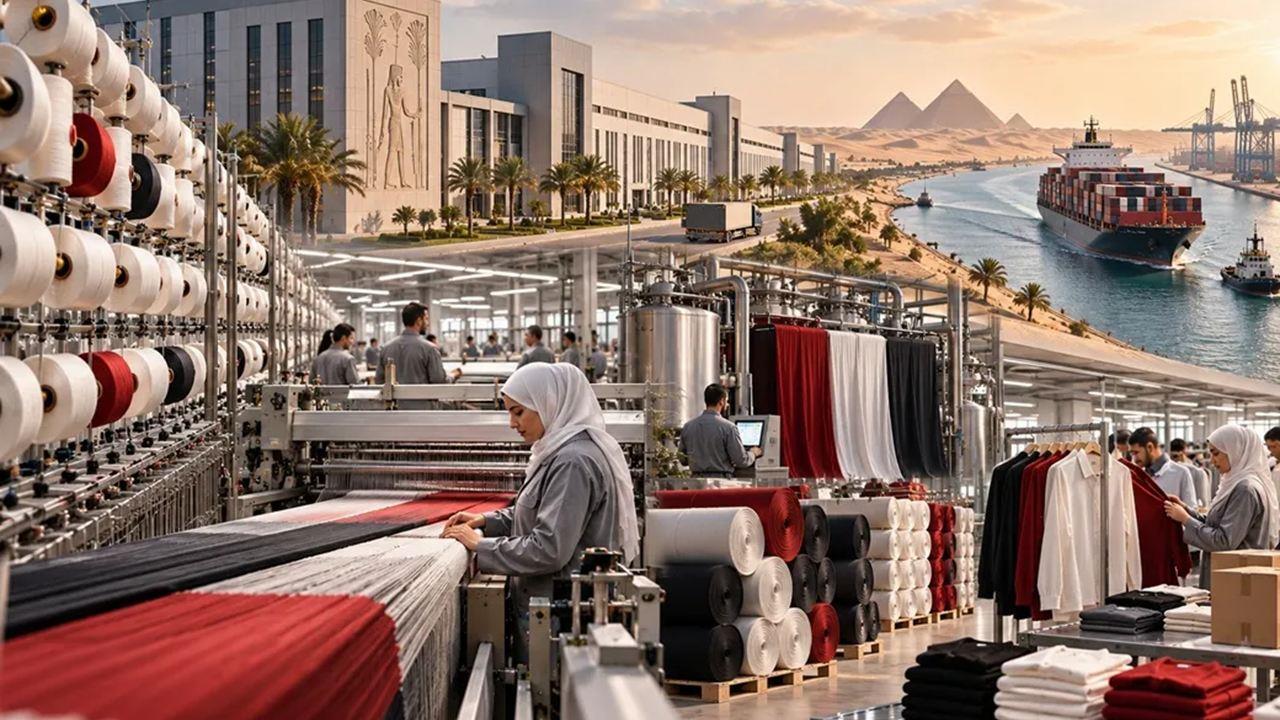
Egypt is witnessing a remarkable evolution in its textile industry, marked by a significant investment of $1.54 billion. This influx of capital is steering the nation away from a basic assembly-led garment production model toward a more sophisticated, integrated sourcing system. As Egypt aims to enhance its textiles sector, various factors are contributing to its growing attractiveness among global brands.
Strengthening Production Capabilities
A major component of Egypt’s transformation involves the introduction of new spinning, weaving, and dyeing facilities. These advancements are designed to bolster the country’s production capabilities, allowing for a more comprehensive range of textile products. By upgrading its manufacturing processes, Egypt aims to not only meet local demand but also position itself as a key player in the international market.
This shift toward enhanced productivity is crucial in an industry where quality and efficiency often dictate market success. As global textile companies look for reliable manufacturing partners, Egypt’s investment in state-of-the-art facilities could make it a viable option for businesses seeking alternatives to traditional manufacturing hubs.
Access to Key Markets
Furthermore, Egypt’s strategic geographic location offers significant advantages for global brands. With proximity to Europe and several duty-free trade agreements, the country is well-positioned to facilitate easy access to important markets. This advantage allows for not just cost-effective shipping but also faster response times, making Egypt an appealing option for brands looking for efficiency in their supply chains.
The duty-free access to certain markets can also encourage foreign investment, as it allows brands to minimize costs associated with tariffs and import taxes. By leveraging these trade benefits, Egypt stands to increase its competitiveness, particularly with brands aiming to optimize their operational expenses while maintaining high product quality.
Challenges Ahead
However, despite these promising developments, several challenges persist. Egypt remains highly dependent on raw materials, particularly cotton, which is subject to fluctuations that could impact production. The continuous availability of high-quality cotton is vital for maintaining the quality standards expected by global brands.
Additionally, trade-policy risks can pose significant hurdles. Changes in international trade agreements or tariffs can greatly affect the dynamics of the textile market, potentially deterring investment and complicating trade relationships. Addressing these vulnerabilities will be essential for Egypt to establish itself as a powerhouse in textile manufacturing.
The Future of Egypt’s Textile Industry
In conclusion, while Egypt’s $1.54 billion investment marks a pivotal point in its textile sector, the journey towards a fully integrated sourcing base is fraught with challenges. The country’s new facilities and geographic advantages offer a solid foundation for growth, but overcoming raw material dependencies and navigating trade-policy risks will be crucial for sustained success. As the industry evolves, it will be interesting to see how Egypt adapts to meet these challenges, positioning itself as a formidable player in the global textile market.