
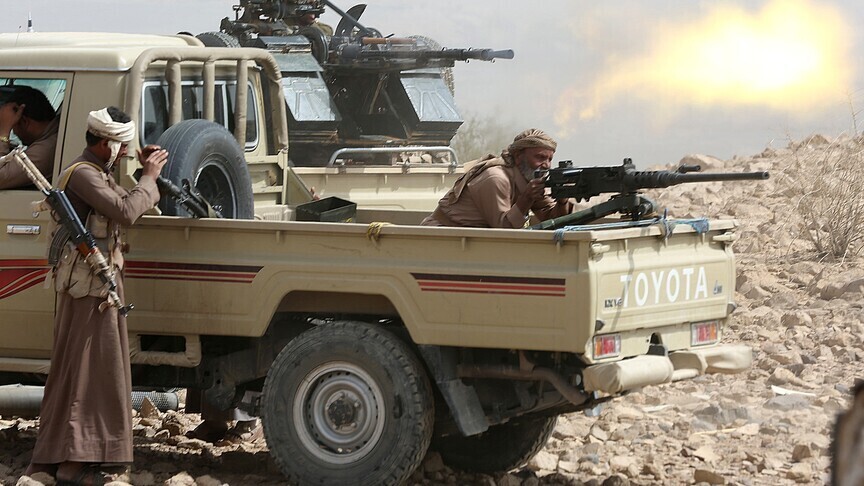
Yemen’s Houthi movement recently escalated its military activities against Saudi Arabia, confirming a series of extensive missile and drone strikes targeting key locations within the kingdom. This surge in aggression marks a significant development in the ongoing conflict between the two nations, raising concerns over the humanitarian implications and regional stability.
Houthi Attacks: A Major Offensive
On Tuesday, a spokesperson for the Houthi military, Yahya Saree, announced the execution of a large-scale military operation that involved the deployment of numerous ballistic missiles and drones. Director targets included Aramco facilities in Abha, Najran, and Jizan, along with the Khamis Mushait Air Base. The spokesperson claimed that the strikes were executed with precision, leading to significant damage at the affected sites. This assertion underscores the Houthi’s commitment to asserting their military capabilities in the face of Saudi opposition.
Retaliation and Justification
The Houthi spokesperson justified the aggressive actions as a direct response to recent Saudi airstrikes in Yemen, stating that there had been a total of 121 strikes from Saudi forces over a span of three days, affecting the provinces of Marib, Al-Bayda, Al-Hudaydah, Taiz, and Al-Jawf. Additionally, he accused Saudi Arabia of hitting the Central Prison in Al-Hazm, Al-Jawf, where the attack reportedly led to civilian casualties, including women and children. Such claims reflect the heightened tensions and ongoing cycle of retaliation between the warring parties.
Civilians Affected and Saudi Response
Saudi authorities reported that the Houthi attacks resulted in injuries to at least 73 civilians, emphasizing the impact of the conflict on non-combatants, including women and children. Following the strikes, the Saudi Energy Ministry confirmed that fires broke out at energy facilities in the southern region, necessitating a temporary halt in operations at certain sites. This incident highlights the broader implications of military engagements, particularly in relation to critical economic infrastructure.
Strategic Implications and Future Outlook
Maj. Gen. Turki al-Maliki, a spokesperson for the Saudi-led coalition, labeled the Houthi actions as a “dangerous escalation.” He asserted that the coalition would implement necessary operational measures to counter the Houthi threat effectively. This statement underscores the growing military strain and suggests that both sides may continue their respective campaigns. Meanwhile, Yemen’s government forces have reported some victories against the Houthis on multiple fronts, including Al-Jawf, Al-Bayda, Taiz, and Al-Hudaydah.
The conflict in Yemen has persisted since 2014, when the Houthis seized control of the capital, Sanaa. In 2015, a Saudi-led coalition intervened militarily to support the internationally recognized Yemeni government. As the situation continues to evolve, the humanitarian crisis deepens, with millions of Yemenis facing dire conditions. The recent military actions by both the Houthis and Saudi Arabia indicate that a resolution remains distant, keeping the region in a precarious state of unrest.
In summary, the resurgence in military operations from both the Houthi forces and Saudi Arabia points to an ongoing cycle of violence that not only threatens national security but also places civilians at significant risk. With escalating attacks and responses, the future of Yemen remains uncertain as the conflict shows little sign of abating.