
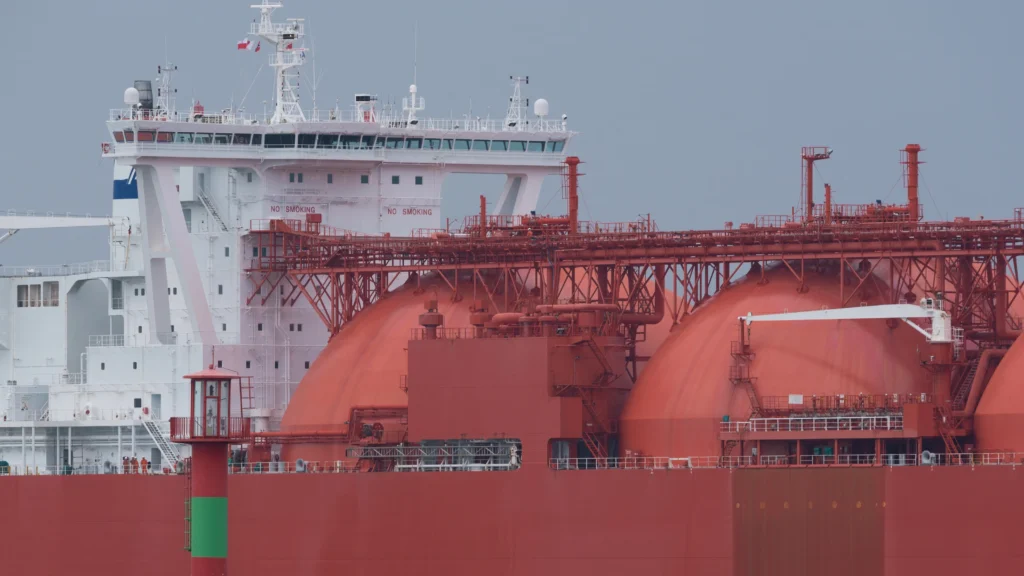
Six LNG tankers are currently en route to Qatar as QatarEnergy monitors the situation to determine when it can resume its liquefied natural gas (LNG) exports through the Strait of Hormuz. The presence of these carriers signifies Qatar’s readiness to restart shipments, an essential aspect for global energy markets.
Qatar Energy Prepares for LNG Shipments
At the end of July, QatarEnergy successfully dispatched a shipment of LNG via the Strait of Hormuz, just weeks after one of its vessels faced an incident during transit in this critical waterway. The vessel, which experienced challenges, was able to complete its journey with its geolocation systems activated. Despite this successful transit, regular LNG exports have not yet fully normalized. The arrival of multiple empty carriers suggests that QatarEnergy is gearing up for further cargoes. However, these actions alone are not indicative of a consistent resumption of exports to global markets.
If the navigational conditions see improvement, Qatar will need an adequate number of vessels ready to transport LNG from the Ras Laffan terminal, a key hub for international energy trade. Historically, Ras Laffan has been among the leading LNG export facilities worldwide, and its operational capability is crucial for meeting global energy demands.
Security Concerns Over Strait of Hormuz
The primary challenge inhibiting the recovery of Qatari LNG exports is maritime security. Following attacks attributed to Iranian forces on the Ras Laffan complex, Qatar declared force majeure. Prior to this, QatarEnergy also scaled back production due to an attack that hit one of its LNG facilities. The company projected that, under stable conditions, it could restore about 50% of its production capacity within the first month and potentially reach 80% in two months.
Nevertheless, the safety of the Strait remains a critical factor. Ongoing threats, including attacks on tankers and military exchanges between Iran and the U.S., have created an uncertain environment, making shipowners and exporters wary. Until security concerns are resolved, the prospect of resuming routine LNG shipments remains precarious.
Innovative Solutions Amid Restrictions
Despite these challenges, Qatar is continuing to log some LNG carrier activity, even if it hasn’t managed to establish a steady flow of shipments out of the Gulf. In August, QatarEnergy and shipping companies implemented alternative logistics methods, such as ship-to-ship LNG transfers off the coasts of Oman and the UAE, enabling certain shipments to reach Asian markets.
These ship-to-ship operations are complex due to LNG’s cryogenic nature, requiring precise coordination and specialized equipment to maintain the gas at nearly -162°C. This operational method adds several hours to transportation times and raises costs, emphasizing its role as a temporary solution while security issues persist in the Strait of Hormuz.
Importance of Safe Passage Through Hormuz
Qatar’s geographic positioning restricts its shipping options, as tankers leaving Ras Laffan must navigate the Strait of Hormuz to access major international routes to Asia and other essential markets. This reliance on the Strait’s security underscores its significance for the recovery of Qatari exports. The current movement of six LNG vessels toward Qatar indicates logistical preparations. Ultimately, the evolution of security in the Strait of Hormuz will be pivotal in determining whether these logistical efforts lead to a sustainable resumption of LNG exports, which are vital to both Qatar’s economy and global energy markets.
In summary, while Qatar is taking steps to revitalize its LNG export capabilities, the interplay of security and logistics remains essential to future developments in this crucial sector.