
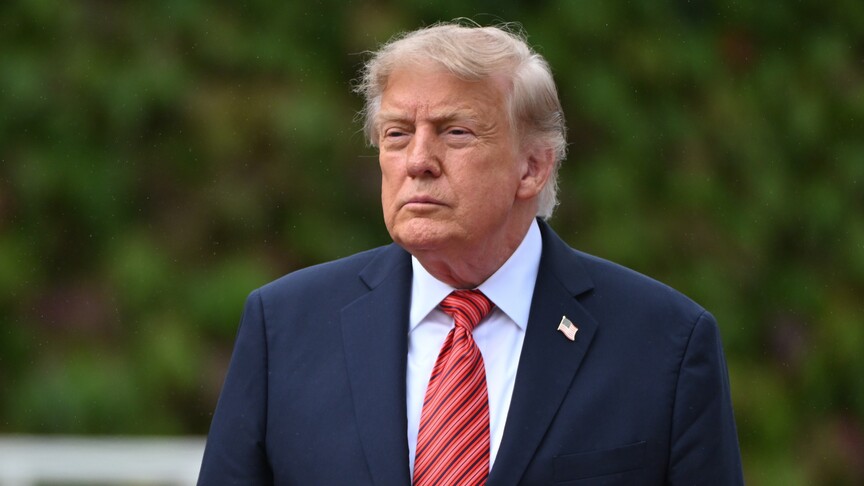
US President Donald Trump recently expressed optimism regarding the ongoing conflict with Iran, suggesting it may conclude sooner rather than later. His remarks came following a discussion with Irish Prime Minister Micheal Martin in Ireland, where he reiterated the necessity of preventing Iran from attaining nuclear capabilities.
End of Conflict on the Horizon?
During a press briefing, Trump conveyed his belief that peace might be achieved shortly, potentially aligning with the election cycle. When probed about the timeframe for the war’s conclusion, he stated, “I think very soon,” and speculated it would likely occur “right after election times.” This assertion captured the attention of analysts who are closely monitoring the geopolitical landscape as elections approach.
Trump also leveled allegations against Iran, claiming that the nation is attempting to prolong the conflict in an effort to complicate the upcoming elections. He emphasized the United States’ unwavering stance against Iran acquiring nuclear weapons, declaring, “Iran cannot have a nuclear weapon. It’s very simple.” His administration’s deterrent strategy appears firm, despite the ongoing tensions.
Impact on Oil Prices
In addition to his views on the war, Trump addressed the resultant consequences on global oil prices. He suggested that these prices are currently elevated due to the conflict but indicated that a resolution would lead to a significant decline. “Oil prices would fall sharply once the conflict ends,” he asserted, hinting at favorable conditions for markets following a successful de-escalation.
Regarding maritime tensions, Trump remarked on communications from the Houthis in Yemen. He stated that they have expressed a reluctance to engage in hostilities with the United States, which can potentially signal a less hostile environment in the Red Sea. “They don’t want to fight with us,” he said, adding that the Houthis were permitting most vessels to navigate through the strategic waterway.
US Naval Strategy and Regional Security
Detaining about 25 vessels daily, most of which reportedly occur at night, Trump illustrated the effectiveness of the U.S. naval presence in the region. He noted that the aggressive blockade established by U.S. forces has enabled stronger control over maritime activities, contributing to a sense of security in the area.
While discussing broader criticisms of U.S. involvement in regions like Gaza, Trump defended his administration’s initiatives, denying accusations that the U.S. plays a role in facilitating genocide or supporting Israel’s occupation of the West Bank. He articulated a narrative of intervention that emphasizes the importance of securing the release of hostages and restoring peace.
In summary, Trump’s recent comments suggest he anticipates a swift end to hostilities with Iran, with implications for both regional stability and global oil markets. His declarations about a naval blockade and cooperative signals from the Houthis may reflect a multifaceted strategy aimed at both mitigating immediate threats and addressing long-term geopolitical challenges. As the political landscape evolves, the world will be watching closely to see how these developments unfold.