Restoration of Ancient Statues in Kibyra, Turkey
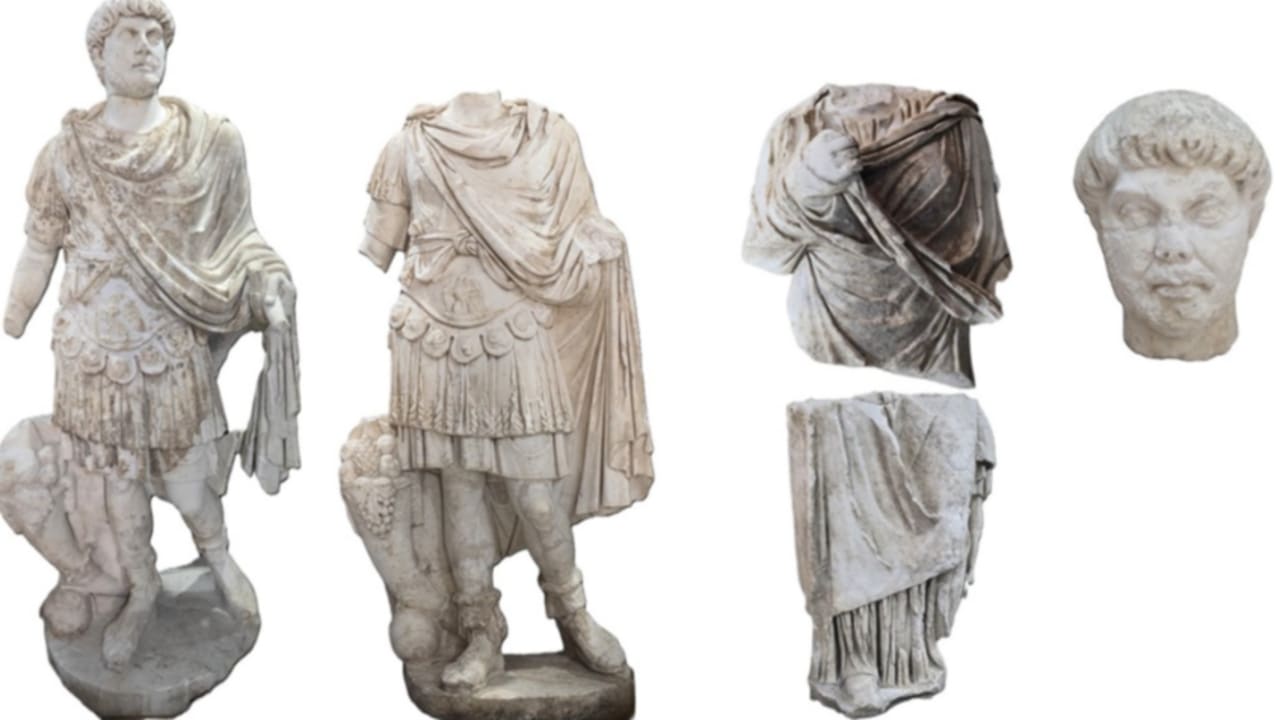
Recently, a significant archaeological development emerged from the ancient city of Kibyra in Turkey, where statues of Roman Emperor Hadrian and his wife, Empress Sabina, have been meticulously restored. Dating back nearly 2,000 years, these statues were uncovered during excavation efforts led by Burdur Mehmet Akif Ersoy University (MAKU).
Historical Significance of Kibyra
Kibyra, located in southwestern Turkey along the Mediterranean coast, became part of the Roman Empire in 133 BCE, following the annexation of the Attalid Kingdom. This historical context adds depth to the significance of the artifacts found there. The excavations are oriented toward revealing more about this once-thriving city, particularly its architectural advancements and cultural exchanges during the Roman period.
Details of the Discovery
During the recent excavations, a total of four statues were found at the Monumental City Gate. Hadrian’s statue, standing approximately 2.14 meters tall, is crafted from exquisite marble sourced from the Afyon-Iscehisar region. According to Dr. Sukru Ozudogru, head of the Kibyra excavation, the well-preserved likeness of Hadrian serves as a rare representation of the emperor in Anatolia, further underscoring its significance.
The statues are believed to have been sculpted around 130 CE, likely commissioned in anticipation of Hadrian’s visit. This commissioning preference was a common practice at the time, indicating the political importance of such monumental art.
Condition and Future Plans
While Hadrian’s statue has been restored almost completely, Sabina’s statue remains less intact, with several fragments still missing. The excavation team remains hopeful that ongoing digging efforts will uncover these lost pieces. Additionally, two other statues—an armored figure approximating 1.86 meters and a mixed-gender statue with their parts discovered separately—were also recovered, alongside various fragmented pieces.
These statues are believed to have adorned the upper regions of the Monumental City Gate. It’s suggested they suffered damage during an earthquake around 417 CE, leading to their fragmentation. Once fully restored, the statues are set to be displayed at the Burdur Museum, showcasing their historical and cultural relevance.
Ongoing Excavation Efforts
The ongoing excavation at the gate, which began in 2025, has resulted in the relocation of about 2,500 stone blocks, critical for the classification and cataloging of the site’s treasures. Dr. Ozudogru indicated that one additional season of excavation would likely finalize the structure’s uncovering and facilitate the subsequent restoration of this ancient gateway.
YOK President Erol Ozvar expressed the excavation’s importance in understanding Anatolia’s historical narratives and cultural interactions over centuries. The initiative is a testament to the dedication of Turkish universities toward preserving national heritage through scientific inquiry.
The renewed interest and findings from Kibyra strongly contribute not just to the understanding of Roman imperial influence in Anatolia but also to the appreciation of the rich historical tapestry that defines this ancient city.