
Last Tuesday, a panel at the Institute of World Politics in Washington D.C. ignited tensions regarding the implications of Cuba’s communist government on U.S. national security. Christine Balling, a former advisor to U.S. Special Operations Command South, led the discussion centered on the troubling nature of Cuba as a potential threat.
Disruption and Political Theater
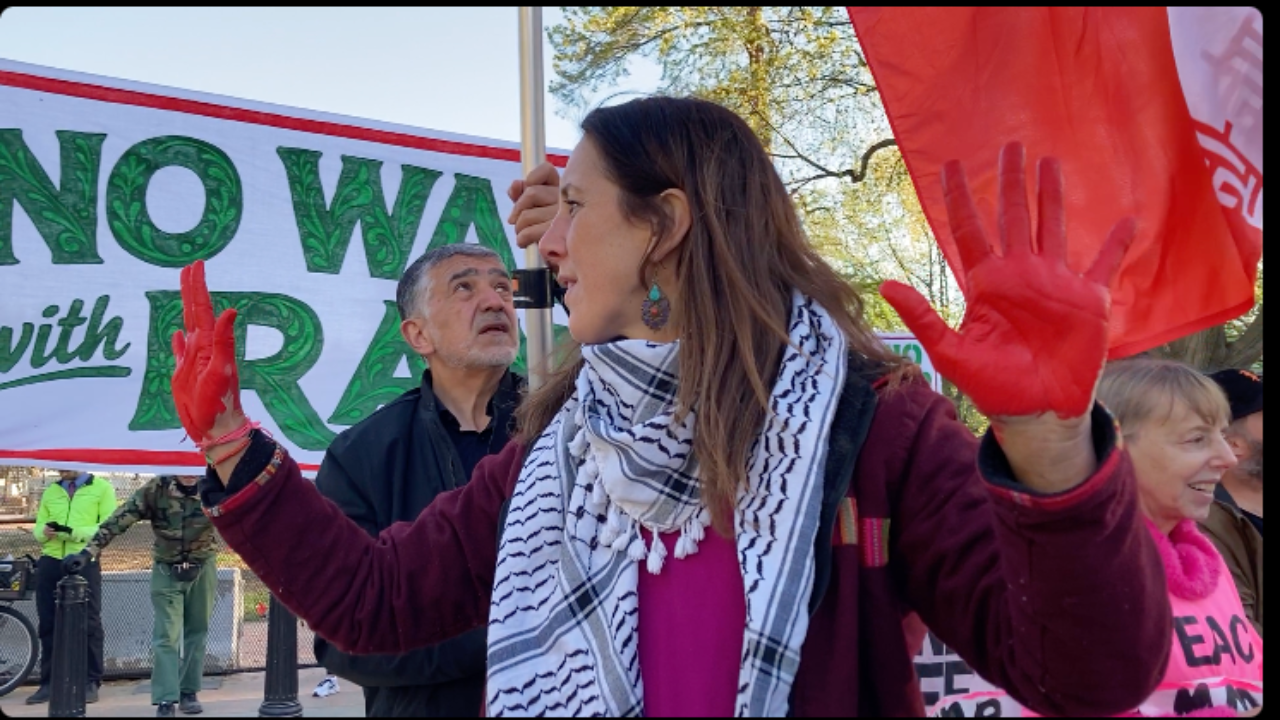
During the panel, Olivia DiNucci, a former college basketball player and political activist affiliated with CodePink, disrupted the event by loudly proclaiming, “SANCTIONS KILL IN CUBA,” while displaying a hand-painted banner. Security promptly intervened, escorting her out as she continued to advocate for “global solidarity” among various oppressed communities. This incident highlighted the tactics often employed by activist groups like CodePink, which claim to seek peace but are accused of promoting divisive ideologies within the political landscape.
The Role of CodePink and Its Ideology
DiNucci is not merely a spontaneous protestor; she operates within a network of activists focused on raising awareness for communist regimes, including Cuba and Iran. Critics like Balling argue that such organizations act as “Trojan horses,” undermining American unity and values. They emphasize that groups like CodePink tend to distort the perception of the American Dream and capitalize on societal friction to promote their agendas. Balling articulated concern that these movements ultimately serve hostile foreign entities by perpetuating narratives that undermine U.S. interests.
Political Influence and Foreign Interests
This controversy unfolds at a time when U.S. lawmakers are probing the extent of foreign malign influence in American civil society. Recent hearings have examined how various activist groups, including CodePink, could potentially advance adversarial interests from countries like China and Cuba. Such discussions are critical for safeguarding national security, as highlighted by Representative Bill Huizenga, who aims to reveal how foreign governments might exploit social movements to alter American political discourse.
The investigation consists of multiple strands, evaluating the intricate financial networks connecting U.S. activist organizations to international allies of communism. Central to these examinations is Neville Roy Singham, a tech mogul believed to funnel extensive funds into nonprofits aligned with anti-American narratives.
Confronting Domestic Disruption
Critics of CodePink’s approach assert that its members engage in disruptive tactics rather than meaningful dialogue. Balling remarked that activists like DiNucci miss opportunities for constructive conversation, opting instead for performative protests designed to generate media attention. This raises questions about the effectiveness of high-profile activism aimed at changing policy or public opinion.
As the conversation around Cuba’s influence intensifies, it further complicates the dynamics of domestic protests against U.S. foreign policy. The actions of groups like CodePink could have far-reaching ramifications, potentially shaping public perception about the U.S.’s stance on global issues.
Ultimately, both supporters and opponents of CodePink agree that the organization and its methods are part of a larger, contentious debate over American values, national security, and foreign influence in domestic affairs.