
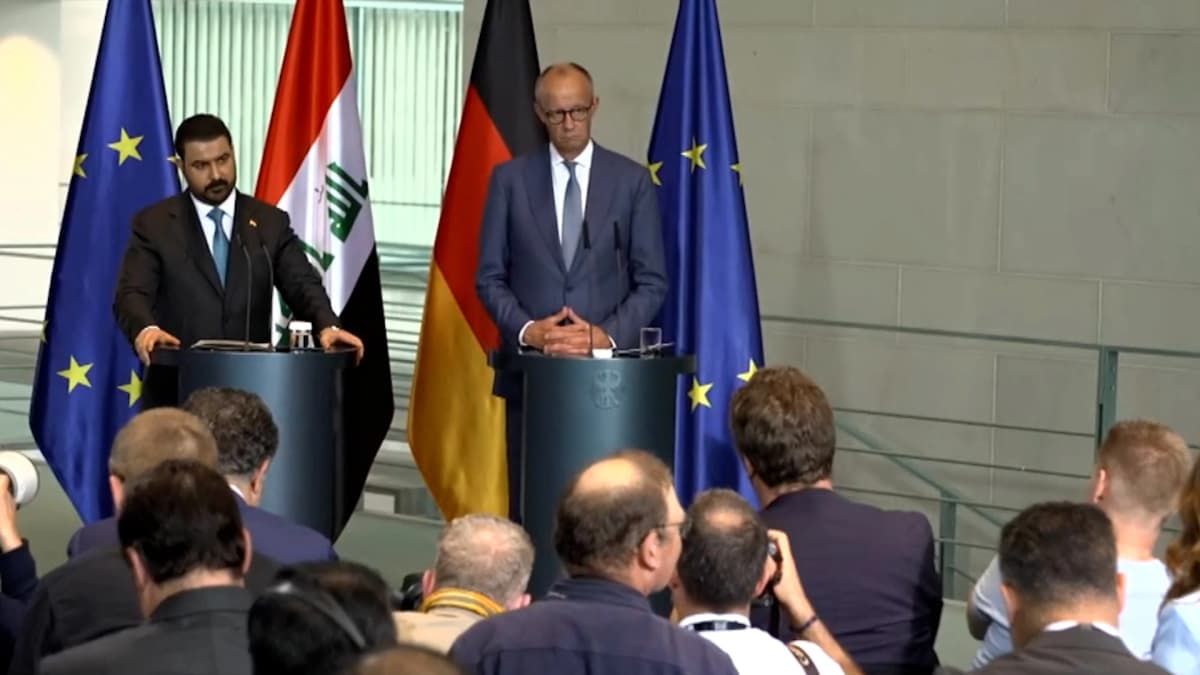
Iraq is taking decisive steps to diversify its oil export routes, moving away from its current reliance on a singular corridor for oil transport. This strategic shift was highlighted by Iraqi Prime Minister Ali al-Zaidi during a joint press conference with German Chancellor Friedrich Merz in Berlin. The Iraqi government’s focus on energy diversification is crucial for establishing a more resilient and sovereign economic framework, especially in light of recent geopolitical tensions.
Transitioning Away From Dependence
Prime Minister Zaidi articulated that Iraq cannot continue to be “held hostage” by a single export pathway, specifically referencing the vulnerabilities tied to the Strait of Hormuz. This critical waterway plays a significant role in global oil trade; disruptions here can have widespread economic repercussions. Zaidi emphasized that Baghdad seeks a “sovereign position” to shield itself from such economic downturns, a necessity given the historical maritime restrictions that have hampered oil exports.
Exploring Alternative Routes
The Iraqi leadership is actively pursuing the establishment of new oil export channels through neighboring Turkey and Syria. According to Zaidi, these routes are expected to serve Western countries, including Europe and the United States, thereby helping Iraq reduce its dependency on the Strait of Hormuz. This diversification effort is not just about better oil sales but also about securing a steady flow of revenue in an increasingly unpredictable geopolitical landscape.
Notably, discussions on a potential pipeline to Germany were raised, promising a safer and more reliable method to transport Iraqi oil to European markets. This pipeline idea falls within the overarching Development Road Project, a $17 billion initiative aimed at enhancing Iraq’s infrastructure and transforming the country into a key transit corridor. Stretching over 1,200 kilometers, the route will connect the Grand al-Faw Port in southern Iraq to the Fishkhabur border crossing with Turkey, promising improved access for international trade.
Recent Developments and Military Cooperation
Zaidi’s remarks coincide with a broader acknowledgment of the pressing need for Iraq to secure its airspace and territory amidst ongoing military cooperation with international partners, particularly those involved in the US-led coalition against ISIS. The Iraqi PM has asserted that the country’s security forces are equipped and capable of maintaining stability and territorial integrity without reliance on foreign military presence. This assertion reflects Iraq’s commitment to sovereignty as it meets its obligations to the Coalition.
The German Chancellor, in turn, confirmed that the decision to withdraw German troops from Iraq is based on Baghdad’s request, while also indicating that Berlin remains ready to engage in partnerships should Iraq express a desire for it. This two-way dialogue underscores an evolving security and economic relationship between Iraq and Germany, aiming to bolster mutual interests.
In conclusion, Iraq is poised for a significant transition that aims to reshape its economic and geopolitical landscape. By diversifying its oil export routes and reaffirming state sovereignty, Baghdad is actively working to enhance national resilience in an era of global uncertainty. The outcomes of these efforts will be monitored closely, as they could redefine not only Iraq’s economy but also its role in the broader energy market.