
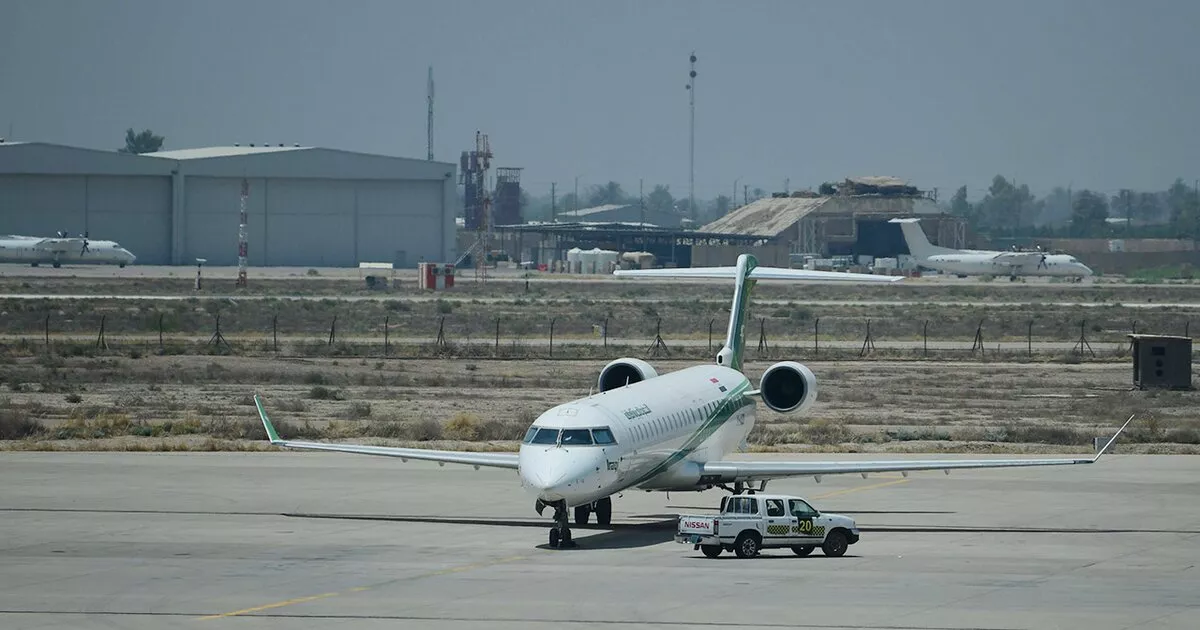
Iraq has recently made a significant announcement regarding its airspace. The country’s Ministry of Transport has declared that it has reviewed restricted airspace areas and has fully restored sovereignty over them. This development marks a crucial shift in air navigation and civil aviation operations, opening up new opportunities for the country.
Restoration of Air Sovereignty
Captain Ihab Saad Karim, who heads the General Company for Airports and Air Navigation Management, shared during a press conference that the Airspace Management Team at the Air Operations Center has confirmed the cessation of military designation for certain airspaces. These areas, previously listed in the Iraqi Aeronautical Information Publication, are now available for civil aviation use.
Karim elaborated that the zones, located primarily in the western regions of Iraq, have been officially returned to the General Company. This transition will enable their utilization for civil aviation purposes, enhancing the operational capabilities of the nation’s air traffic.
Achievements Through Coordination
The successful completion of this phase was achieved through extensive collaboration with military officials, particularly with General Abdul Amir Al-Shammari, Chief of Staff and the Director of the Commander-in-Chief’s Office. Over several years, a series of institutional and technical efforts were undertaken to enhance the efficiency of air navigation. This long-term commitment has culminated in the reclassification of previously restricted airspace.
Karim stated that these advancements lay the groundwork for updating the Iraqi Aeronautical Information Publication, facilitating its official dissemination to global airlines. This change is expected to modernize air travel routes, enabling improved flight operations and connectivity.
Impact on Civil Aviation and the Economy
The restriction of these airspaces to civil usage began between 2016 and 2017. The restoration of these areas is anticipated to provide enhanced flexibility in establishing new air routes, leading to increased financial revenues. This development aims to boost civil air traffic flow, significantly supporting Iraq’s economy.
In addition to economic benefits, the efficient management of air traffic ensures the safety and security of both aircraft and passengers. Karim acknowledged the dedicated efforts of airport personnel and air traffic controllers, emphasizing their role in facilitating safe flight operations. With the air routes now accessible, Iraqi airports are poised to offer comprehensive services to both domestic and international airlines.
This transition marks a pivotal moment in Iraq’s aviation sector, signifying advancements in airspace management and cooperation across various governmental sectors. As the country moves forward, the restored sovereignty over its airspace heralds a new era for civil aviation, aimed at enhancing overall efficiency and economic growth.