
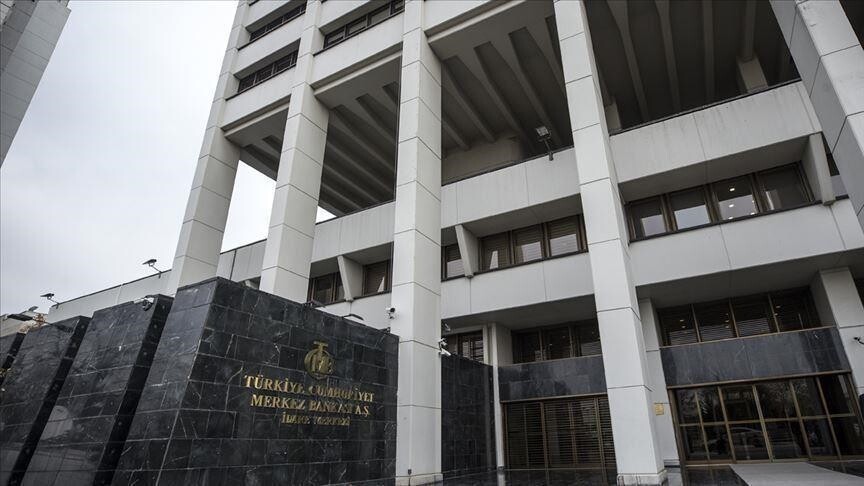
Türkiye’s economic landscape is marked by noteworthy shifts in its international financial standing, as highlighted by the latest data from the Turkish Central Bank. As of the close of July 2026, the external assets of the nation saw a rise of 4.2% month-on-month, reaching a substantial $419.6 billion. This development suggests a positive trend in the country’s financial health, but the accompanying liabilities reveal a more complex narrative.
Growth in External Assets
The increase in Türkiye’s external assets indicates a growing potential for foreign investment and international partnerships. External liabilities, however, have also shown a rise, increasing by 1% during the same period to $818.3 billion. This juxtaposition of assets and liabilities brings the net international investment position to a negative $398.7 billion, raising questions about the sustainability of the current economic trajectory. Despite the optimistic growth in assets, the persistent liabilities present a challenge that cannot be overlooked.
Changes in Central Bank Reserve Assets
The reserves held by the central bank have bolstered Türkiye’s financial stance. In July, these reserve assets climbed by $17 billion, resulting in a total of $164.4 billion. This increase may serve as a cushion against potential economic volatility and reflects the central bank’s efforts to stabilize the nation’s finances. Moreover, direct investments experienced a modest rise of 0.8%, reaching $81.8 billion. Meanwhile, financial derivatives also increased slightly, by 0.7%, to stand at $2.5 billion. Such figures underscore a cautious optimism in the investment climate, even as certain sectors face declines.
Declining Foreign Currency Deposits
Conversely, some areas have encountered downturns. Foreign currency deposits held by resident banks experienced a significant drop of 6.9% month-on-month, reducing the figure to $44.7 billion. This trend might signal a shift in confidence among local investors towards domestic currencies or alternative investment avenues. On the liability side, direct investments have also seen a slight contraction, decreasing by 0.3% to $232.5 billion. This decline could indicate a hesitation among foreign investors amid economic uncertainties, raising concerns about future capital inflow.
Portfolio Investments Show Resilience
On a more positive note, portfolio investments saw an increase of 3.5%, contributing to a total of $160.2 billion. The activities in equities and investment fund shares held by non-residents also grew by 1%, reaching $50.2 billion. These figures demonstrate resilience in certain segments of the investment landscape, suggesting that while some sectors experience declines, others remain attractive to foreign investors.
In addition, liabilities in financial derivatives dropped sharply by 43% to $4 billion. This decline could be attributed to risk aversion among investors, but it’s crucial to monitor market dynamics closely. On the other hand, other investment liabilities rose by 1.6%, reaching $421.6 billion, indicating ongoing commitments from both local and international stakeholders.
In summary, while Türkiye’s external assets show a positive uptrend, the associated liabilities emphasize the necessity for careful economic management. With shifts in both reserves and investment categories, Türkiye must navigate these complexities to maintain its growth trajectory. Understanding the interplay of these economic factors will be vital for stakeholders monitoring the evolving financial landscape.