
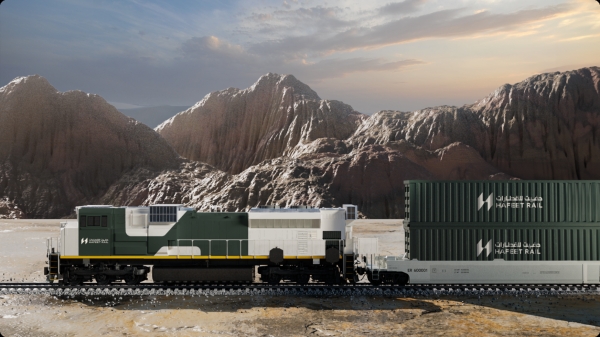
The impending launch of trial operations for the Hafeet Railway, designed to connect Oman and the UAE, marks a significant development in regional logistics and transportation. Set to commence in the latter part of 2027, this ambitious project aims to enhance cross-border trade and economic collaboration between the two countries.
Launch of Trial Operations
Eng. Said bin Hamoud Al Maawali, the Minister of Transport, Communications, and Information Technology in Oman, announced that trial runs for the railway will kick off in the fourth quarter of 2027. This initiative is part of a broader strategy to boost the logistics ecosystem in the region, facilitating smoother movement of goods and services. As both countries look to strengthen ties, the Hafeet Railway is expected to play a pivotal role in realizing these objectives.
Economic Impact and Sectors Benefited
The Hafeet Railway will establish a vital link between the UAE capital, Abu Dhabi, and Suhar in Oman, with a focus on integrating industrial hubs in both nations. Once fully operational, the railway network is poised to revolutionize the movement of both passengers and freight. Each freight train journey will boast a capacity of over 15,000 tonnes, equating to around 270 standard shipping containers, thus significantly enhancing cargo transport efficiency.
Various sectors stand to gain from the railway’s operation, including mining, iron and steel, agriculture, retail, and the petrochemical industry. Moreover, tourism is expected to flourish, as the rail connections will serve as a convenient travel option for individuals seeking to explore both nations.
Infrastructure and Connectivity
Spanning 238 kilometers, the railway will feature over 12 passenger stations in addition to crucial links to major ports within Oman and the UAE. This extensive network will provide an alternative to road transport for heavy freight, potentially decreasing the volume of trucks on highways and reducing road congestion.
Passenger trains are designed to run at a remarkable speed of 200 km/h, allowing travelers to journey between Suhar and Abu Dhabi in just 100 minutes, and between Suhar and Al Ain in approximately 47 minutes. In contrast, freight trains will operate at a maximum speed of 120 km/h, ensuring swift movement of goods across the border.
In conclusion, the Hafeet Railway is set to be a game-changer for regional transportation and trade. By bolstering economic ties and providing a reliable option for both passenger and freight transport, this initiative promises to pave the way for a more interconnected Oman and UAE, driving growth and enhancing the attractiveness of both destinations for trade and tourism.