
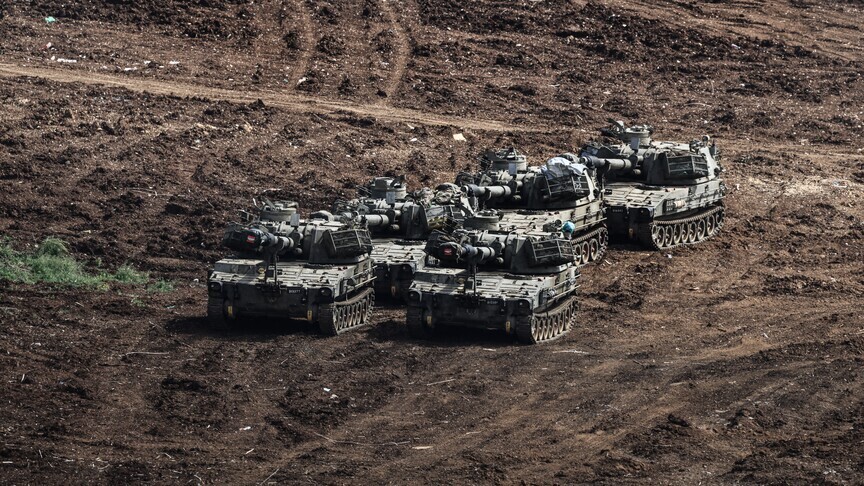
Israeli military operations in southwestern Syria have escalated recently, targeting sites associated with the former regime of Bashar al-Assad. This activity is not only a continuation of Israel’s long-standing strategy in the region but also highlights the ongoing tensions surrounding territorial sovereignty and military engagement.
Recent Attacks and Military Operations
On a Sunday morning, Israeli forces demolished what were once military installations located near Jandal Castle on Mount Hermon (Jabal al-Sheikh), according to reports from Syrian state television. Alikhbariah TV further detailed that the Israeli military conducted artillery shelling in an area southeast of Al-Rafid, which is situated in the southern Quneitra countryside. This assault marks yet another episode in a series of incursions that have characterized Israel’s military approach in southwestern Syria.
In a different incident, Israeli forces launched artillery shells at the Bir Ajam forest, located to the west of Zubaida in the central Quneitra area. Reports have yet to confirm any casualties or material damage resulting from these strikes, raising concerns about the impact on local civilian populations. Such continued military actions underscore a pattern of aggression that has escalated over the years.
Implications of Israeli Incursions
The southwestern region of Syria has become a focal point for repeated Israeli incursions, which include raids, shelling, and land clearing operations. These actions have drawn fierce criticism from the Syrian government, which categorizes them as violations of national sovereignty and the 1974 Disengagement Agreement that aims to maintain peace between Israel and Syria. The Syrian regime has made persistent calls for the withdrawal of Israeli troops from its territory, urging the international community to hold Israel accountable for its military operations.
Despite the Syrian government’s limited military capabilities, Israeli forces have continued to engage in airstrikes and ground assaults that have resulted in civilian casualties and significant damage to military infrastructure. This ongoing conflict raises serious questions regarding regional stability and the humanitarian conditions for citizens living in affected areas. The international community has largely remained silent, which only adds to the frustration felt by the Syrian populace.
International Reactions to the Conflict
The actions of the Israeli military also drew the attention of international figures, including UN Secretary-General Antonio Guterres. During a visit to Syria in July, Guterres labeled violations of Syrian sovereignty and territorial integrity as “unacceptable,” urging Israel to comply with the 1974 disengagement agreement. This plea highlights the broader international concern regarding the precarious situation in Syria and the potential fallout from relentless military engagement.
The continuing military actions by Israeli forces may serve to reinforce their strategic objectives, but they also complicate the landscape for peace and reconciliation in the region. Calls for intervention and dialogue remain critical, but they require a united front from the international community to effect meaningful change.
In summary, the ongoing Israeli military operations in southwestern Syria illustrate a deeply entrenched conflict that raises pressing questions about regional stability, sovereignty, and humanitarian impacts. As military actions persist, the demands for accountability and peace grow louder, underscoring the urgency for a renewed focus on diplomatic solutions.