
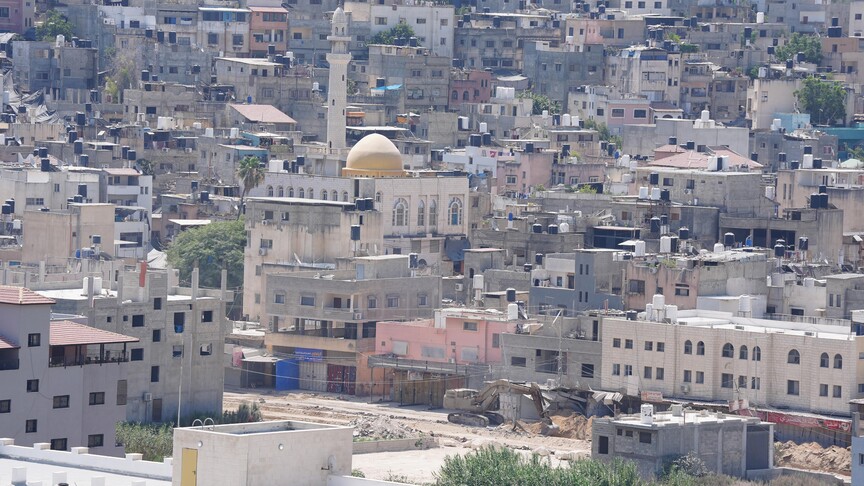
Israeli forces conducted operations in multiple parts of Tulkarm, a city in the northern region of the occupied West Bank, on Sunday. Reports from official Palestinian sources indicate that they placed a Muslim shrine under the jurisdiction of the Israeli Antiquities Authority. This action has raised significant concerns among Palestinian officials and communities.
Details of the Shrine and Its Significance
The shrine in question, known as the Bint Yaqub shrine, features a two-story structure that showcases historical layers from both the Roman period on its lower level and the Mamluk era on the upper level. According to the Palestinian news agency Wafa, this site is characterized by distinct architectural elements, including domes and a prayer room, along with a passage that leads to the ground floor. Notably, the area in front of the shrine is home to two stone-built pools and additional structures dating back to Roman times.
In proximity to the shrine is a modern building named Al-Fakhara, which is associated with pottery production and includes a kiln. The Palestinian Ministry of Tourism and Antiquities, along with the Tulkarm Municipality, undertook restoration efforts for the shrine from 2002 to 2004, emphasizing its cultural and historical significance to the local community.
Palestinian Response to Israeli Actions
In response to the Israeli initiatives regarding the shrine, the Palestinian Ministry of Endowments expressed stern opposition to the designation of the site as an archaeological zone. They emphasized that the shrine occupies land classified as an Islamic endowment, or waqf, asserting that the Israeli order reflects a broader strategy to seize and appropriate endowment properties for settlement expansion.
The ministry issued a call to international and human rights organizations, urging them to intervene swiftly to protect these religious sites from confiscation. They regard these efforts as token moves by the Israeli authorities towards further encroachment on Palestinian land and identity.
Expanding Control Over Archaeological Sites
This incident is part of a broader trend of Israeli control over archaeological sites in the occupied West Bank. Recent actions have included targeting various locations such as Izbat Abu Yasin in the village of Iktaba and Al-Hafasi village, where similar notices about land designated as archaeological sites were issued.
In February 2026, the Israeli government expanded the powers of the Civil Administration’s archaeology officials, granting them more authority over archaeological sites, even in areas partially governed by the Palestinian Authority. This was followed up in May with a preliminary approval from the Israeli Knesset for a bill that would create a civilian “Heritage Authority,” aimed at managing archaeological and cultural sites in the occupied territories under the Israeli Heritage Ministry. Although progress on this legislation has stuttered, the intentions behind it remain clear, signaling ongoing and systematic efforts to impose control over culturally significant lands.
The recent raids and the announcement of new jurisdiction over these sites raise crucial questions about cultural heritage, human rights, and the preservation of Palestinian identity in an increasingly contentious atmosphere. The local and international response to these developments will likely be influential in shaping the future narrative surrounding these historical sites.