
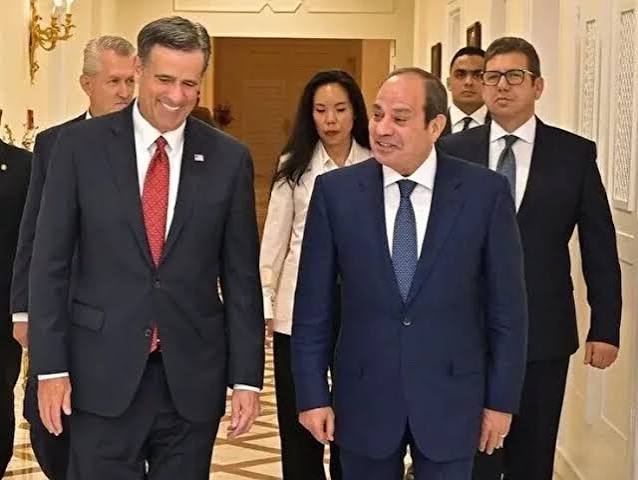
Egyptian President Abdel Fattah el-Sisi recently held discussions with CIA Director John Ratcliffe in Cairo. This meeting highlights Egypt’s intensified diplomatic maneuvers in relation to the ongoing Iran conflict, as the nation seeks to foster a more comprehensive regional resolution that tackles security and maritime issues.
Key Discussion Points
The primary focus of the talks revolved around the ongoing war, regional stability, the principle of freedom of navigation, and the pressing need for a political solution that can ease tensions in West Asia. President Sisi voiced his support for a framework that would resolve the crisis, enhance regional security, and safeguard international maritime routes. In turn, Washington reiterated the significance of collaboration with Cairo on various regional matters, underscoring the need for a unified approach to these challenges.
This meeting is particularly noteworthy as it coincides with Egypt’s increasing diplomatic outreach to both Iranian and American officials. By positioning itself as a potential mediator between the two nations, Egypt aims to navigate the complexities of the current geopolitical landscape. Maintaining communication with Tehran while nurturing a strong strategic partnership with Washington provides Cairo with unique leverage during a time of uncertain U.S.-Iran relations.
Strategic Implications for Egypt
Egypt’s motivations extend far beyond mere political mediation. Prolonged instability in the Red Sea and the Bab Al-Mandab region poses a significant threat to shipping routes vital for Suez Canal traffic. Given that the canal constitutes a major revenue stream for the Egyptian economy, any disruption in this area could have dire economic consequences. Additionally, the threat to energy supplies and maritime trade amplifies the economic pressures faced domestically, further motivating Cairo to advocate for de-escalation.
The country is also enhancing its engagement with Gulf states and other regional players who share similar concerns about the Iran conflict escalating into a wider confrontation that could involve Yemen and neighboring territories. By forming alliances and partnerships, Egypt seeks to maintain a stable regional environment, which would benefit its economic and strategic interests.
An Emerging Diplomatic Framework
The meeting between Sisi and Ratcliffe is indicative of a broader diplomatic trend in the region. While Qatar has been active in bridging communications between Tehran and Washington, Egypt is carving out its own path emphasizing a balanced approach that addresses both Arab security concerns and maritime stability. These diplomatic efforts do not need to be competitive but could instead complement one another, promoting a unified objective of preventing further escalation and ensuring that regional states are included in any future resolution.
If these mediation initiatives continue to develop, Egypt is poised to become a vital link among Washington, Tehran, and Arab nations. This evolving role could help facilitate the establishment of a more thorough security framework that transcends temporary ceasefires, paving the way for enduring peace in the region. With its strategic position and commitment to diplomacy, Egypt may well emerge as a pivotal player in shaping the future geopolitical landscape.